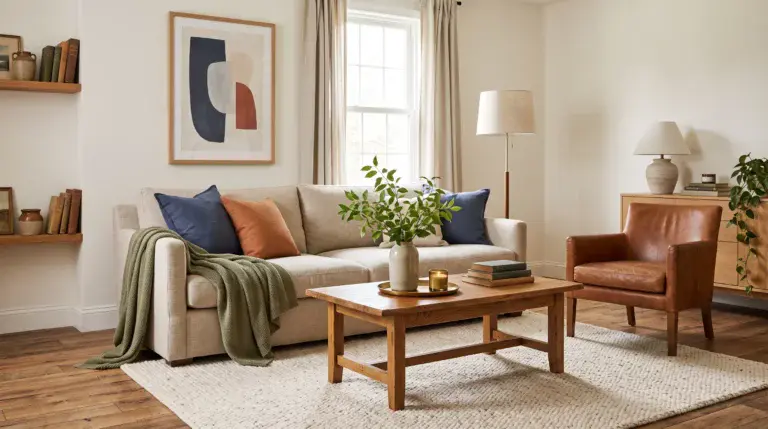

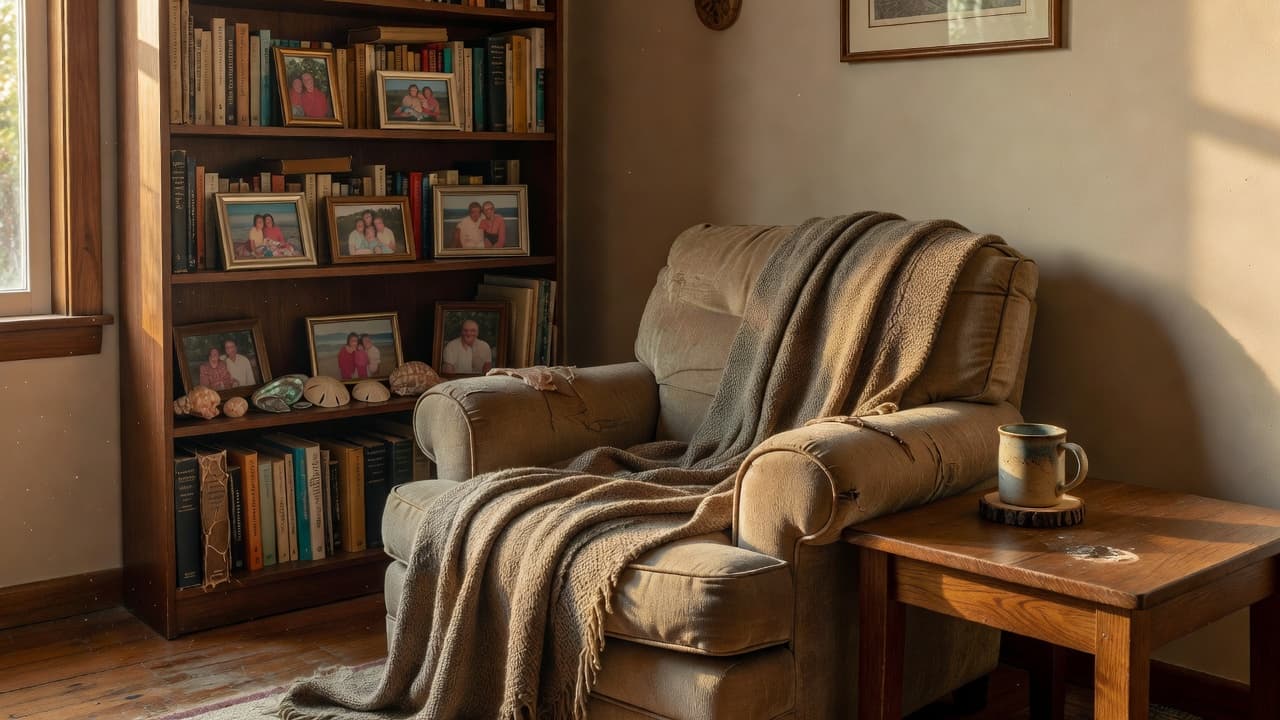
You’ve seen the photos. Perfectly fluffed pillows. A blanket folded just so. A stack of books with coordinating covers. Everything color-matched, everything spotless, everything… empty.
It looks nice. But does it feel cozy?
Not really. And there’s a simple reason why: it doesn’t feel like anyone actually lives there.
Coziness isn’t about aesthetics alone. It’s about the stuff that makes a space feel like yours. The mug you reach for every morning without thinking. The photo of your kid at age four, mid-laugh. The rock you picked up on a beach walk three years ago and never put down. These things don’t just fill a room. They fill it with you.
If you’ve read my breakdown on what actually makes a space cozy, you know it comes down to warmth, comfort, and intimacy. But there’s a sixth element that ties all of those together: personality. That’s what we’re talking about today. Not another shopping list. Not another “10 candles to buy.” We’re talking about the personal touches that turn a decorated room into a space you actually want to come home to.
Personal touches are what make a home feel truly cozy. Family photos that capture real moments, books you’ve actually read, collections with a story behind them, and daily-use items left visible instead of tucked away. A showroom looks cozy because it uses warm lighting and soft textures, but it never feels cozy because it lacks personality. Coziness needs lived-in details that tell your story.
The Essentials
- 1 Cozy needs personality. A perfectly staged room looks nice but never feels truly cozy because it lacks lived-in details.
- 2 Photos, books, and collections carry more warmth than any decor you can buy. The key is that each item has a story.
- 3 Daily-use items belong in view. The mug, the blanket, the slippers. These traces of everyday life make a room feel real.
- 4 Personal is not the same as clutter. A few meaningful items per surface, smart storage, and seasonal rotation keep it tidy.
- 5 Let things age. The chipped mug and the faded blanket are what make a space feel lived-in. Don’t rush to replace them.
The Problem With Showroom Cozy
There’s a difference between a room that looks cozy and a room that feels cozy. Showrooms are designed to look cozy. They use warm lighting, soft textures, and neutral colors. But the moment you walk in, something feels off. It’s too clean. Too arranged. Too intentional in a way that real life never is.
Looks Cozy
- ✕ Perfect lighting
- ✕ Coordinated colors
- ✕ Fluffed and staged
- ✕ No story behind it
Feels Cozy
- ✓ Warm, imperfect light
- ✓ Mixed and personal
- ✓ Used and well-loved
- ✓ Every item has a story
The lighting trick is a big part of how showrooms pull this off. Layered, warm lighting can make almost any space feel softer and more inviting. But even the best lighting can’t fake the feeling of a room someone actually lives in.
A showroom can’t have your grandmother’s clock on the wall. It can’t have the chair you dragged from apartment to apartment because it’s the most comfortable thing you’ve ever sat in. It can’t have the stack of books you’re actually reading, with dog-eared pages and a coffee ring on the cover.
“Coziness needs personality. The same way a porch light in the rain means more when it’s your porch light.”
What Actually Counts as a Personal Touch?
Here’s the good news: personal touches don’t require a budget. They require intention. You probably already have most of what you need. Let’s break down the categories.
Family Photos (Yes, Really)
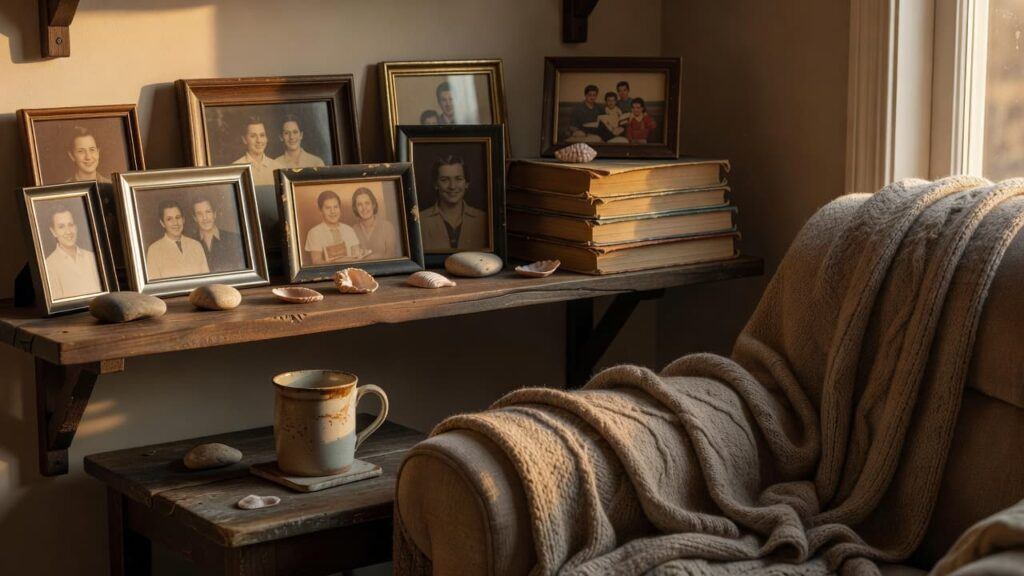
We know. Family photos can feel dated. The matching frames on the hallway wall. The posed portraits from 2011. But here’s the thing: photos work when they feel casual and lived-in, not when they look like a catalog.
Try this instead. Mix frame styles and sizes. Use photos that capture a moment, not a pose. The blurry one from the hike. The one where someone is mid-sneeze. The one that makes you laugh every time you pass it. These are the images that make a room feel warm because they make you feel something.
A single framed photo on a bedside table does more for coziness than a whole gallery wall of stock images. When I wrote about cozy living rooms, one of the key points was simple: display books, photographs, art, and meaningful objects that reveal something about the people who live there. That’s not a design rule. It’s just how coziness works.
Books You’ve Actually Read
A stack of books is a classic decor move. But there’s a big difference between books bought by color and books you’ve actually read.
Books you’ve read carry your history with them. The creased spine. The page you folded down. The note you scribbled in the margin (or the sticker from the coffee shop where you read it). These details make a book feel like part of your story, not just a decorative object.
Don’t hide your real books behind trendy ones. Let your taste show. The thriller next to the cookbook next to the dog-eared poetry collection. That mix is you, and it tells anyone who visits what you care about.
Collections That Mean Something
Collections get a bad rap. People hear “collection” and think of dusty figurines behind glass. But a collection can be anything you’ve gathered over time that means something to you.
Things Worth Displaying
from beach trips & hikes
from places you’ve visited
you actually play
pinned to a corkboard
stacked on a shelf
Each item should have a story, not a price tag.
The key is that each item has a story. Not “I bought this at Target.” But “I found this on the morning we got lost in that small town.” That story is what makes it cozy.
Some of the best collections come from nature. Rocks, shells, driftwood, pinecones. These natural finds add warmth and character without costing anything, and they work alongside natural elements like wood, woven fibers, and plants to make a room feel grounded and real.
Your Daily-Use Items
Sometimes the most personal thing in a room is the thing you use every single day. The coffee mug with the chipped handle. The blanket that’s been washed so many times it’s impossibly soft. The reading glasses you leave on the same table every night.
These items create what designers call “a sense of belonging.” We call it feeling at home. When your everyday things have a place, your space feels settled. It feels like someone lives here, and that someone is you.
Don’t tuck everything away. Let your daily items be visible. The kettle on the stove. The slippers by the door. The journal on the nightstand. That blanket on the armchair? The one you’ve washed a hundred times? There’s a reason it feels better than a brand-new one. If you’re curious about what makes a throw actually snug versus just decorative, I wrote a whole guide on choosing the right throw blankets that gets into the materials and textures that age well.
And if you’re working with a rental where you can’t make permanent changes, this part matters even more. Making a rental feel cozy without painting comes down to the same thing: your stuff, your lighting, your textures. Not the walls.
These small traces of daily life are what make a room feel real.
How to Add Personal Touches Without Creating Clutter
Here’s the balance: personal touches are not the same as clutter. The goal isn’t to fill every surface with stuff. The goal is to choose items that mean something and give them room to breathe.
If your living room has drifted from cozy to chaotic, you’re not alone. I wrote about creating calm in a cluttered living room without losing the warmth and personality that made it inviting in the first place. The same principle applies here.
Pick a few meaningful items per surface. A side table doesn’t need seven things on it. One photo, one lamp, one book. That’s enough. Each item stands out because it has space around it.
Use storage that hides mess without hiding you. A woven basket for the throws, a lidded box for the mail, a tray for the remotes. These keep daily life organized without stripping the room of personality. If you want ideas, my basket storage guide covers how to choose baskets that add warmth while keeping clutter out of sight.
Rotate items seasonally. You don’t have to display everything at once. Switch out photos, swap collections, change which books are on the coffee table. This keeps your space feeling fresh without losing the personal feel. My guide to seasonal cozy spaces walks through how to rotate decor and personal items through the year so each season feels intentional, not overwhelming.
Let items age naturally. Don’t rush to replace the chipped mug or the faded blanket. Wear and tear is what makes things feel lived-in. A brand-new everything feels staged. A few well-loved items feel like home.
The Truth About Cozy
Here’s what it comes down to. You can buy all the right furniture, pick the perfect paint color, and layer every texture the blogs tell you to layer. But if your space doesn’t have anything personal in it, it will always feel like someone else’s idea of cozy.
Coziness is personal. It’s the books with bent pages. The photo that makes you stop and smile. The rock on the windowsill from a trip you almost didn’t take. The mug that fits your hand just right.
That’s why a showroom never feels truly cozy. It looks nice, but it doesn’t feel lived-in. Coziness needs personality.
The same way a porch light in the rain means more when it’s your porch light.

Personal Touches That Make a Home Cozy
- ✓ Display 3 to 5 photos that capture real moments (not posed portraits)
- ✓ Keep books you’ve actually read visible, not hidden behind decorative ones
- ✓ Showcase one collection that tells a story about your life
- ✓ Leave 1 to 2 daily-use items out instead of storing them away
- ✓ Let well-loved items stay, even if they show signs of wear
- ✓ Limit each surface to a few meaningful items to avoid clutter
- ✓ Rotate personal items seasonally to keep things fresh
Coziness needs personality. Start with what you already have.