
A rental can feel temporary before you’ve even unpacked the mugs. Plain walls, tired flooring, and a light fixture that belongs in a dentist’s office don’t help.
But how to make a rental feel like home without painting is mostly about what sits in front of those walls. I focus on reversible changes that add warmth without jeopardizing the security deposit: better furniture placement, rugs, lamps, curtains, soft textures, plants, and the objects that make a room yours.
Start with the pieces you can take with you, then build the room around them.
This post may contain affiliate links. If you make a purchase through these links, I may earn a small commission at no extra cost to you.
How can you make a rental feel like home without painting?
Make a rental feel like home by focusing on changes you can take with you. Rearrange the furniture, add a large rug, layer warm lighting, soften the windows with curtains, and bring in plants, blankets, books, photos, and other personal touches.
- Improve the layout: Create clear zones for relaxing, dining, or working.
- Soften the lighting: Use warm bulbs, floor lamps, table lamps, and plug-in sconces.
- Add texture: Use rugs, curtains, pillows, blankets, baskets, and slipcovers.
- Decorate safely: Lean art and mirrors, and check lease rules before using adhesives.
- Make it personal: Display plants, photos, books, and meaningful objects.
Key Takeaways
- Read the lease and photograph existing damage before decorating.
- Arrange furniture into useful zones before buying more decor.
- Use warm bulbs, lamps, rugs, and curtains to soften a plain room.
- Treat adhesives and peel-and-stick wallpaper as potential risks, not guarantees.
- Finish one small corner first, then add personal things slowly.
How to make a rental feel like home without painting
Begin with the lease. Ask for written permission if anything feels unclear, especially wallpaper, drilling, or fixture changes. Take dated photos or video of scuffs, nail holes, flooring, blinds, and aging fixtures before you begin.
Build a better layout with portable furniture
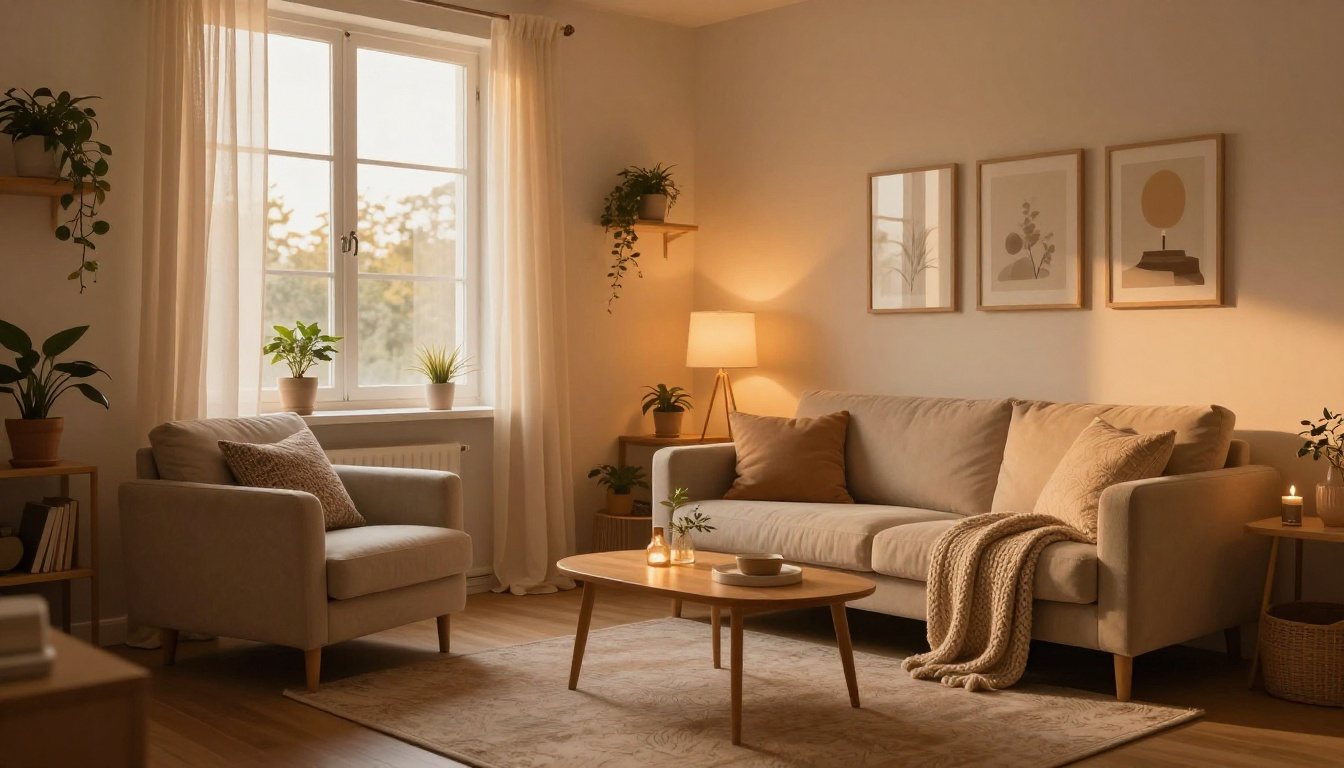
Measure the room, leave clear paths to doors, and mark a possible layout with painter’s tape before moving heavy furniture. Face seating toward a fireplace, window, or conversation area, then anchor it with a rug, coffee table, and pillows.
For a comfortable seating area, these cozy living room ideas can help you think beyond pushing every piece against the wall.
Define rooms without built-ins
A bookcase, console, or sofa can separate an open room without becoming part of the building. Choose pieces with storage and a future elsewhere. Original fixtures should stay put, and permanent built-ins rarely make sense in a place you don’t own.
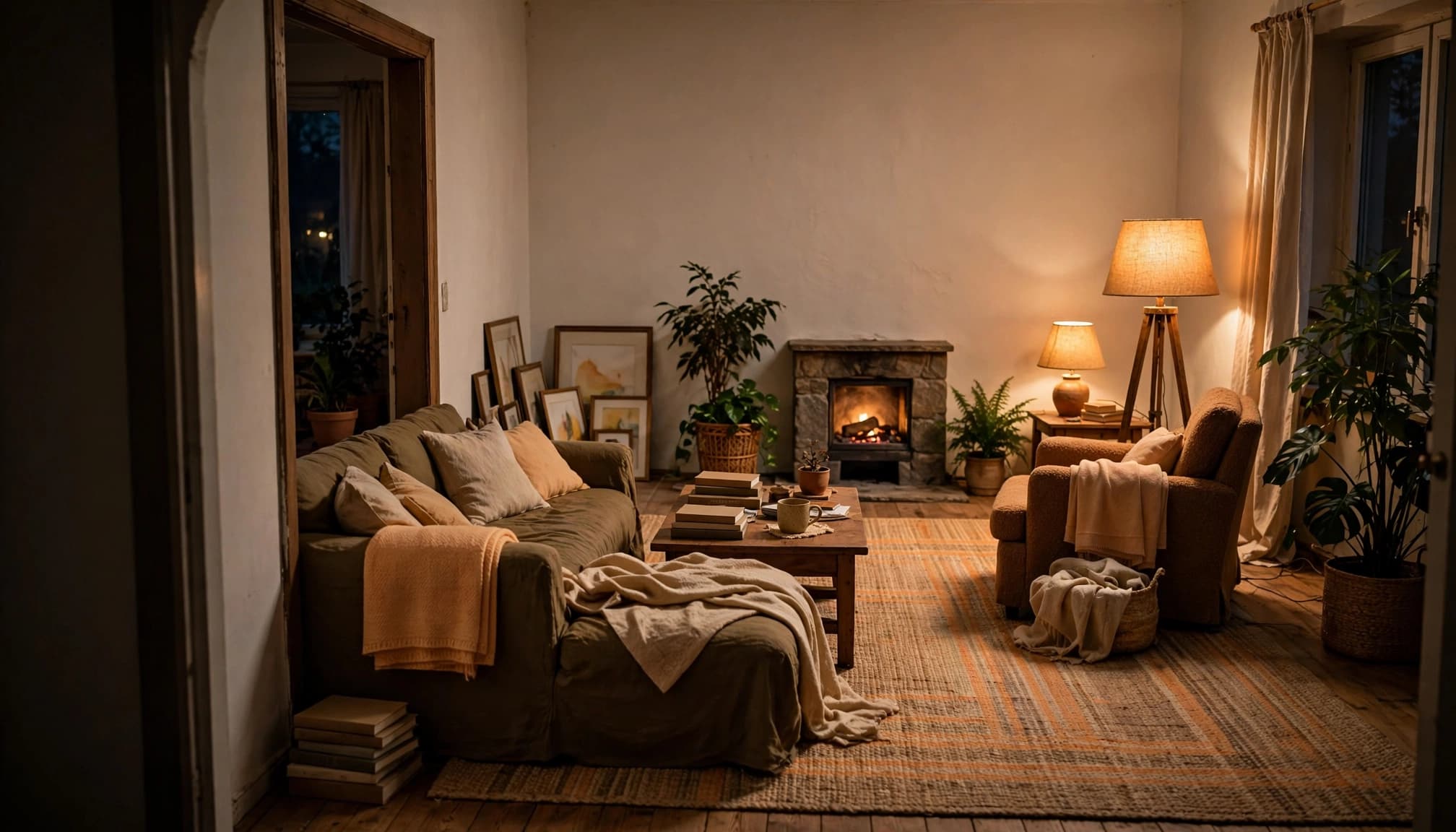
Upgrade rental lighting for a softer, cozier atmosphere
Lighting changes a rental more than most people expect. Swap harsh bulbs for warm LED or smart bulbs around 2700K, and store the originals in a labeled bag for move-out.
Layer light instead of relying on one ceiling fixture
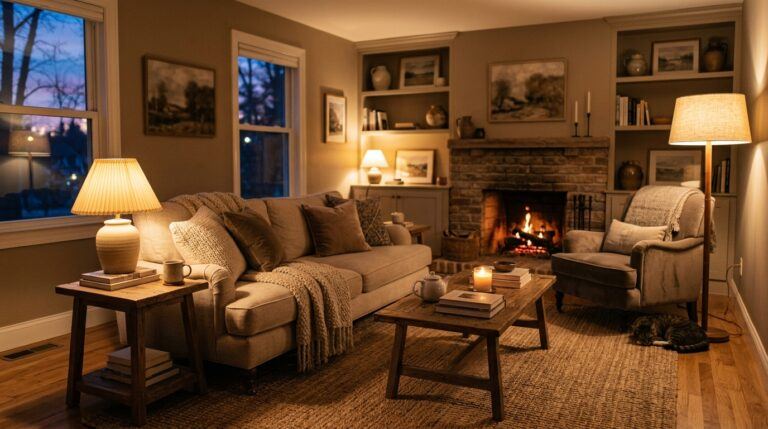
Use three types of light: general light for the room, task light beside a chair or desk, and accent light for shelves, plants, or art. A corner lamp can make a room feel finished after sunset.
Keep every change easy to remove
Try a fabric-shaded floor lamp, a table lamp, a plug-in sconce, a swagged chandelier, or rechargeable lights. Don’t overload outlets, tuck cords neatly, and follow the fixture instructions. One hard ceiling light can make good furniture look guilty.
Warm up blank walls, floors, and windows without permanent changes
A large rug with a rug pad hides flooring you dislike and gives bare feet somewhere kinder to land. Choose a size that reaches under the front legs of the main seating. A postage-stamp rug in the middle of the room tends to make everything look stranded.
Hang floor-to-ceiling curtains with tension rods or damage-free hooks when possible. They soften the window and make the ceiling seem taller. For more renter-friendly styling, browse these cozy decor ideas.
Hang art safely and plan the wall first
Leaning a large framed print or mirror on a console, shelf, or floor is the lowest-risk option. For lightweight pieces, use hanging strips or hooks only when the wall surface and weight match the manufacturer’s rules.
Lay out a gallery wall on the floor first. Mark positions with painter’s tape, then test any adhesive in a hidden spot.
Be cautious with removable wallpaper
Tempaper and NuWallpaper are common peel-and-stick options, but removable does not mean risk-free. Paint and drywall can still lift, especially on textured or weak walls. Read a peel-and-stick wallpaper rental guide and get approval if your lease treats it as an alteration.
Add texture and personal details that make a rental feel lived in
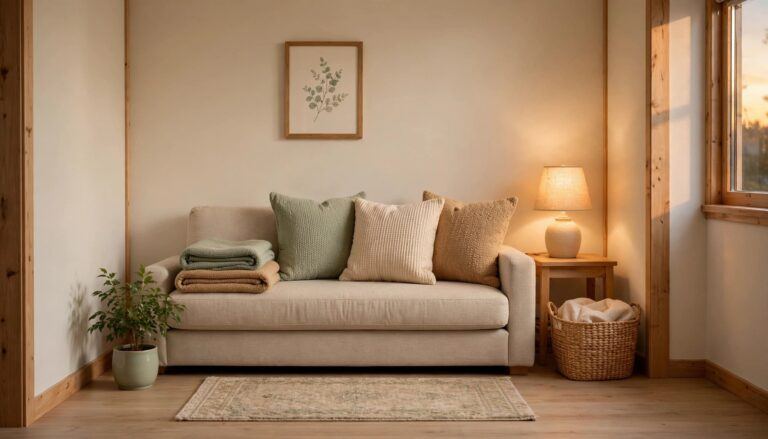
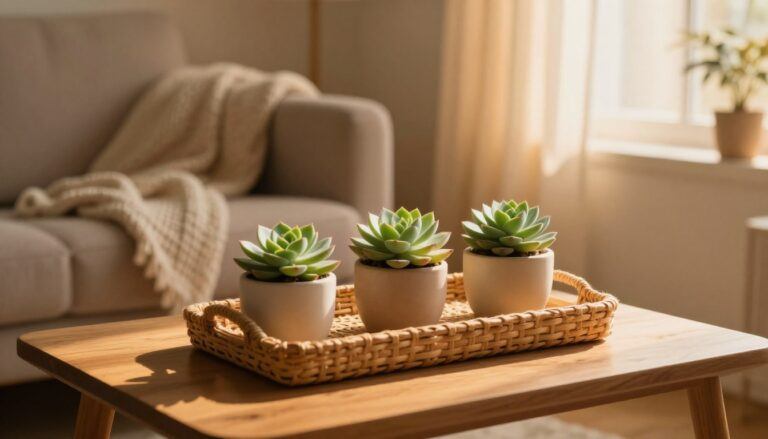
Blankets, pillows, slipcovers, baskets, bedding, and curtains do the quiet work that paint often gets credit for. Add live or faux plants to empty corners and windowsills, then use photos, books, and travel finds on shelves.
I like pillows that get used. If six of them must be moved before anyone can sit down, cozy has become an obstacle course.
Create one finished corner first
Don’t buy everything at once. Start with a reading nook or entryway drop zone, then use one useful piece, one soft texture, one light source, one natural element, and one personal object.
A small tray for keys, hooks for a bag, and a lamp nearby can make the daily arrival home feel less makeshift.
Add scent with common sense
Candles, diffusers, and simmer pots can help, where the lease allows. Keep flames attended and away from curtains, books, and the blanket that always ends up on the sofa arm.
Want a DIY option? Try This: Easy DIY Baking Soda Air Freshener
Protect the security deposit when decorating a rental
Before decorating, document damage and save written approval. Follow product directions for hooks, curtains, wallpaper, and adhesives, then remove temporary decor slowly at move-out.
Security-deposit rules vary by location and lease. The Charlotte Observer’s renter guidance notes that deductions often turn on damage beyond normal wear. A hair dryer on low heat may loosen stubborn wallpaper, but stop immediately if paint or drywall begins to lift.
Frequently Asked Questions
What is the safest way to decorate a rental wall?
Leaning art, mirrors, and framed pieces is the safest route. For adhesive hooks or strips, check the surface, weight limit, preparation steps, and lease before using them.
Can removable wallpaper damage a rental?
Yes. It can pull paint or damage drywall, especially on textured, freshly painted, or fragile walls. Test a small hidden section and follow the brand’s removal guidance.
How can a rental feel cozy on a small budget?
Start with warm bulbs, thrifted textiles, a secondhand rug, rearranged furniture, plants, and personal objects. Layout and layered light often matter more than expensive decor.
How can renters make a room feel larger without painting?
Use tall curtains, a large mirror, a properly sized rug, clear walking paths, and furniture with visible legs. Add light to dark corners so the room doesn’t feel cut into little shadows.
Final Thoughts
A rental doesn’t need paint to feel personal. Rearrange the furniture, add the largest practical rug, soften the lighting, then bring in textiles, plants, and meaningful objects.
Make one change at a time and choose pieces that can follow you to the next home. Comfort comes from a room that works for your life, not from a wall color you have to undo later.