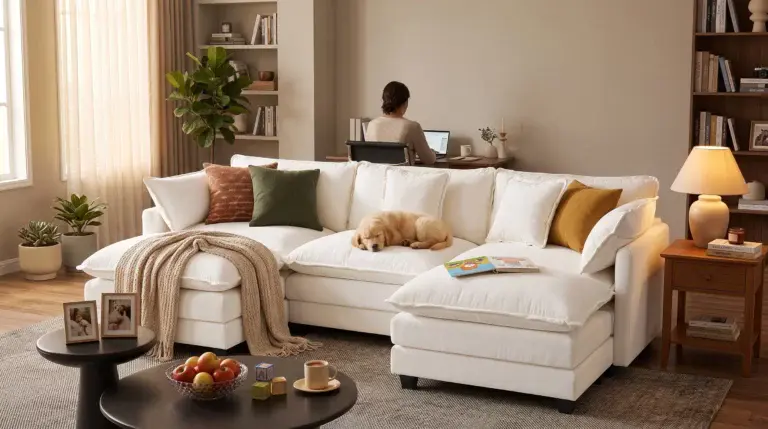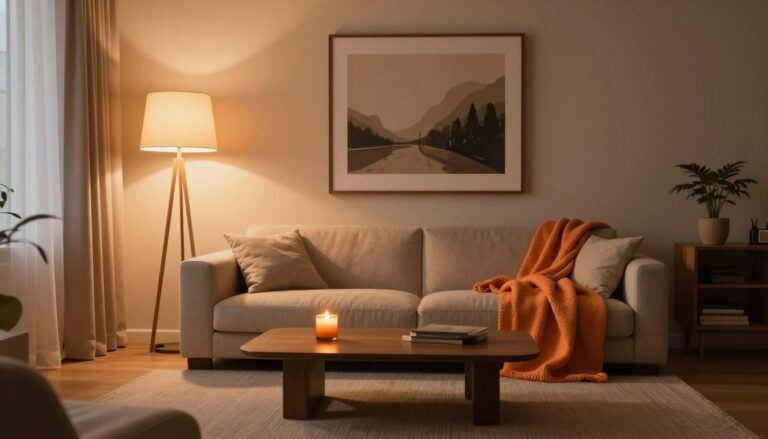

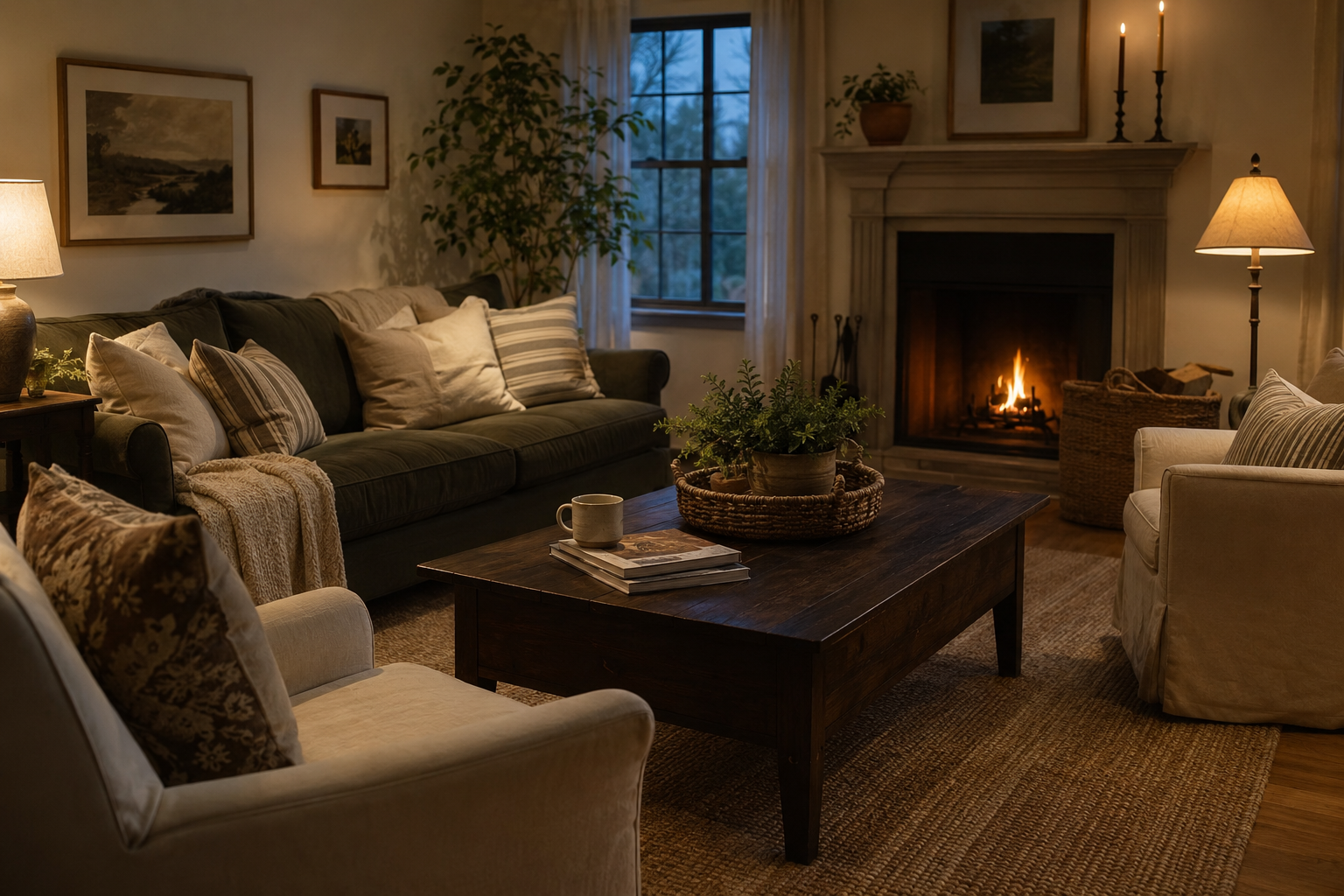
A room can look polished and still feel like nobody wants to sit down in it. Cozy living rooms feel different because they invite you to put your feet up, stay awhile, and enjoy the ordinary parts of home. The cozy living room meaning comes down to that same comfort and warmth, not any single decorating style.
I have found that achieving a cozy atmosphere rarely comes from hiring an interior designer or replacing all your existing living room decor. It comes from softer light, touchable fabrics, sensible seating, and personal pieces that make the room feel lived in.
Start with the atmosphere you want at the end of a long day, then make each choice support it.
This post may contain affiliate links. If you make a purchase through these links, I may earn a small commission at no extra cost to you.
What Makes a Living Room Feel Cozy?
A cozy living room combines comfortable seating, warm layered lighting, touchable fabrics, natural materials, and personal details. Begin with the way you actually use the room. Then arrange the furniture, lighting, and decor to support conversation, reading, relaxing, and ordinary time at home.
Key Takeaways
- Use several warm light sources instead of relying on one bright overhead fixture.
- Add inviting textures through wool, linen, cotton, wood, and woven materials.
- Arrange seating for conversation and rest rather than directing every piece toward the television.
- In a small living room, choose fewer substantial pieces instead of filling the room with tiny decor.
- Display books, photographs, art, and meaningful objects that reveal something about the people who live there.
Build Cozy Living Rooms Around Everyday Comfort
A cozy room begins with how you use it. Before I move furniture or buy a pillow, I consider where people naturally sit, set down a drink, read, or gather after dinner. Evaluating your room layout and how you arrange your living room furniture matters more than just filling floor space. A beautiful coffee table is not useful if it blocks the path to the sofa.
Start with one comfortable anchor piece. In many homes, that is a sofa or a comfortable sectional sofa that invites you to stretch out. Choose a seat depth that suits how you relax. A deep seat feels wonderful for lounging, while a shallower one can work better in a compact room or for people who prefer upright support.
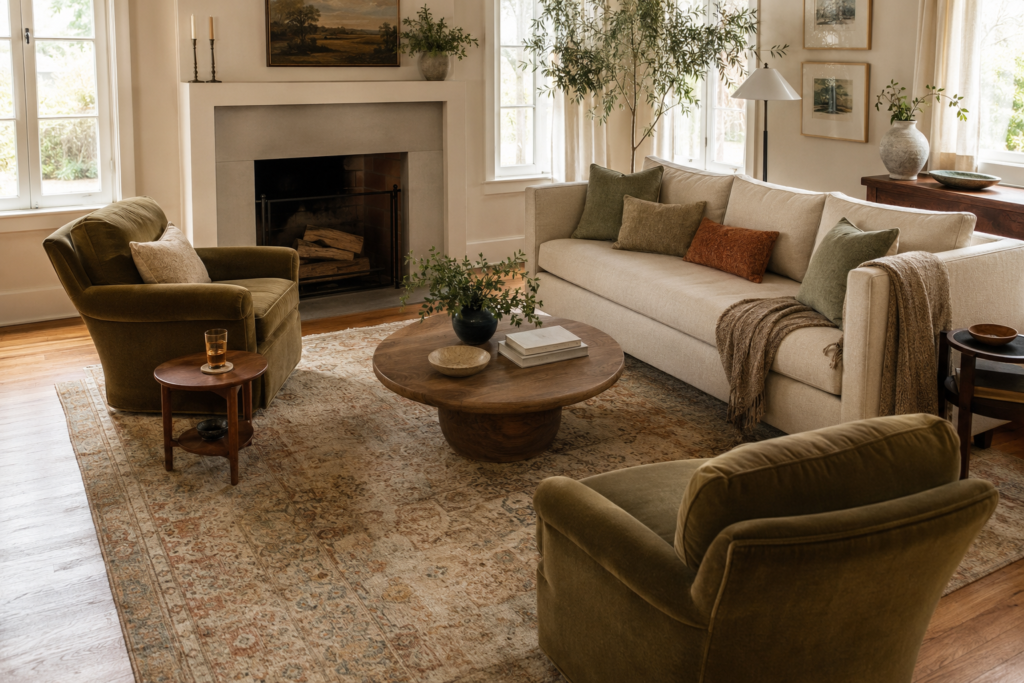
Then, create a conversation area. Place chairs close enough that people can talk without raising their voices. If the room allows it, pull seating several inches away from the walls. That small gap gives the arrangement shape and makes the space feel less like a waiting room.
A well-placed area rug helps define the zone. I prefer a large area rug big enough for at least the front legs of the sofa and chairs to sit on it. A too-small rug often makes a room feel scattered, even when the furniture itself is lovely.
A room feels more welcoming when its furniture supports the way you spend time there, not the way a showroom is arranged.
For a tighter budget, start with what you own. Move an unused dining chair into the living room, add a lumbar pillow, and place a small lamp beside it. A secondhand solid-wood side table can also feel more inviting than a matching set of new furniture.
When exploring small living room ideas, keep walkways clear and look for clever storage solutions. A storage ottoman can replace a bulky coffee table, while a narrow console behind the sofa creates a landing spot for lamps and books. Larger rooms need visual closeness, so avoid pushing every seat to the perimeter.
Cozy Living Rooms Need Layered, Gentle Lighting
Harsh overhead light can flatten even the softest room. I use overhead lighting for cleaning or finding something quickly, but I don’t rely on it for evenings. Lamps create pools of warmth that make the room feel settled, and ambient lighting makes all the difference when you want to relax.
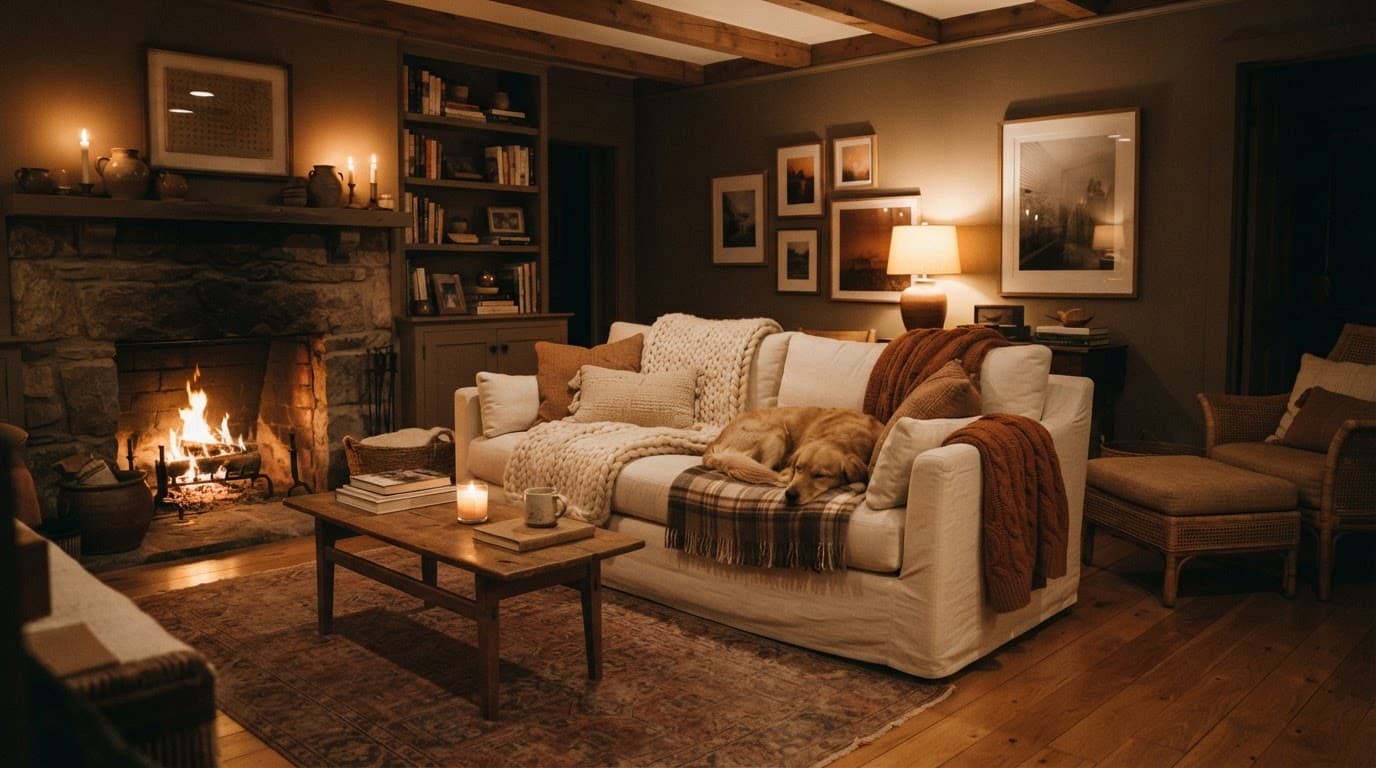
Use at least two or three light sources at different heights. Sturdy floor lamps beside a reading chair, a table lamp on a side table, and a small lamp on a console give the eye somewhere gentle to rest. If you have a fireplace, its glow becomes another layer, though the room should still feel usable when it is not lit.
Look for bulbs around 2700K to 3000K when you want warm or soft-white lighting. A 2700K bulb generally produces the warmer, more traditional glow many people prefer in living rooms.
Dimmers are helpful in a main living area, especially when the room is used for work, family time, and movie nights. If you use LED bulbs, make sure both the bulbs and dimmer are labeled as dimmable and compatible. I also like shades made from linen, paper, or fabric because they soften the light more than clear glass.
Candles add atmosphere, but they should not carry the room alone. Place them in stable holders, keep them away from curtains, throws, children, and active pets, and never leave a burning candle unattended. Battery-operated candles offer a safer alternative for crowded shelves and households with young children or pets.
Common lighting mistakes include placing one small lamp across the room from the seating area, using daylight-white bulbs, and leaving every corner equally bright. Truly cozy living rooms have gentle contrast and warm lighting, meaning you should be able to read on the sofa while the far side of the room stays softly shadowed.
If the budget is limited, replace cool bulbs first. Next, add one thrifted lamp or try out new floor lamps to completely change the atmosphere. Those two changes can shift the mood more than another decorative accessory.
Layer Light at Different Heights
Ambient Light
Use a dimmable ceiling fixture or floor lamp for comfortable general illumination.
Task Light
Place a focused lamp beside the sofa or reading chair where additional visibility is useful.
Accent Light
Add a small console lamp, picture light, or softly illuminated shelf to create depth.
Warm Bulbs
Look around the 2700K–3000K range and verify that LED bulbs are compatible with your dimmer.
Add Warmth With Texture, Color, and Natural Materials
Texture is what makes a neutral room feel rich instead of plain. A cream sofa becomes more inviting when you introduce layered textures, such as a nubby pillow, a washed-linen cushion, and cozy throw blankets folded over one arm. The goal is contrast in surfaces, rather than a pile of identical blankets or matching throw pillows.
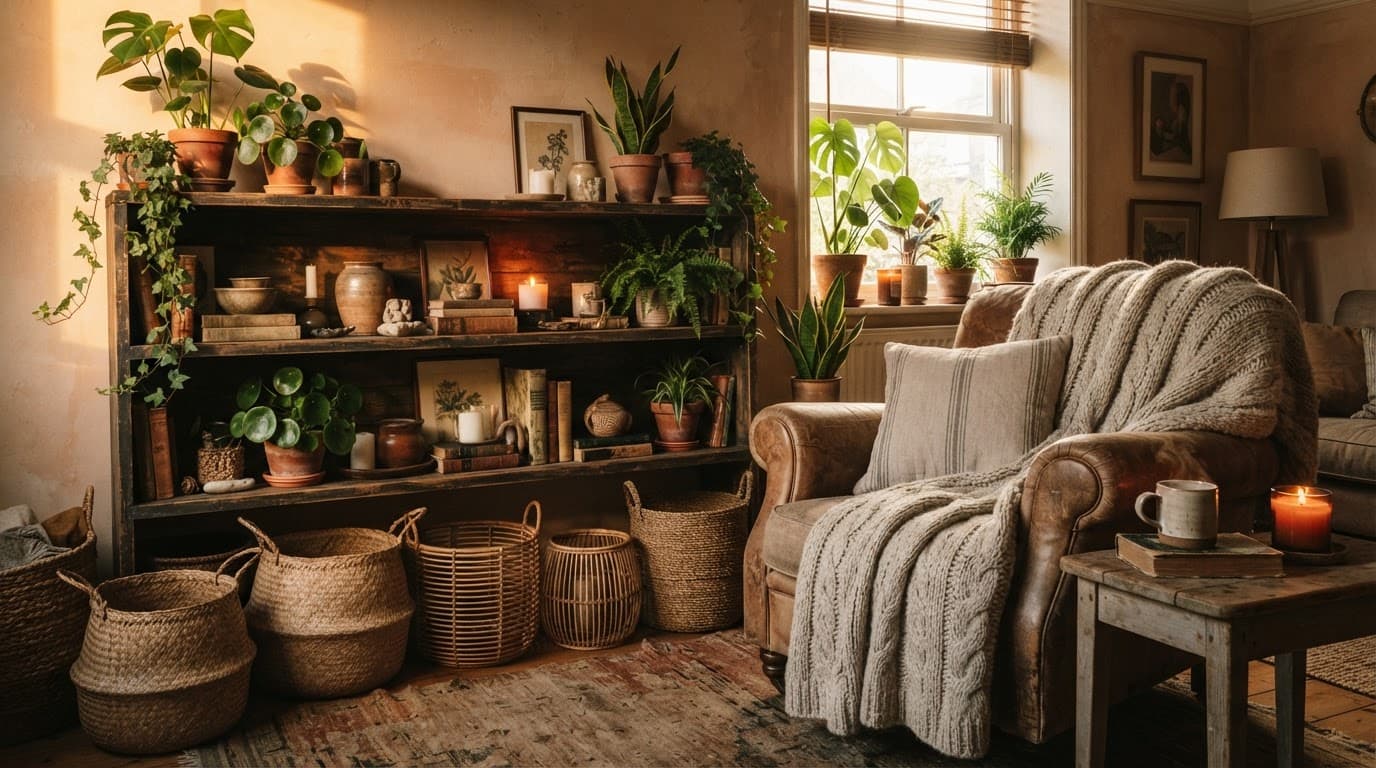
I usually begin with a restrained base, such as warm white, oatmeal, mushroom, muted olive, or soft brown, which builds a welcoming color palette. Then I bring in darker notes through wood, a charcoal pillow, aged brass, or framed art that serves as a subtle focal point. This careful balance keeps pale rooms from feeling washed out while maintaining a cohesive color scheme.
Build a Warm, Relaxed Palette
Begin with a gentle neutral, introduce an earthy supporting color, and use a deeper shade to keep the room from looking washed out.
Using natural materials does much of the heavy lifting in a design project. Wood brings warmth through its grain and imperfect finish. A jute or wool rug gives the floor presence. Woven baskets hold spare throws, magazines, or children’s toys without making storage feel clinical. Even one leafy plant can soften the hard lines of a media console.
You don’t need expensive textiles to make this work. Cotton canvas pillow covers, a simple waffle-weave blanket, and a basket from a local home store can add enough variation. For one investment piece, I would choose a durable rug or a quality throw that you will use often.
Avoid buying every pillow in the same fabric and size. Also skip purely decorative objects that leave no room for a cup of tea, a book, or the remote. A cozy space should feel collected, but it still needs to function.
For visual depth, use a mix of rounded and straight forms. A square sofa, round coffee table, curved lamp base, and woven basket create a relaxed rhythm without making the room feel busy.
Choose Contrast Instead of More Stuff
Something Soft
A wool throw, washed-linen pillow, or cotton blanket.
Something Woven
A basket, jute rug, cane detail, or textured lampshade.
Something Natural
A wooden table, ceramic bowl, stone detail, or leafy plant.
Something Personal
A favorite book, family photograph, collected pottery, or art.
Make the Room Personal Without Adding Clutter
The warmest rooms reveal something about the people who live there. Swapping out generic living room decor for a stack of well-read books, a framed family photograph, pottery from a trip, or art made by a child can carry more feeling than a shelf full of store-bought items.
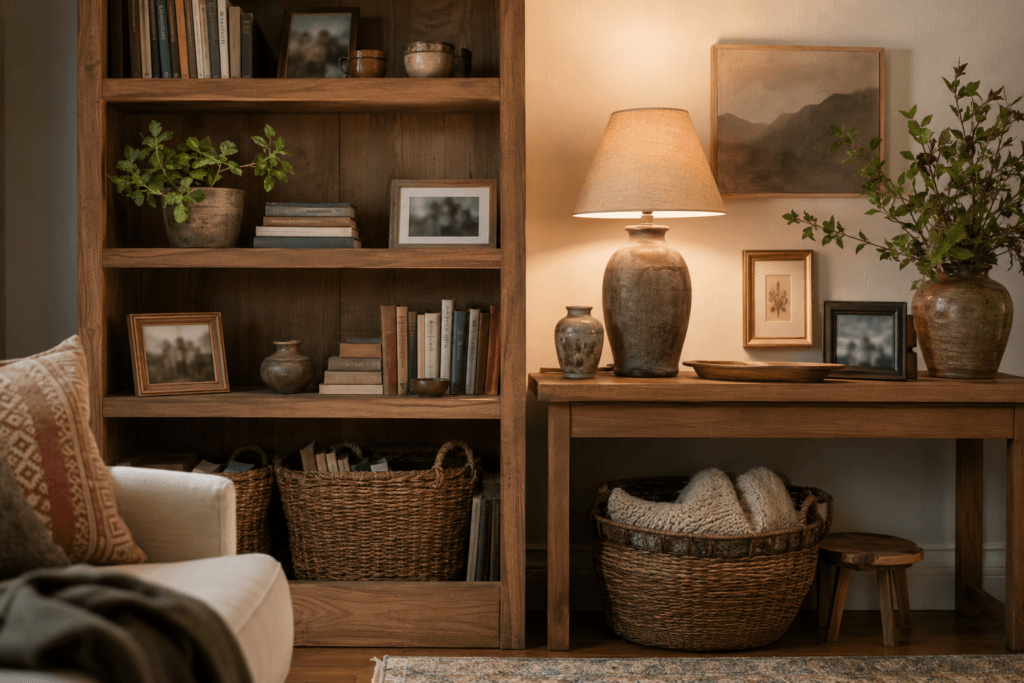
I keep surfaces edited, but I don’t aim for emptiness. Your coffee table can hold a tray, a candle, and one or two books to anchor the seating area. A mantel or console looks more natural when objects vary in height and material. Leave open space around your coffee table decor so each item can breathe.
Built-in bookshelves benefit from the same restraint. Group books in a few loose stacks, then add a plant, small bowl, or framed print. If every shelf is full edge to edge, the eye has nowhere to pause. Closed baskets or cabinets help hide chargers, game pieces, and other useful clutter.
A television can make a living room feel less restful when it dominates the wall. If possible, choose a low media console that grounds it. Add lamps, art, or shelves nearby so the screen becomes one part of the room rather than its whole purpose.
For renters, removable picture-hanging strips and lightweight frames may allow you to create a gallery wall without making nail holes. Follow the strip manufacturer’s surface, preparation, and weight instructions, and check your lease before making changes. If your lease permits painting—or your landlord approves it—a subtle accent wall can create a cohesive backdrop for your art. Removable wallpaper may offer another option, although it is wise to test it in an inconspicuous area first. I also like leaning framed pieces on a console or shelf. It feels relaxed and lets you swap items whenever your gallery wall needs a small refresh.
Adapt the Cozy Look to Your Budget and Room Size
Small budgets benefit from patience. You do not need to hire an interior designer to achieve a warm home, because simple small living room ideas can transform your space over time. I recommend choosing one problem to solve first, such as poor lighting or uncomfortable seating. Then spend where your body notices the difference. A supportive accent chair, thick rug pad, or quality lamp will serve you better than a cart full of small decor.
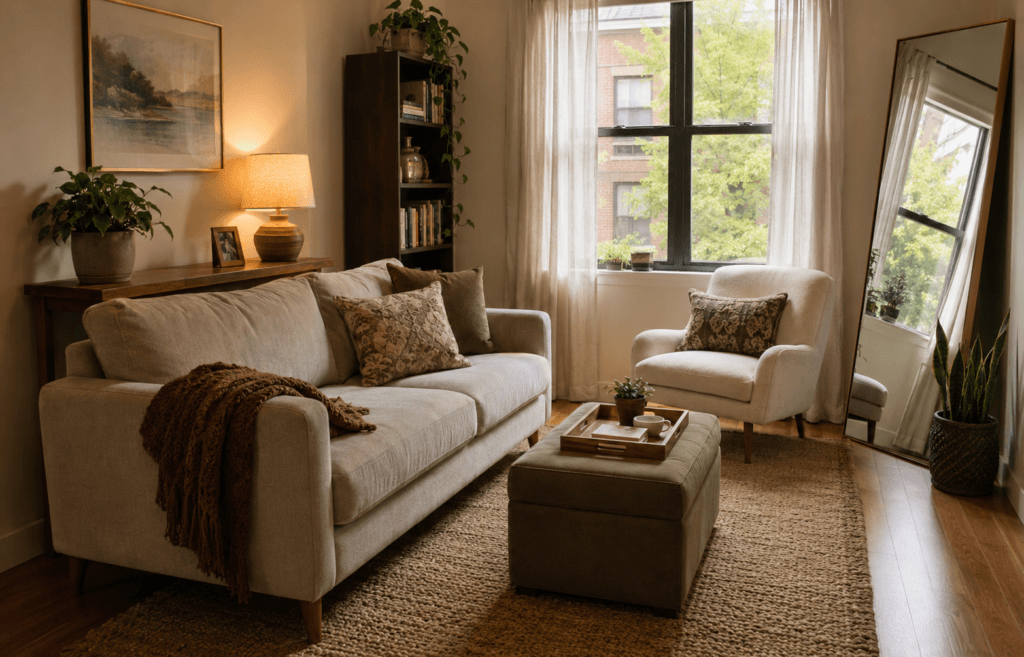
Secondhand shopping is especially useful for wooden furniture, lamps, frames, baskets, and side tables. A thrifted vintage table can easily become a striking statement piece with minimal effort. Check that drawers work, surfaces are stable, and upholstered pieces are free from stains, odors, damage, and signs of pests. The EPA recommends carefully inspecting second hand couches and other furniture for bed bugs before bringing them into your home. A fresh shade or a coat of paint can update an older lamp without erasing its character.
Check Secondhand Furniture Carefully
- Test drawers, doors, joints, and legs for stability.
- Inspect upholstery for stains, odors, tears, and pest activity.
- Look closely along seams and underneath cushions for bed bugs.
- Examine lamp cords, plugs, switches, and sockets for damage.
- Clean each item appropriately before placing it in the room.
In a small room, choose furniture with visible legs and avoid too many matching storage cubes. A mirror positioned opposite or at an angle to a window can reflect daylight farther into the room. Test the placement to avoid glare and make sure it reflects a view you want to emphasize. Use vertical space for art or a slim bookcase, but leave the floor open enough to move comfortably. When working with compact layouts, clever window treatments let in maximum natural light while keeping the room feeling open.
A larger living room needs zones. Create one area for conversation and another for reading, games, or a desk. A consult with an interior designer can help you map out these larger footprints, or you can test arrangements yourself. Repeat a color or material between zones, such as oak, rust-colored fabric, or black metal, so the room still feels connected.
Cozy living rooms do not need constant replacement. When you want to refresh a statement piece or update your decor, try changing pillow covers with the seasons, washing throws, trimming plants, and shifting a few objects. Familiar pieces can feel new again when you see them in a different spot.
A Four-Step Cozy Living Room Refresh
Replace cool bulbs and add a lamp beside the seat you use most.
Clear walkways and bring conversation seating a little closer.
Try a rug, throw, pillow cover, or woven basket instead of several small decorations.
Finish with books, photographs, art, or another object that means something to you.
Creating a Cozy Living Room
Practical answers for improving your lighting, furniture arrangement, textures, and overall comfort.
How can I make my living room cozy on a budget?
Begin with what you already own. Rearrange the furniture to improve conversation and movement, replace cool bulbs with warm 2700K to 3000K options, and add a thrifted lamp. Textured pillow covers, blankets, baskets, books, and personal photographs can also make a noticeable difference without requiring a large decorating budget.
What lighting works best in a cozy living room?
Use two or three light sources positioned at different heights instead of relying entirely on one bright overhead fixture. Warm bulbs around 2700K to 3000K, table lamps, floor lamps, and fabric shades create softer pools of light. When using a dimmer, confirm that the LED bulbs and dimmer are compatible.
How do I choose the right rug size for my living room?
Choose a rug large enough for at least the front legs of the sofa and nearby chairs to rest on it. This helps connect the seating arrangement and makes the room look more settled. Measure the furniture grouping before buying rather than estimating the rug size from the room alone.
How can I make a small living room feel cozy without crowding it?
Choose fewer pieces that serve a clear purpose and keep the main walkways open. Furniture with visible legs can preserve a sense of floor space, while a storage ottoman or narrow console provides function without adding several small storage units. Use vertical space for art, lighting, or a slim bookcase.
What colors make a living room feel warmer?
Warm white, oatmeal, mushroom, muted olive, soft brown, and gentle rust tones can create an inviting foundation. Add deeper accents through dark wood, charcoal fabric, aged brass, or framed art so pale colors do not feel washed out.
How do I add personality without making the room look cluttered?
Display a small selection of meaningful objects rather than filling every surface. A few well-read books, a family photograph, travel pottery, or a favorite piece of art can give the room character. Leave open space around displayed items and use baskets or closed cabinets for chargers, games, and everyday clutter.
A Living Room You Will Want to Use
Comfort comes from choices that suit your real routines. Good lighting, useful seating, varied textures, and personal details create a room that feels warm without becoming crowded.
I have learned to make changes slowly and live with them before adding more. The best cozy living rooms reflect real daily living rather than an overly polished catalog setup. Combining a thoughtful layout, functional living room decor, and subtle warmth can turn an ordinary room into a place that feels comfortable, personal, and genuinely enjoyable to use.