
A basket can hide the everyday mess that makes a peaceful room feel unfinished. With the right basket storage ideas, you can keep useful things close without filling every surface with bins, drawers, and plastic containers.
I use baskets where a closed cabinet would feel too heavy or inconvenient. They soften open shelves, give loose items a home, and bring texture to rooms that need warmth. Start with what you need to store, then choose baskets that fit the space and the way you live.
This post may contain affiliate links. If you make a purchase through these links, I may earn a small commission at no extra cost to you.
How Can You Use Baskets Without Creating More Clutter?
Measure the available space first, then give every basket one specific purpose. Choose open baskets for things you use daily and lidded baskets for seasonal or less attractive items. Repeat one or two basket materials throughout the room, add simple labels where needed, and leave some open space around them so the arrangement still feels calm.
Key Takeaways
- ✓ Measure the shelf, cabinet, or floor space before buying a basket.
- ✓ Group similar items together so each basket has one clear job.
- ✓ Match the basket material to the room and what you plan to keep inside.
- ✓ Use simple labels and washable liners to make storage easier to maintain.
- ✓ Leave some open space around baskets so cozy storage still looks calm.
Start Basket Storage Ideas With a Plan
Baskets look effortless when they fit their surroundings, but a little planning prevents expensive mistakes. I have bought beautiful baskets that were too tall for a shelf and too wide to sit beside a chair. They quickly became clutter themselves.
First, measure the inside width, depth, and height of the storage spot. For a shelf, allow at least one inch of breathing room on each side. You need enough clearance to lift the basket out without scraping the wall or knocking nearby decor over.
If you are placing baskets under a console table or bed, measure the lowest point of the furniture. Include the basket handles in your height calculation. Flexible rope handles can bend, while fixed wooden or metal handles need extra room.
Measure Before You Buy
Record the width, depth, and height of the available space. Include fixed handles in the basket’s total height, and leave enough clearance to lift it out comfortably. For open shelving, about one inch of space on each side usually prevents the arrangement from feeling cramped.
Then, measure the items you want to store. A basket for rolled bath towels needs different dimensions than one for board games or winter scarves. Instead of estimating, place the items in a laundry basket or cardboard box to see how much volume they take up.
I also decide whether the basket will be used every day. Frequently used items belong in open-top baskets with easy handles. Seasonal decor, extra bedding, and paperwork can go in lidded styles or baskets on higher shelves.
A basket only reduces visual noise when its contents fit without spilling over the rim.
The One-Basket Rule
Give each basket one clear job. A blanket basket should hold blankets, while chargers, mail, pet toys, and other unrelated items get their own designated homes. The simpler the purpose, the easier it is to reset the room.
Try: One blanket basket and one small tray or lidded container for loose essentials
Choose Basket Materials That Suit Each Room
Natural fibers add warmth, although each material has a different feel and level of durability. Choosing carefully keeps your storage attractive for longer.
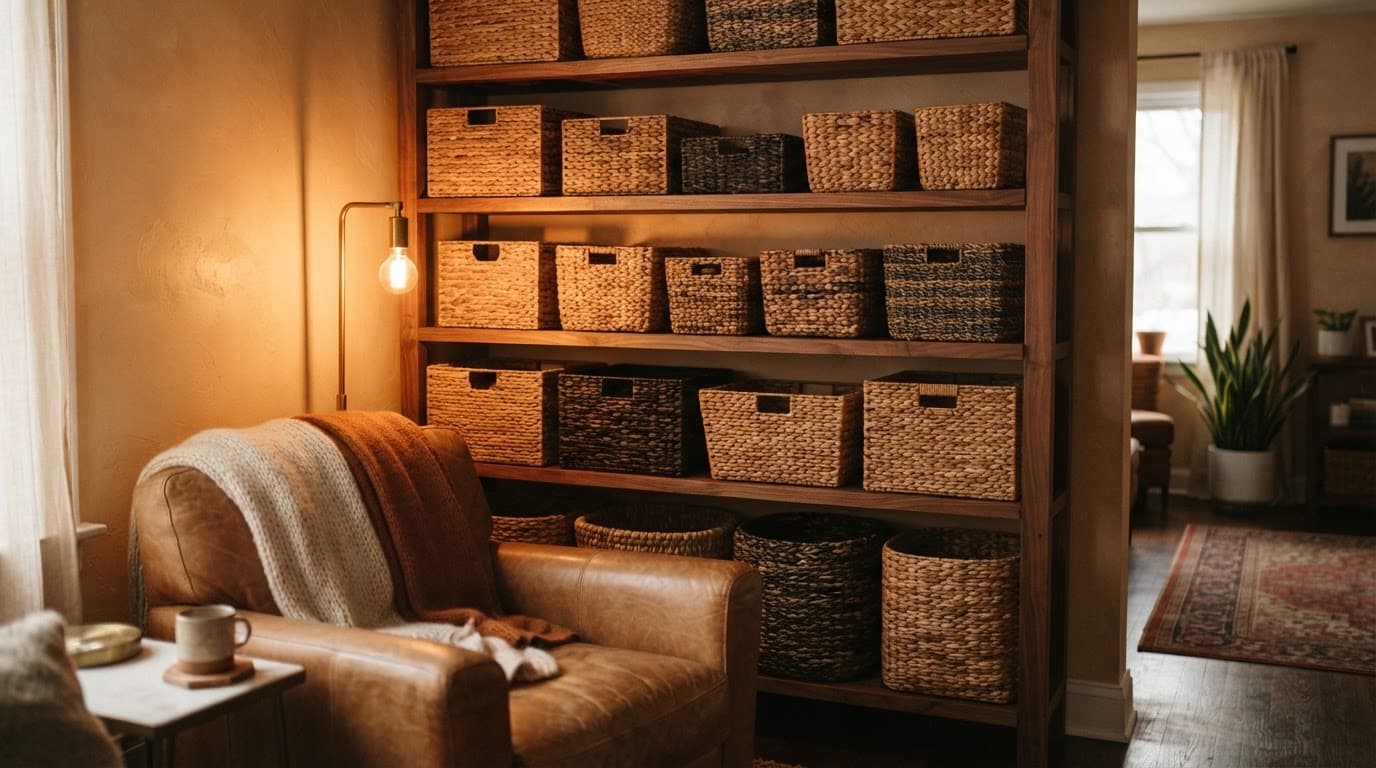
Seagrass and water hyacinth have a relaxed, woven texture that works well in living rooms, bedrooms, and entryways. Their uneven color gives a room a collected look. I use them for blankets, magazines, guest slippers, and lightweight toys.
Rattan and wicker feel more structured. These baskets often hold their shape, so they are useful on open shelving and in cubby units. Look for a tightly woven base if you plan to store small pieces such as remote controls, art supplies, or socks.
Jute has a soft, earthy appearance. It pairs naturally with linen, wood, and knit textiles. Because it is flexible, a jute basket works well for extra throws or stuffed animals. However, it can sag if you pack it with heavy books.
Cotton rope is gentle on furniture and safe around children. It is a strong choice for a nursery, bathroom, or bedroom because it has no sharp woven ends. Many rope baskets can be spot-cleaned, and some are machine-washable.
Wire and metal baskets suit a more rustic kitchen, laundry area, or mudroom. Use them for potatoes, cleaning cloths, or spare linens. A fabric liner prevents small items from slipping through and makes the look less industrial.
For damp rooms, avoid untreated natural fibers near splashing water. A washable fabric bin, plastic basket with a woven look, or powder-coated metal option is often more practical. I keep true seagrass baskets away from wet towels because trapped moisture can lead to odors and mildew.
Budget-friendly choices are easy to find. IKEA, Target, Walmart, HomeGoods, thrift stores, and flea markets often carry simple woven or rope baskets. When I shop secondhand, I check the base, handles, and weave for breaks before bringing one home.
Basket Material Comparison
| Material | Best Uses | Main Advantage | Keep in Mind |
|---|---|---|---|
| Seagrass or Water Hyacinth | Blankets, magazines, slippers, and lightweight toys | Warm, relaxed texture with natural color variation | Keep away from persistent moisture |
| Rattan or Wicker | Open shelves, cubbies, accessories, and small household items | Structured appearance that generally holds its shape | Rough edges may snag delicate fabrics |
| Jute | Throws, stuffed animals, pillows, and lightweight clothing | Soft, earthy appearance that complements cozy textiles | Flexible sides may sag under heavy contents |
| Cotton Rope | Nurseries, bedrooms, bathrooms, and children’s spaces | Soft against furniture and comfortable to handle | Check the care label before washing |
| Wire or Metal | Kitchens, pantries, laundry rooms, and mudrooms | Durable, visible storage with good airflow | Small items may require a washable liner |
| Washable Fabric | Bathrooms, laundry areas, closets, and children’s rooms | Lightweight and easier to clean | May not hold its shape when partly empty |
Put Baskets to Work in Everyday Rooms
The most useful basket storage ideas solve a small annoyance in a room you use often. Begin with the places where items collect on chairs, counters, and floors.
Easy Basket Storage Ideas by Room
Living Room
Store blankets, magazines, toys, game controllers, remotes, or spare candles.
Entryway
Collect shoes, gloves, hats, dog leads, reusable bags, or outgoing mail.
Bedroom
Organize extra pillows, knitwear, charging cables, hair tools, or seasonal accessories.
Bathroom
Separate washcloths, toilet paper, toiletries, guest towels, or cleaning cloths.
Make the living room easier to reset
Place a large basket beside the sofa for blankets that otherwise drift over every armrest. A medium basket near the coffee table can hold children’s books or a few current magazines. Keep the basket’s height below the table if you want an open sightline across the room.
I prefer a tray-style basket on an ottoman for remotes, coasters, and a candle. It contains the little items without looking like a catchall. At night, putting those pieces back takes less than a minute.
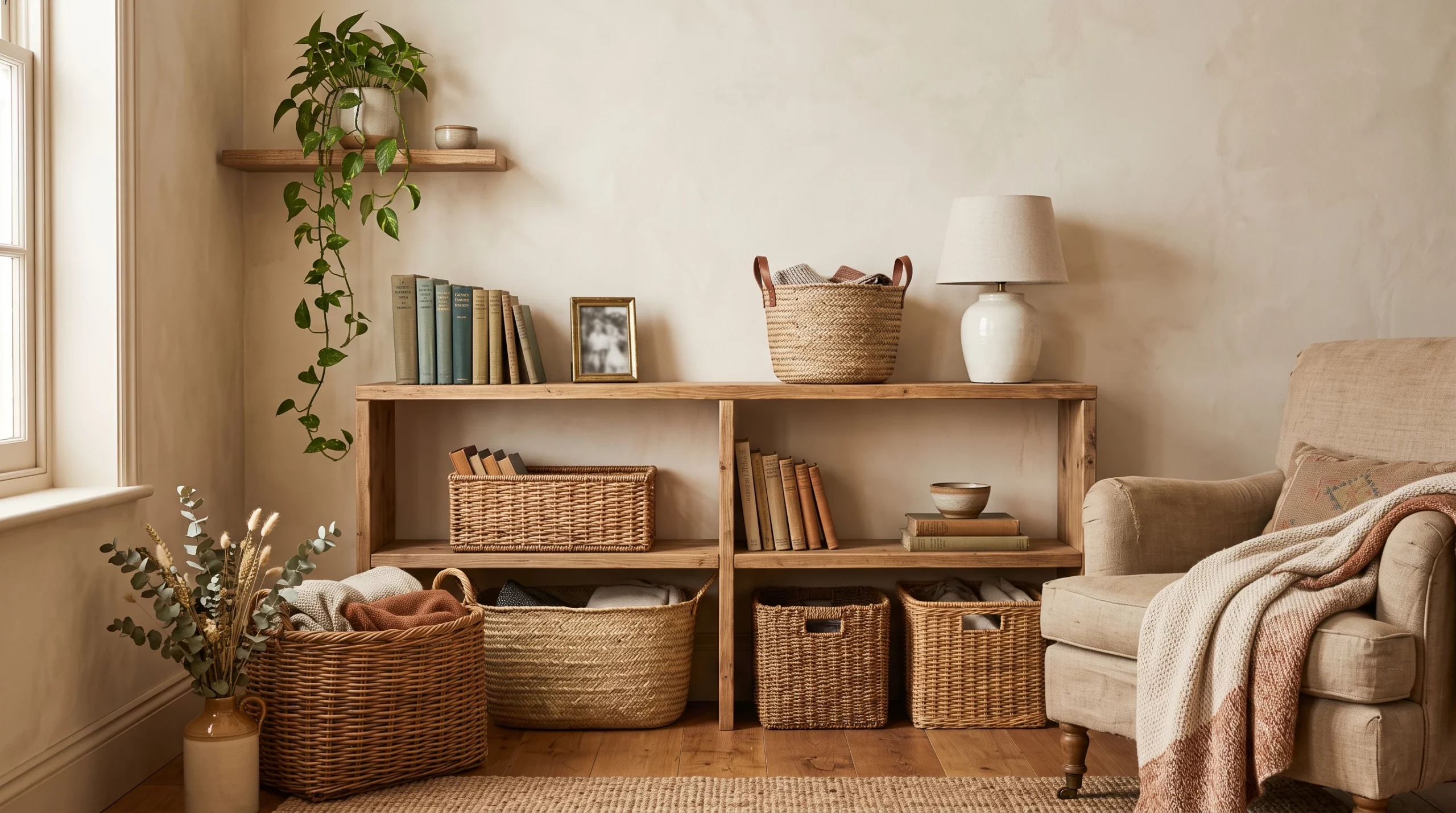
For open shelving, use matching baskets across the lower rows. They hide less attractive items such as game controllers, cords, and spare candles. Keep a few shelves open for books and meaningful objects, or the room can feel overly boxed in.
Calm a busy entryway
An entry basket works best when it handles one routine. Put a sturdy, low-sided basket by the door for shoes, especially slippers and easy slip-on pairs. A narrow handled basket on a console can hold outgoing mail, dog leads, and reusable shopping bags.
In a small entry, a lidded basket can double as decor. Choose one sturdy enough to sit under a bench, then use it for hats and gloves. This small habit stops cold-weather gear from spreading through the house.
Add gentle order to bedrooms and bathrooms
A bedroom often needs storage that doesn’t resemble storage. At the foot of the bed, a wide basket can hold a folded quilt or extra pillows. On a dresser, a small lidded basket keeps hair tools and charging cables out of sight.
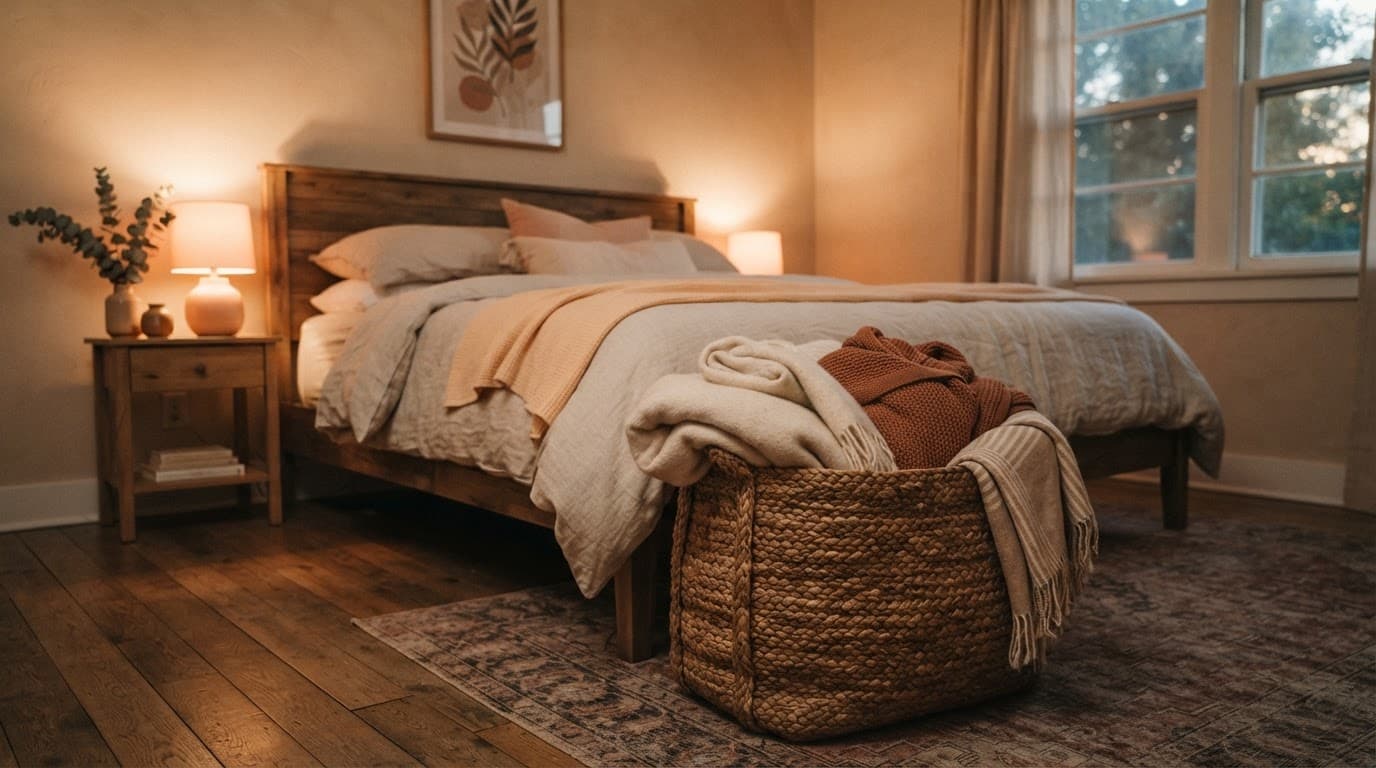
In the bathroom, use shallow baskets to separate washcloths, toilet paper, and everyday toiletries. Roll towels before storing them if shelf depth is limited. I like a removable cotton liner for anything that may be damp or dusty.
A woven basket also suits a relaxed bedroom style. Folded knitwear looks especially inviting when stored in a natural-fiber basket.
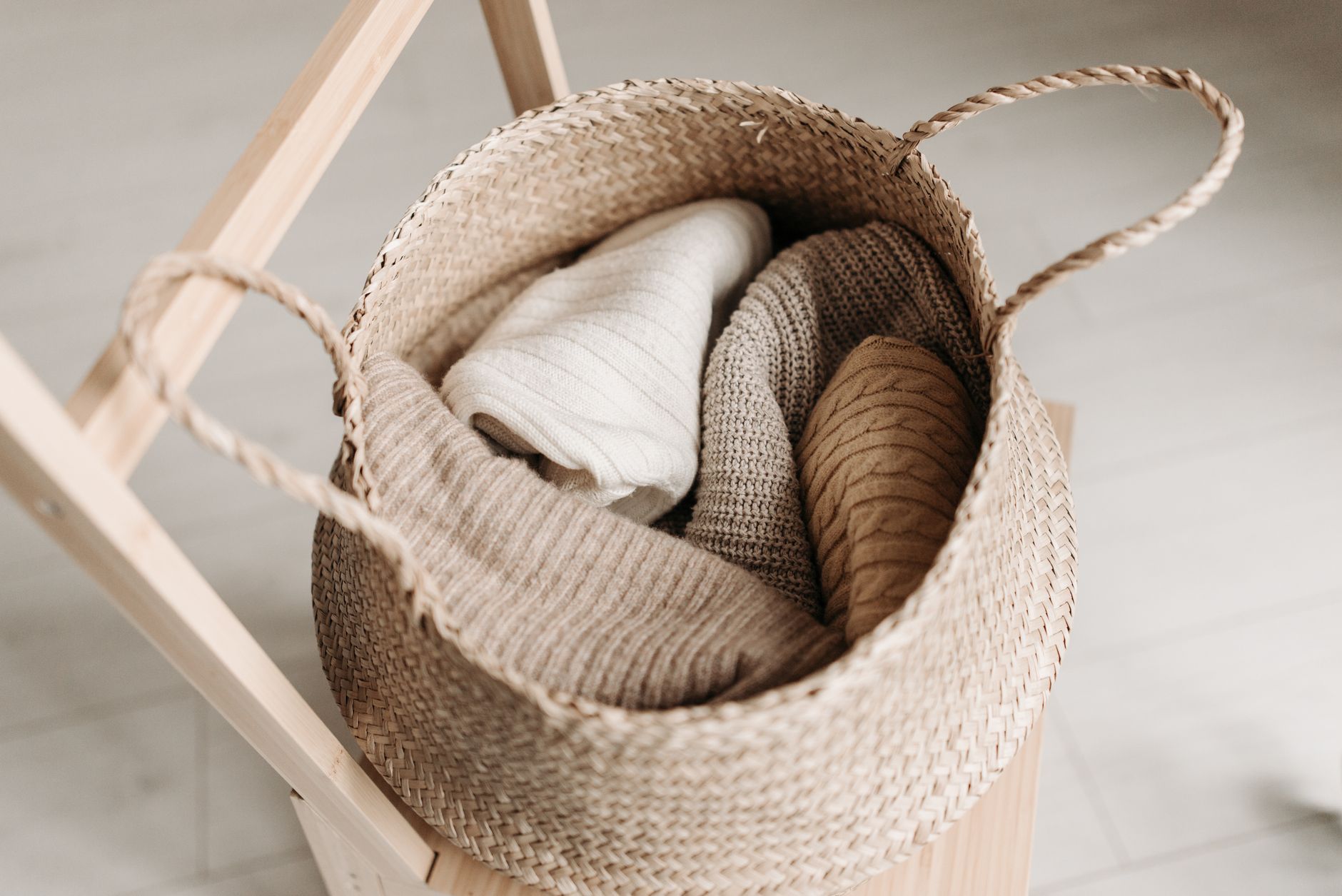
Photo by Pavel Danilyuk
Group, Label, and Line Baskets for Real Life
A room stays orderly when you can tell where an item belongs at a glance. Group by use rather than by vague categories. For example, keep all supplies for a weekly movie night in one basket, including the remote, a charging cable, and a soft throw. A separate basket can hold pet grooming supplies.
Labels are helpful in closets, pantries, and shared family spaces. A small kraft-paper tag tied to the handle looks warm and casual. For baskets that get heavy use, I prefer a simple clip-on label holder or a chalkboard tag. Use short names such as “cables,” “scarves,” or “dog towels.”
If you want a cleaner look, place the label on the back or inside rim. You still get the benefit of order without covering the basket’s texture.
Liners make rough or open-weave baskets more useful. A plain cotton pillowcase can work as a low-cost liner for yarn, baby clothes, or small toys. Cut a piece of sturdy cotton fabric slightly larger than the inside, then fold the top edge over the rim. Washable liners are especially useful in the laundry room and bathroom.
Avoid filling every basket to the top. Leave a couple of inches below the rim for flexible contents, such as blankets or scarves. Small items can go into a fabric pouch inside the basket, so they don’t disappear into the bottom.
Keep Storage Baskets Looking Intentional
Baskets can create visual clutter when every surface gets one. I treat them like accent furniture rather than scattered containers. Repeating one or two materials throughout a room feels settled, while too many colors and weaves can look busy.
Vary the size, not every detail. A tall floor basket beside a sofa pairs well with two smaller shelf baskets in a similar natural tone. In contrast, five different baskets lined across a mantel can make the room feel crowded.
Use the empty space around baskets as part of the arrangement. On a shelf, leave room for a framed photo, a small lamp, or a stack of books. Near furniture, don’t wedge a basket into every gap. You need enough clear floor to make the room feel restful.
Maintenance matters, too. Shake out crumbs and dust every few weeks. Vacuum woven baskets with a brush attachment on low suction. For spills, blot right away with a barely damp cloth, then let the basket air-dry completely. Natural materials last longer when they stay dry and out of harsh sunlight.
Rotate baskets as your needs change. A blanket basket may become a toy basket in summer, while a winter entry basket can move to the bedroom when gloves and hats are no longer needed. This keeps storage useful without constantly buying more.
Explore Basket Storage for Every Room
Looking for woven floor baskets, shelf baskets, lidded storage, or soft cotton-rope designs? Browse Amazon’s current selection and compare sizes, materials, colors, and customer reviews before choosing.
Explore Basket Storage on Amazon As an Amazon Associate, I earn from qualifying purchases at no additional cost to you.Create Cozy Storage That Feels Like Home
The best basket storage ideas make daily routines easier while adding warmth to the room. Measure first, choose a material that suits the space, and give each basket a clear purpose.
I have found that one well-placed basket often does more than several small containers. It holds the things you use, softens the room, and leaves more space for the details that make home feel comfortable and lived in.
Frequently Asked Questions
What should I store in baskets around my home?
Baskets work well for blankets, pillows, toys, magazines, toiletries, washcloths, shoes, seasonal accessories, pet supplies, cables, and other small items that tend to collect on furniture or floors. Give each basket one purpose so its contents remain easy to find.
How do I choose the correct basket size?
Measure the width, depth, and height of the available space before shopping. Include fixed handles in the total height and leave enough clearance to remove the basket easily. It also helps to group the items you intend to store and measure their approximate volume.
Which basket material is best for a living room?
Seagrass, water hyacinth, rattan, wicker, jute, and cotton rope all work well in living rooms. Structured rattan or wicker suits shelves, while flexible jute and cotton-rope baskets are comfortable choices for blankets, pillows, and toys.
Can natural-fiber baskets be used in a bathroom?
They can be used in a well-ventilated bathroom if kept away from splashing water and consistently damp items. Washable fabric, coated metal, or moisture-resistant baskets are generally more practical near sinks, showers, and wet towels.
How can I keep basket storage from looking cluttered?
Repeat one or two similar materials or colors, vary the basket sizes, and leave open space around them. Avoid placing a basket in every available gap. Mixing storage with books, lamps, framed photographs, or a few meaningful objects creates a calmer arrangement.
Should storage baskets have labels?
Labels are especially helpful in closets, pantries, children’s rooms, and shared spaces. Use short names such as “scarves,” “cables,” or “dog towels.” If you prefer a cleaner appearance, place the label on the back or inside rim.
How do I clean woven storage baskets?
Remove loose dust with a soft brush or a vacuum brush attachment on low suction. Blot spills with a barely damp cloth and allow the basket to air-dry completely. Always follow the manufacturer’s care instructions, particularly for dyed fibers and washable rope baskets.