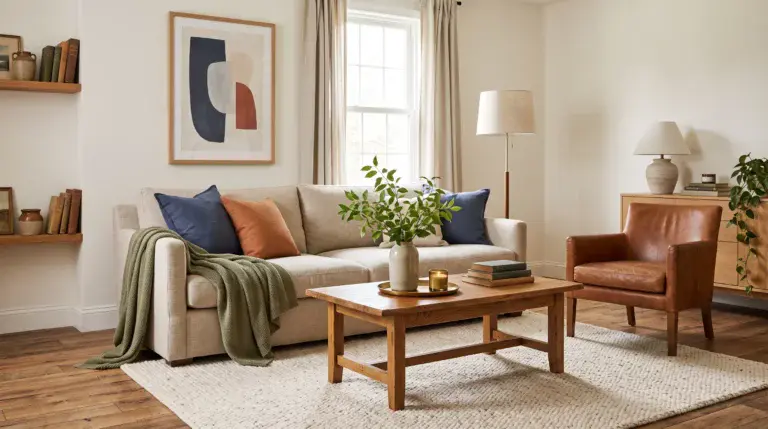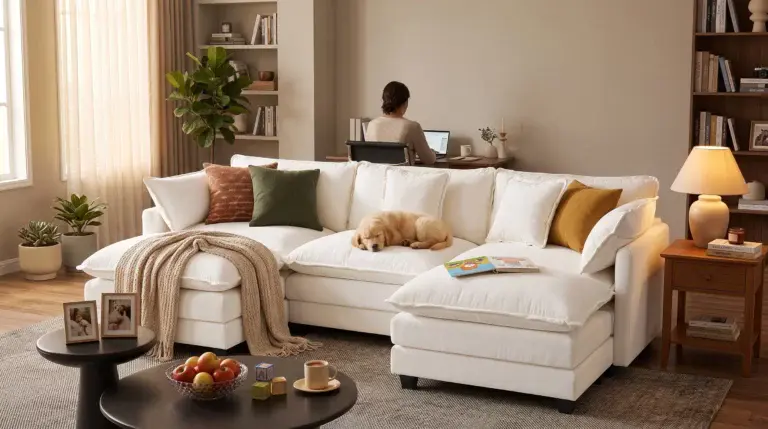

Blankets spill from the sofa, papers cover the coffee table, toys drift underfoot, and remotes disappear beneath a pile of decor. A cluttered living room can make even a favorite room feel hard to use.
I don’t believe a cozy space needs to look perfect. It needs clear surfaces, useful storage, and enough open floor to move comfortably. My approach keeps the warmth, memories, and personality while making daily life easier.
This post may contain affiliate links. If you make a purchase through these links, I may earn a small commission at no extra cost to you.
Quick Answer
A cluttered living room becomes calm by giving every item a clear home, clearing walking paths first, choosing hidden storage that fits your daily habits, and doing a five-minute reset each evening. The goal is comfort and function, not bare minimalism.
Key Takeaways
- Keep items near the places where you naturally use them.
- Clear walking paths before styling shelves or tabletops.
- Choose storage that hides daily mess without hiding your personality.
- Use warm light, texture, and meaningful objects to keep the room inviting.
- A five-minute reset prevents small piles from becoming permanent clutter.
Find the Real Reasons Behind a Cluttered Living Room
A cluttered living room usually points to a practical problem, not a lack of effort. Items may have no real home, furniture may overwhelm the footprint, or one room may be handling movies, homework, playtime, and hosting.
First, notice what happens there on an average week. You may read, work, watch sports, build puzzles, or welcome friends. Those routines should guide what stays accessible.
Visual clutter also matters. Overfilled shelves, loose paperwork, too many tiny accessories, crowded walls, and toys across the floor can make a tidy room feel busy. I like choosing three mood words, such as “calm, warm, welcoming,” before I start. Then I relocate anything that works against that feeling.
Did You Know
A study from UCLA’s Center on Everyday Lives found that managing household clutter ranks among the top stress triggers at home. Clearing visible surfaces can reduce that stress without requiring a full renovation or expensive systems.
Separate Everyday Essentials From Visual Noise
Sort each item into four groups: keep nearby, store elsewhere, donate, or discard. Keep favorite books, meaningful photographs, useful throws, and anything that supports your current routines.
Empty space gives the pieces you love room to matter. A shelf doesn’t need decor in every gap, and a tabletop doesn’t need to carry a collection.
A room can look lived in without putting every part of daily life on display.
Check Furniture Size, Placement, and Walking Paths
Too much furniture makes a room feel crowded even after you clear every surface. Measure before buying, leave pathways open, and remove pieces that rarely earn their footprint.
One well-sized sofa with one or two chairs often feels friendlier than a cluster of small seating. Keep doorways clear, and make sure people can reach a seat without weaving through tables or baskets.
Declutter the Living Room Without Losing Its Cozy Feeling
Start with the floor, because clear space changes the room immediately. Next, empty tabletops and return loose objects to their proper places. Finally, work through drawers, cabinets, and shelves one zone at a time. If you want a structured approach for a deeper clean, Apartment Therapy’s 20-minute living room declutter guide breaks the process into manageable steps.
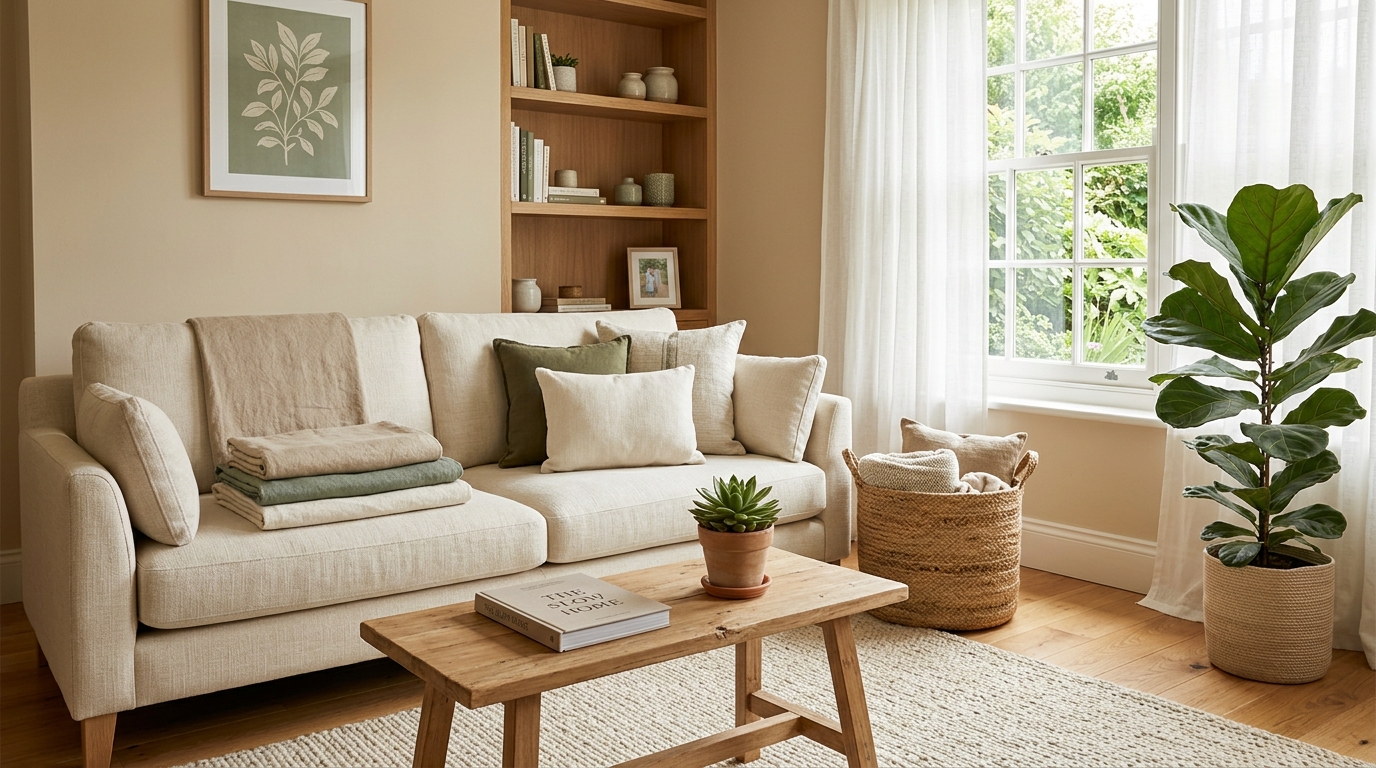
The goal isn’t bare minimalism. I keep coziness through soft textiles, warm wood, ceramics, plants, and personal details. If you want to go deeper on layering comfort and warmth, my guide to a hygge-inspired living room walks through the full approach. A narrow color palette also helps: warm neutrals, earthy greens, or muted blues can carry the room, while darker accents add depth.
Natural light deserves attention, too. Open curtains fully during the day when privacy allows, since daylight makes a crowded room feel less closed in.
My Pick
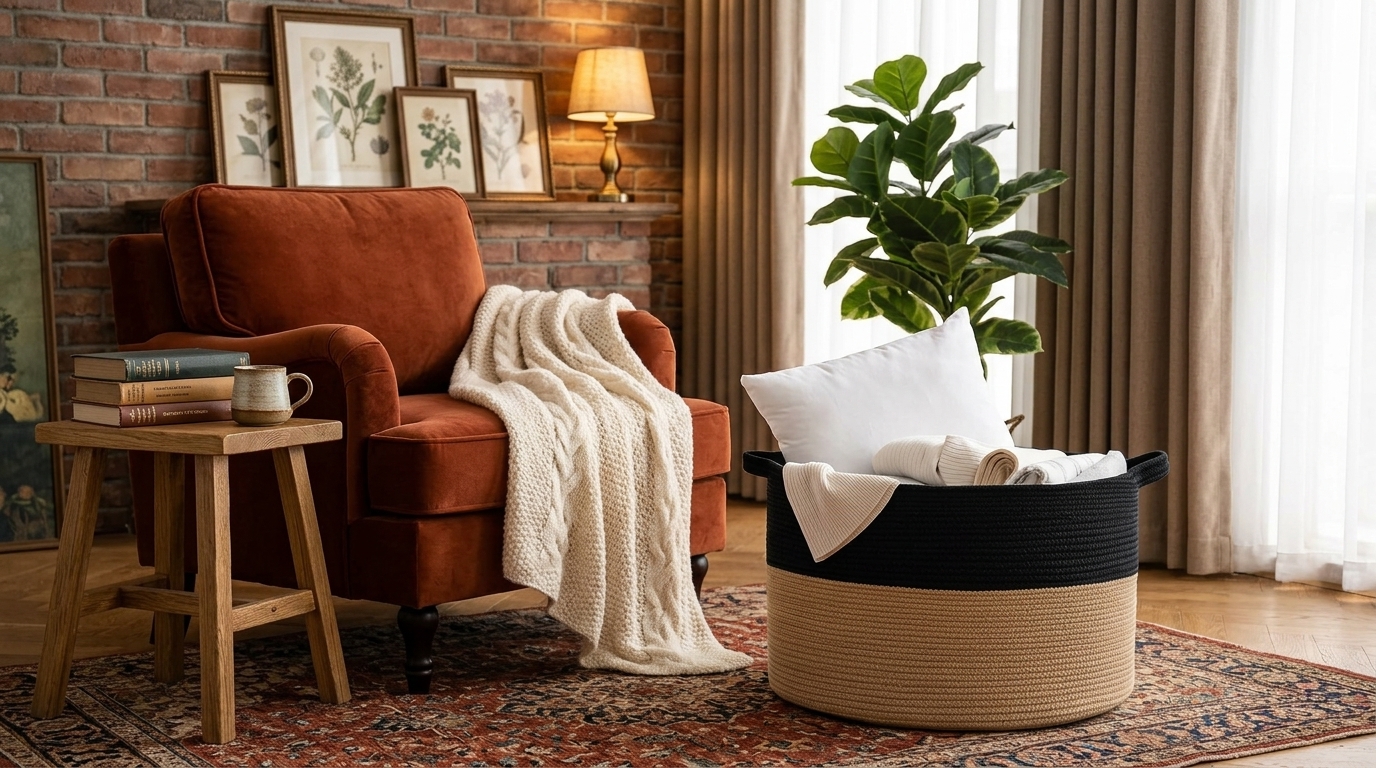
MEGASKET Extra Large Cotton Rope Storage Basket
Holds multiple throw blankets, sits neatly beside the sofa, and the neutral two-tone weave blends with warm decor. Machine washable and safe for kids.
Check Price on AmazonAs an Amazon Associate I earn from qualifying purchases.
Use Hidden Storage for Remotes, Toys, and Throws
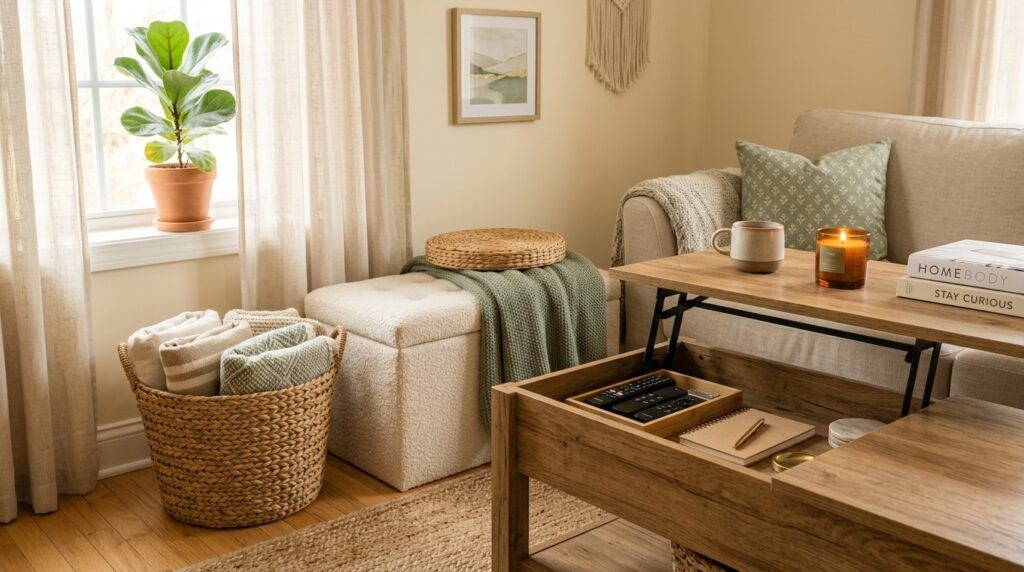
Choose storage based on what you actually reach for. A lift-top coffee table, storage ottoman, lidded basket, slim console with drawers, wall shelf, or closed cabinet can keep essentials close without leaving them scattered.
Give current books or blankets one dedicated basket. If children use the room, place a toy basket near their usual play spot rather than allowing toys to spread over every surface. Natural materials such as woven seagrass, wood, bamboo, and cotton rope add texture while doing the work. For more ideas on choosing and placing baskets room by room, see my basket storage ideas for a cozy, tidy home.
Keep Decor Personal, Edited, and Easy to Maintain
Display the objects that tell your story: family photos, travel finds, handmade pottery, well-read books, and a few healthy plants. Using natural elements to add warmth goes deeper on how wood, stone, and greenery shape a room’s feel. Rotate seasonal pieces instead of showing every collection all year.
One large artwork, or a small thoughtful grouping, often looks calmer than many tiny frames competing for attention. I also find that dusting is much easier when shelves have breathing room.
Make the Room Feel Calm, Warm, and Ready to Use
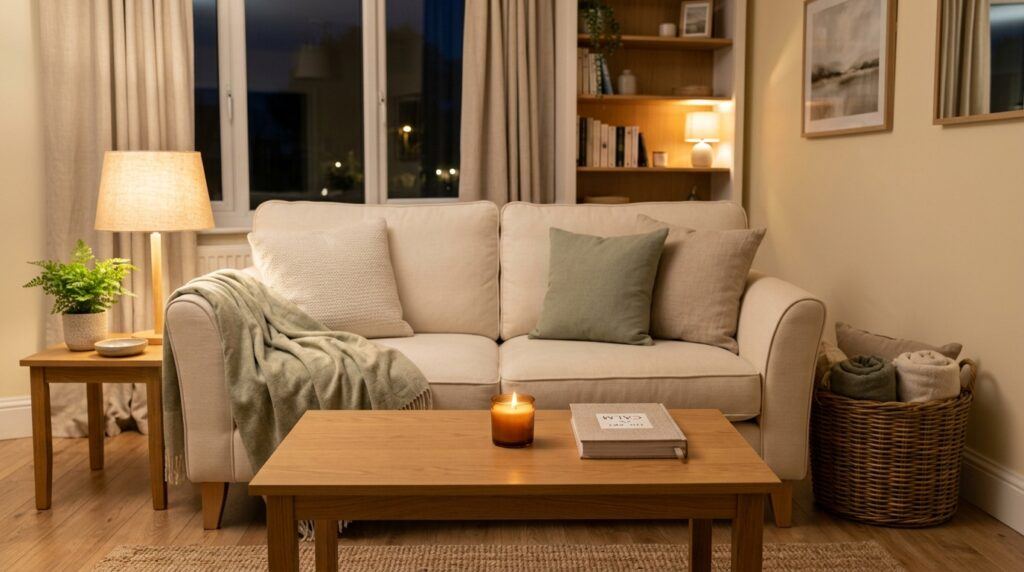
Once the clutter is under control, arrange seating for connection. Place the coffee table close enough for a drink or board game, but far enough away to leave an easy route through the room.
A large rug should hold at least the front legs of your main seating. Then layer in a linen throw (here’s how to choose the perfect throw blankets for material, weight, and size), wool pillow covers, wood surfaces, ceramics, and one or two plants. These materials bring softness without adding visual noise.
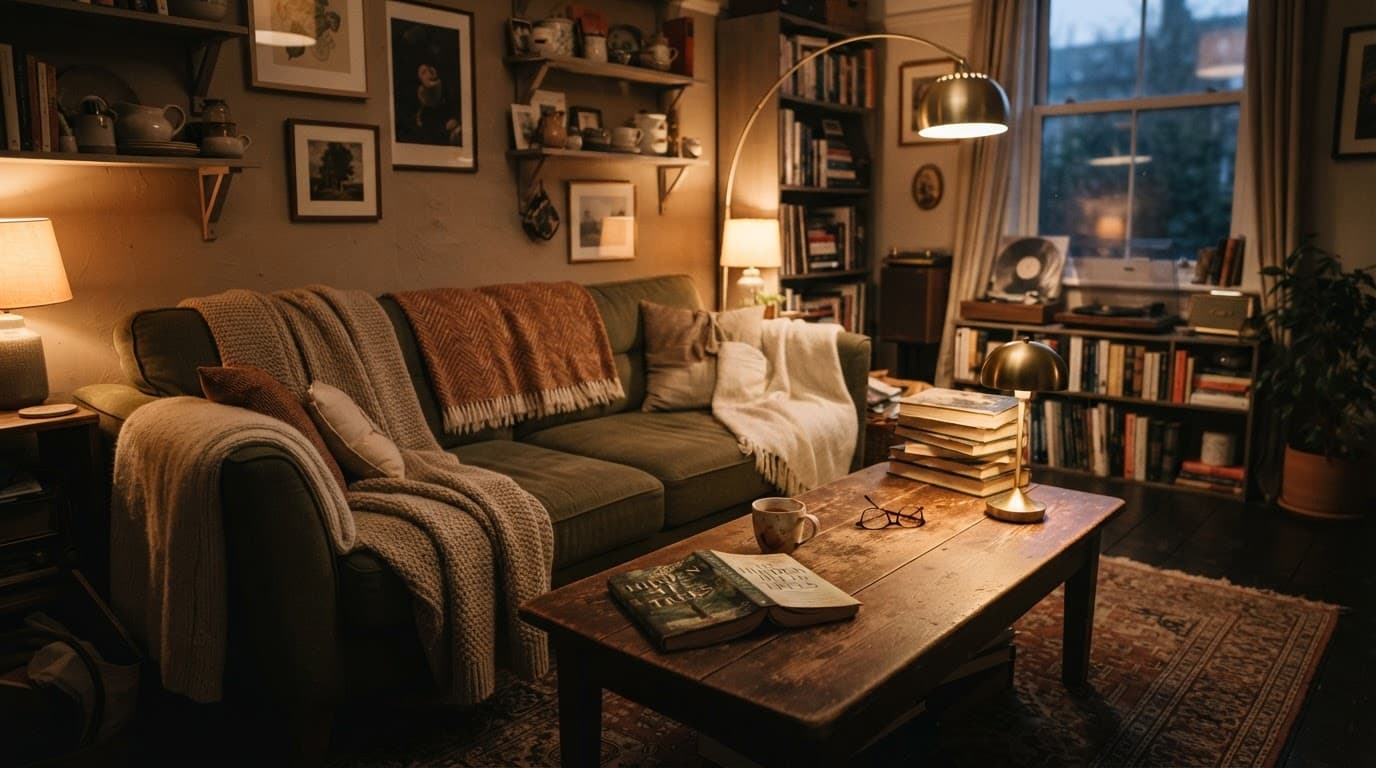
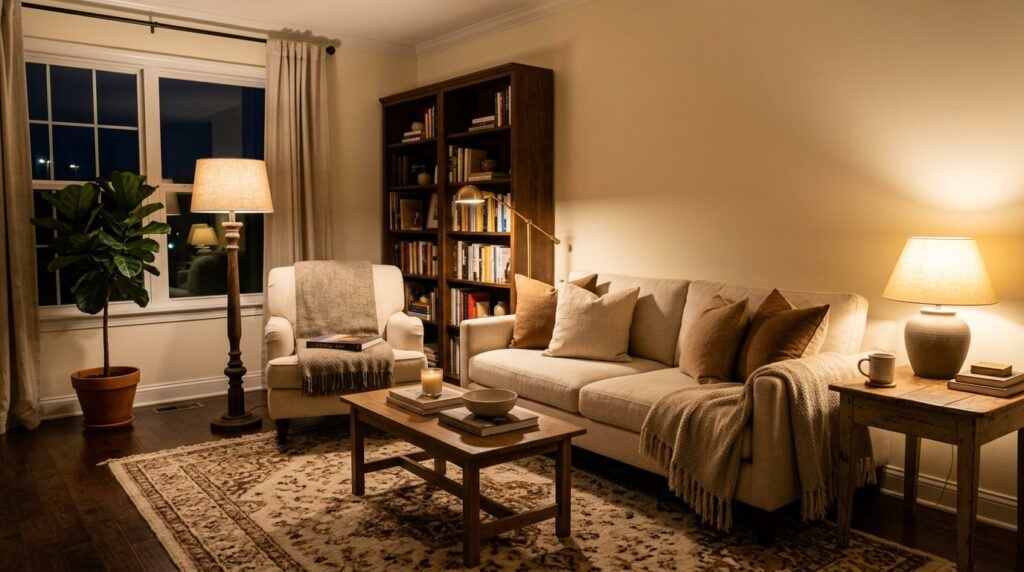
Several low-level lamps with warm 2700K bulbs create a gentler mood than one harsh ceiling fixture. I wrote more about creating a warm ambiance with lighting if you want the full breakdown of layers, bulbs, and dimmers. Lamps at different heights also make the room feel more settled after dark.
Create Zones for Conversation, Reading, and Daily Life
A rug, chair, lamp, or low bookcase can define separate uses in a larger room. Set up a reading corner with a comfortable chair, side table, and dedicated reading light.
Keep a useful surface beside every seat. Arrange furniture for conversation and rest, not only toward the television.
Build a Five-Minute Reset That Actually Lasts
Each evening, return dishes and cups, gather loose items, fold throws, clear the coffee table, and put stray belongings in their assigned homes. A weekly check of papers, toys, and decor stops small piles from becoming permanent.
A cozy room can look used and still feel peaceful when everyday items have a clear place.
Frequently Asked Questions
I do a quick reset daily and a more careful review once a week. Seasonal edits work well for decor, books, and blankets that have accumulated over time.
Keep only items you use or enjoy seeing, such as a tray, one book, a candle, or a small bowl. Leave enough open space for drinks, snacks, or a puzzle.
Yes, if its dimensions fit the room and it doesn’t block the path through it. A compact sectional can provide more useful seating than several mismatched chairs.
Use washable fabrics, sturdy baskets, and a simple toy drop zone. Children’s books and art can stay visible when you edit them thoughtfully and give them a defined place.
A Cozy Room Needs Room to Breathe
Decluttering doesn’t mean removing everything that makes your home feel like yours. It means choosing what supports the way you live, then giving those things a proper place.
Start with one surface, one basket, or one piece of furniture that blocks the room’s flow. Clear space leaves more room for soft light, personal memories, conversation, and rest.