

You know that feeling when you walk into a room and immediately want to grab a blanket and stay a while? That’s a cozy space. But if someone asked you to actually define what makes it cozy, you’d probably struggle to put it into words.
That’s because “cozy” is one of those words everyone understands but few can explain. It’s a feeling more than a formula. But there actually are specific elements that create that feeling, and once you know what they are, you can bring coziness into any room.
Let’s break it down.
Why Cozy Spaces Matter to Me
Before we get into definitions, I want to be upfront about why I built this site. I spent most of my life working in towing. Late nights, bad weather, stressful calls, and people having one of the worst moments of their week. You see a lot in that line of work, and it teaches you something pretty fast: coming home to a calm, warm space isn’t a luxury. It’s a lifeline.
That’s part of why cozy spaces pull me in. A chair by a window. A coffee mug on a worn table. A porch light glowing in the rain. Those little details tell a story without needing to explain themselves. I started Cozy Space Place because I wanted to create and share images and ideas that make people slow down for a second. Warm rooms, cabin corners, seasonal spaces, the kind of place you don’t want to leave.
If you want the full story behind the site, you can read more on my about page. But for now, let’s get into the actual question: what makes a space cozy?

What Does “Cozy” Actually Mean?
The dictionary definitions are pretty consistent. Merriam-Webster calls cozy “enjoying or affording warmth and ease.” Cambridge says a cozy place is “comfortable, pleasant, and inviting, especially because it is small and warm.” Collins keeps it simple: comfortable and warm.
So at its core, cozy means warm + comfortable + intimate. It’s not just about physical comfort (though that’s part of it). It’s about a space that makes you feel relaxed, safe, and emotionally at ease. A cozy room doesn’t demand anything from you. You can just exist in it.
There’s also a size element. “Cozy” often implies a smaller, more intimate space. A giant open-concept living room can feel cozy with the right design, but a snug reading nook gets there naturally. Coziness loves boundaries.
What Is a Cozy Space?
A cozy space is a room or area that feels warm, inviting, and comfortable. It’s a place where you want to slow down and stay a while. Think of a cabin living room with a fire going, a bedroom with soft lighting and layered blankets, or a corner chair with a lamp and a stack of books.
A cozy space isn’t about looking perfect. It’s about feeling right. The best cozy spaces are the ones you don’t want to leave.
The word “cozy” gets thrown around a lot in real estate listings too, where it usually means “small.” But a truly cozy space is small and warm and inviting. A tiny room with harsh lighting and bare walls is just small. It’s not cozy.
The 6 Elements That Make a Space Cozy
Coziness isn’t random. It comes from specific design choices that work together. Here are the six elements that show up in almost every cozy space:
1. Warm Lighting
This is the big one. Harsh overhead lighting kills coziness instantly. Cozy spaces use layered, warm-toned lighting instead. Think table lamps, floor lamps, string lights, and candles rather than a single bright ceiling fixture.
The goal is soft, diffused light that creates gentle shadows and a warm glow. Dimmer switches are your best friend here. Warm light (around 2700K to 3000K) mimics the golden hour and signals to your brain that it’s time to relax.
I wrote a whole piece on creating warm ambiance with lighting if you want to go deeper on this one. It’s probably the single biggest thing you can change in a room.
2. Soft Textures and Textiles
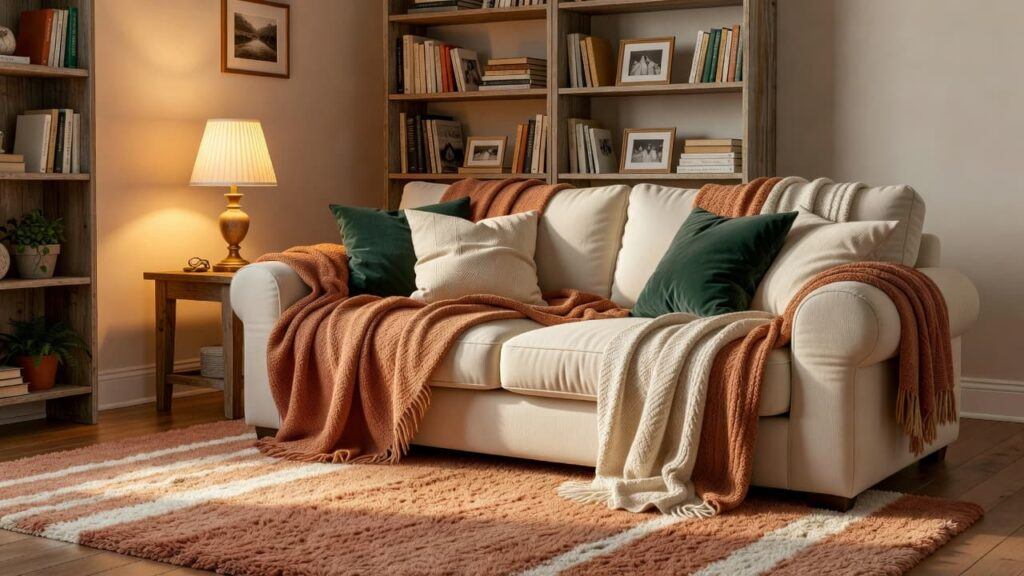
Cozy spaces are tactile. Blankets, throw pillows, plush rugs, curtains, and upholstered furniture all add softness that you can see and feel. The more layers, the cozier.
This is why a room with hardwood floors, bare windows, and a leather couch feels cold even if it’s decorated nicely. Add a fluffy rug, some linen curtains, and a good throw blanket, and suddenly the whole room changes.
3. Comfortable Seating
A cozy space needs a place to actually get comfortable. That means seating designed for lounging, not just looking good. A deep armchair you can curl up in. A sofa with soft cushions. A window seat with cushions and pillows.
If your furniture looks great but nobody wants to sit in it for more than ten minutes, it’s not cozy. Function comes first. I’ve put together some cozy living room ideas that focus on this balance between looks and comfort.
4. Defined, Intimate Zones
Big, open rooms can feel cold and exposed. Coziness loves nooks and corners. You can create intimate zones in a larger room by using rugs to define a seating area, placing a bookcase as a room divider, or arranging furniture to create a sense of enclosure.
The brain reads smaller, bounded spaces as safer and more relaxing. That’s why a reading nook in the corner of a bedroom feels cozier than the middle of an open floor plan. Small spaces get cozy naturally, which is why tiny house layouts are some of the coziest spaces out there.
5. Personal Touches
A cozy space feels like yours. Family photos, books you’ve actually read, a collection that means something to you, a mug you use every morning. These personal items create a sense of belonging and familiarity.
This is why a perfectly staged showroom never feels truly cozy. It looks nice, but it doesn’t feel lived-in. Coziness needs personality. The same way a porch light in the rain means more when it’s your porch light.
6. Warm Colors
Color isn’t the most important element, but it helps. Warm tones like terracotta, cream, beige, mustard, deep green, and warm browns naturally create a sense of warmth. Cool grays and stark whites can work in a cozy space, but they need help from lighting and textures.
You don’t need to repaint everything. But warm-toned accents in your pillows, rugs, and decor will nudge any room toward cozy. Using natural elements like wood, stone, and plants is another easy way to bring warmth in without a full redesign.
Cozy vs. Comfortable: What’s the Difference?
People use these words interchangeably, but they’re not quite the same thing.
Comfortable means physically at ease. A supportive office chair is comfortable. A well-fitted shoe is comfortable. But you wouldn’t call either of those cozy.
Cozy adds emotional warmth and intimacy on top of physical comfort. A cozy space doesn’t just feel good to sit in. It makes you feel safe, relaxed, and content. It’s comfortable plus warmth plus a sense of being sheltered.
Think of it this way: a hotel room can be comfortable, but it’s rarely cozy. It’s missing the personal touches, the warmth, and the sense of belonging that make a space feel like yours.
How to Make Any Room Cozy
Want to bring more coziness into your home? Here’s a quick checklist:
- Swap your bulbs. Switch to warm-toned LED bulbs (2700K-3000K) and add lamps instead of relying on overhead lights.
- Layer textiles. Add a rug over your existing floor, drape a throw blanket over a chair, pile on some pillows. More layers equals more cozy.
- Create a nook. Find a corner and turn it into a reading spot with a chair, a lamp, and a small table. Even a small defined area changes how a room feels.
- Tackle the clutter first. A cluttered room can’t feel cozy because your brain can’t relax. Check out my tips on fixing a cluttered living room and using basket storage to keep things tidy without losing warmth.
- Add personal items. Put out books, photos, or objects that mean something to you. Coziness needs personality.
- Control the light. Get a dimmer switch or use smart bulbs so you can lower the brightness as the evening goes on.
- Warm up your bedroom. Layered bedding, soft lighting, and the right decor make a huge difference. Here are some cozy bedroom decor ideas to get started.
None of these require a renovation. Most of them don’t even require much money. Coziness is about choices, not budget.
Examples of Cozy Spaces
Cozy spaces come in all forms. Here are a few classic examples:
- A cabin living room with a wood-burning fireplace, plaid blankets, and warm wood walls (yes, you can do cabin style without it feeling like a cave)
- A bedroom with autumn accents and layered bedding that makes you want to hibernate
- A seasonal cozy space that shifts with the weather, from summer porches to winter reading corners
- A hygge-inspired living room that nails the Danish approach to comfort and contentment
- A coffee shop corner with a worn leather chair, warm lighting, and the smell of espresso
- A covered porch in autumn with a throw blanket, a mug of tea, and string lights overhead
Notice the pattern? None of these are about expensive furniture or perfect styling. They’re about warmth, softness, and a sense of being somewhere you want to stay.
The Bottom Line
A cozy space is a room or area that feels warm, comfortable, and inviting. It’s not about spending a lot of money or following a specific design style. It’s about layering warmth, texture, light, and personality until a room feels like a place you never want to leave.
The best part? Coziness is one of the easiest things to create in your home. You don’t need a contractor. You need a lamp, a blanket, and a corner to call your own.
That’s the whole point of this site. I’ve spent enough stressful nights to know what a difference a warm space makes. If you want more cozy inspiration, browse through the rest of my blog or learn more about why I started Cozy Space Place.
Common Questions About Cozy Spaces
A cozy space is a room or area that feels warm, comfortable, and inviting. It combines soft lighting, textured textiles, comfortable seating, and personal touches to create a sense of relaxation and intimacy.
The six key elements are warm lighting, soft textures, comfortable seating, defined intimate zones, personal items, and warm colors. You don’t need all six, but the more you layer in, the cozier the space becomes.
Not quite. Comfortable means physically at ease. Cozy adds emotional warmth, intimacy, and a sense of shelter. A space can be comfortable without being cozy, but a cozy space is always comfortable.
Yes, but it takes more effort. Break large spaces into smaller zones using rugs, furniture arrangement, or bookshelves as dividers. Add warm lighting and plenty of textiles to soften the scale.
Warm tones like terracotta, cream, beige, mustard yellow, deep green, and warm brown naturally create coziness. You can also use cool tones if you balance them with warm lighting and soft textures.