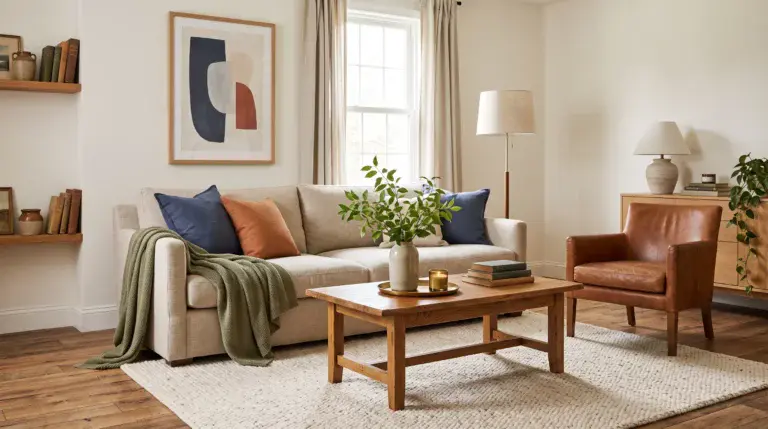

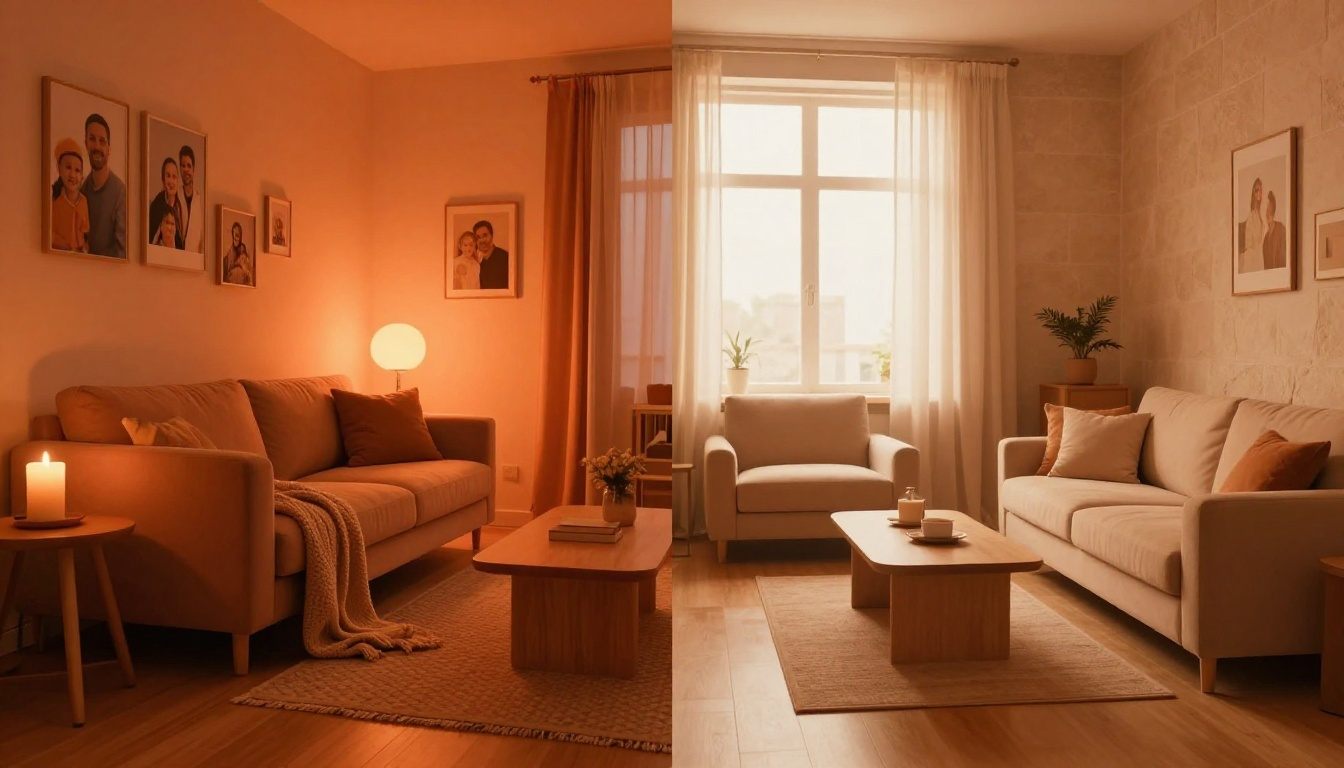
A room can look warm and inviting, yet still make you shift around because the sofa is too deep and the side table is out of reach. Without physical ease, even a beautiful space can be hard to enjoy.
On the other hand, a comfortable room can offer great seating and clear paths while feeling bare and cold. A home should feel comfy and functional, not merely attractive.
This distinction comes down to atmosphere versus function. I have found that the most relaxing homes combine both, creating a cozy atmosphere without sacrificing a comfortable daily experience.
This post may contain affiliate links. If you make a purchase through these links, I may earn a small commission at no extra cost to you.
Quick Answer: Cozy vs. Comfortable
Cozy describes how a room feels emotionally. It creates warmth, intimacy, and a welcoming mood. Comfortable describes how well a room supports your body and daily routines. The best homes combine supportive furniture and easy movement with warm lighting, soft texture, and personal details.
Key Takeaways
- Cozy creates warmth and intimacy through lighting, texture, and personal details.
- Comfortable design supports your body, daily routines, and clear movement.
- A room needs both qualities to feel inviting and useful beyond a few minutes.
- Start with practical needs, then add warmth, texture, and personality.
Cozy vs. Comfortable: What Is the Difference?
Cozy describes the mood of a space. It often feels sheltered, warm, personal, and a little softer around the edges. A cozy cottage can feel inviting through layered textures and personal details.
Comfortable describes how well a room works for your body and routine. A comfortable chair supports your back. A comfortable layout lets you carry a mug, stretch out, and walk through the room without bumping into furniture.
The ideas overlap, but they aren’t exact synonyms. A large sectional can be comfortable without feeling cozy. A coffee shop may create a cozy mood without guaranteeing physical ease. Meanwhile, a candlelit room with too many floor cushions can feel charming until you try to sit there for an hour.
There’s also a useful language distinction. In English learning, cozy is an informal word and a warm way to describe a pleasant atmosphere. Snug can describe a room or winter clothing, while “snug as a bug” is an idiom. In everyday conversation, these descriptive terms suggest comfort, but comfortable usually points to physical support and physical relief. This linguistic difference helps explain why the words can overlap without meaning exactly the same thing.

What Makes a Room Feel Cozy?
Warm-white lamps, soft fabrics, wood, plants, muted colors, and conversational seating create warmth and intimacy. Blankets, pillows, rugs, and curtains soften hard edges, helping a room feel cozy without overwhelming it with decor.
I rely on lighting and texture first. A table lamp and a washable throw can make a cozy room feel more inviting while keeping surfaces clear.
What Makes a Space Physically Comfortable?
Physical comfort starts with support, useful table heights, readable light, and enough room to move. Furniture should also keep everyday items within easy reach and support a natural posture.
A chair is not truly comfortable if its seat is shallow, its back lacks support, or you need a lumbar pillow after ten minutes. Furniture should fit the people who use it, not only the photo you had in mind.
How to Create a Home That Feels Cozy and Comfortable
When I compare Cozy vs. Comfortable choices, I start with what the room must do each day. Then I add layers that make a cozy home feel lived in rather than staged.
Start With Supportive Furniture and an Easy Layout
Test a sofa, chair, or mattress for real support before choosing it for color. Look for a comfortable sofa and sit in a comfortable chair with your feet on the floor. Check whether you can reach a nearby table without leaning or twisting.
Leave clear walking paths, especially near doorways and between seating. In a small space, a slim C-table and an appropriately sized loveseat can create a snug arrangement. Good scale makes the room more comfortable to use and easier to keep tidy.
Add Warm Light, Soft Layers, and Personal Details
Use several small light sources instead of relying only on a ceiling fixture. A 2700K bulb usually gives off a warmer glow than a cool-white bulb. Add a floor lamp near reading seating and a small lamp where you want a cozy glow at night.
Then bring in a rug, a washable throw, two or three cushions, books, framed photos, or a handmade bowl. These cozy textures and personal details keep the room simple while making it feel human. I like choosing pieces that invite you to snuggle up without making the space feel crowded.
Warm minimalism uses natural materials, layered texture, and softer colors to make simple rooms feel warmer. Keep the trend secondary to choices that work for your home.
A reading nook doesn’t need much. Zillow’s 2026 Home Trends Report found that reading nooks were mentioned 48% more often in for-sale listings. A supportive chair, focused lamp, and small table are enough to make one useful. Add a soft throw for a comfy place to read or rest.
Match the Balance to the Room and the People Using It
A bedroom can handle softer light and more fabric because bedroom comfort is the priority. A home office needs task lighting, an ergonomic chair, and a surface at the right height.
Consider pets, children, allergies, cleaning routines, and storage needs before adding layers. I choose durable throws and closed storage in busy rooms because cozy decor loses its appeal when it creates more work.
Too much clutter can make a room feel crowded, even when the styling looks cozy. Edit decorative objects until surfaces remain useful, and add task lighting where you need clear visibility.
Oversized furniture can block movement, so measure the room and preserve comfortable walking paths. Scratchy wool, stiff upholstery, and heavy curtains may also reduce comfort, so test fabrics before committing.
Finally, don’t overlook temperature. Check for drafts and maintain a comfortable temperature instead of relying on styling alone.
Frequently Asked Questions
Quick answers to common questions about creating a home that feels cozy and comfortable.
Can a room be comfortable without being cozy?
Yes. Supportive furniture and an efficient layout can make a room comfortable and functional, yet it may still feel plain or emotionally distant. Warmer light, texture, and personal objects can improve the atmosphere without changing how the room works.
Can a small room be both cozy and comfortable?
Yes. A small room can feel cozy and comfortable when furniture fits its scale and walkways stay clear. Use vertical storage, lighter layers, and multifunctional pieces instead of filling the room with bulky decor.
Is cozy the same as hygge?
No. Cozy describes a broad feeling or design quality, while hygge is a Danish idea centered on warmth, simple pleasures, togetherness, and contentment. Hygge can inspire a cozy home, but the two terms do not mean exactly the same thing.
How can a modern home feel more cozy?
Add natural wood, rounded forms, warm lamps, rugs, textured fabrics, plants, and a few meaningful objects. A modern room can stay clean-lined and simple while still feeling warm and welcoming.
What makes a home feel cozy and comfortable?
A cozy and comfortable home pairs physical support with a warm atmosphere. Start with furniture that fits your body and layout, then add soft lighting, comfortable textures, personal details, and enough clear space to move easily.
A Home That Supports Real Life

Cozy shapes how a room feels, while comfortable shapes how well it supports everyday life. Start with one practical improvement for physical ease, such as better seating or a clearer layout. Then add one atmospheric layer, such as a lamp, rug, or soft throw.
I believe the most inviting homes are not perfect. They give you room to relax, move freely, and feel at home. Improve one practical detail, then add one atmospheric layer, and let the room grow around real life.