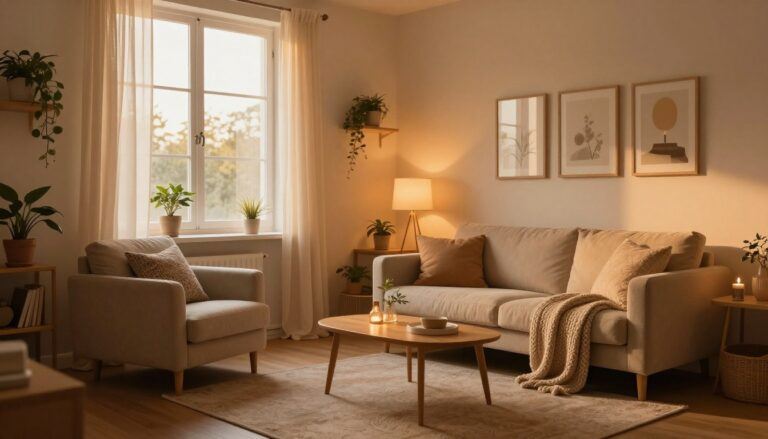

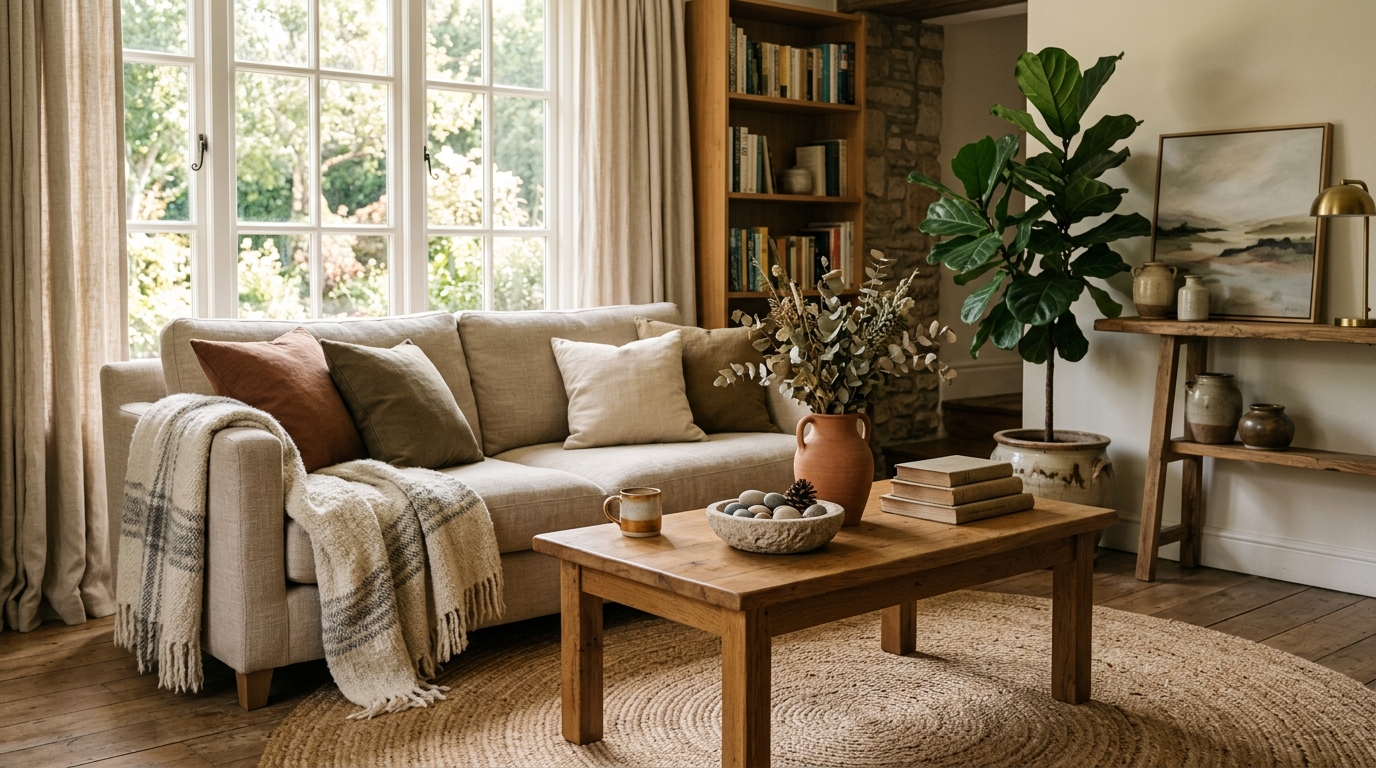
A cozy home is shaped by what it feels like, not only what it looks like. When a room feels cold or flat, I reach for texture and natural materials before buying more decor.
Using natural elements to add warmth can be as simple as bringing in wood, woven fibers, plants, stone, soft daylight, and earthy color. These choices work in small apartments, busy family homes, and polished modern spaces because they add touchable character without requiring a renovation.
Quick Answer
Using natural elements to add warmth means bringing in materials like wood, woven fibers, plants, stone, linen, wool, clay, and warm daylight. These details make a room feel softer, more grounded, and more lived in without needing a full renovation.
Key Takeaways
- Choose two or three core materials, then repeat them throughout the room.
- Pair structured surfaces, such as wood or stone, with soft linen, wool, or cotton.
- Use plants and natural finds to add life without filling every surface.
- Let daylight and warm lamps reveal grain, texture, and gentle color variation.
- Start small with a basket, throw, plant, or wooden bowl.
Using Natural Elements To Add Warmth
This approach is less about decorating with a theme and more about choosing materials that feel honest. Wood has grain, knots, and shifts in tone. Stone has weight and a cool surface. Linen wrinkles a little, while wool softens a room underfoot.
Those imperfect details make a home feel lived in. They also keep a minimal room from looking bare or overly polished. I find that a wood table, one woven texture, and a healthy plant often create a stronger foundation than a shelf full of small accessories.
Choose a limited material mix. For example, oak, jute, and terracotta work well together. Walnut, linen, and limestone create a moodier version. Metal can add contrast, but a small brass lamp or black iron frame is usually enough.
The Simple Natural Warmth Formula
Start With Structure
Use wood, stone, clay, or leather to give the room weight and shape.
Add Texture
Bring in jute, linen, wool, cotton, rattan, or seagrass to soften the space.
Finish With Life
Add plants, branches, herbs, flowers, or natural light so the room feels cared for.
Start with Wood and Woven Fibers
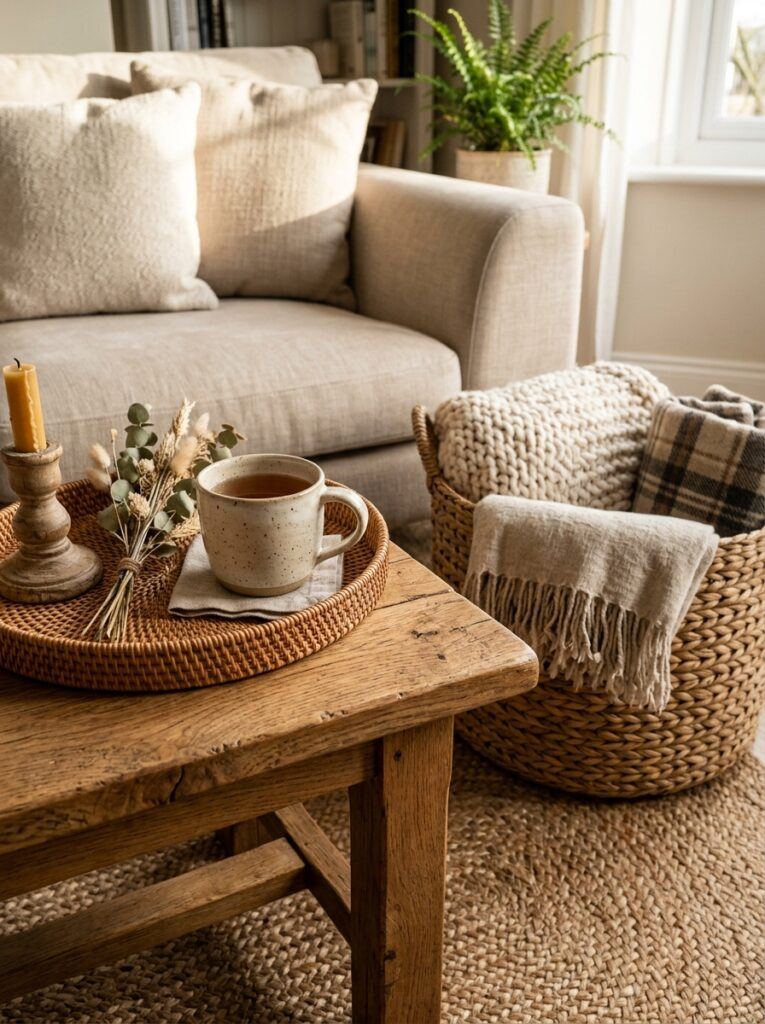
Wood furniture makes an immediate difference. A coffee table, dining table, bedside table, or simple headboard can soften a room that relies on painted drywall and smooth upholstery. Reclaimed wood adds extra character, though a clean-lined oak piece works beautifully too.
You don’t need matching wood tones. I prefer one dominant tone and one supporting tone, such as medium oak with a darker walnut accent. Keep their undertones similar so the mix feels intentional.
For a lower-cost update, place a jute rug under a seating area or use a seagrass basket for blankets. Rattan, bamboo, cork, and woven shades add structure, while a wool throw adds softness. That contrast between a sturdy surface and a soft textile is what makes the room inviting.
Best Natural Materials For A Warmer Room
| Material | What It Adds | Easy Way To Use It |
|---|---|---|
| Wood | Grain, warmth, and structure | Coffee table, shelves, headboard, bowl |
| Jute or Seagrass | Texture and relaxed character | Rug, basket, woven shade |
| Linen | Softness with a natural, lived-in look | Curtains, pillow covers, bedding |
| Stone | Weight, contrast, and calm | Tray, sculpture, bath mat, lamp base |
| Terracotta | Earthy color and handmade texture | Planter, vase, bowl, candle holder |
| Plants | Life, color, and freshness | Floor plant, herbs, small grouped pots |
Add Life with Plants and Natural Finds
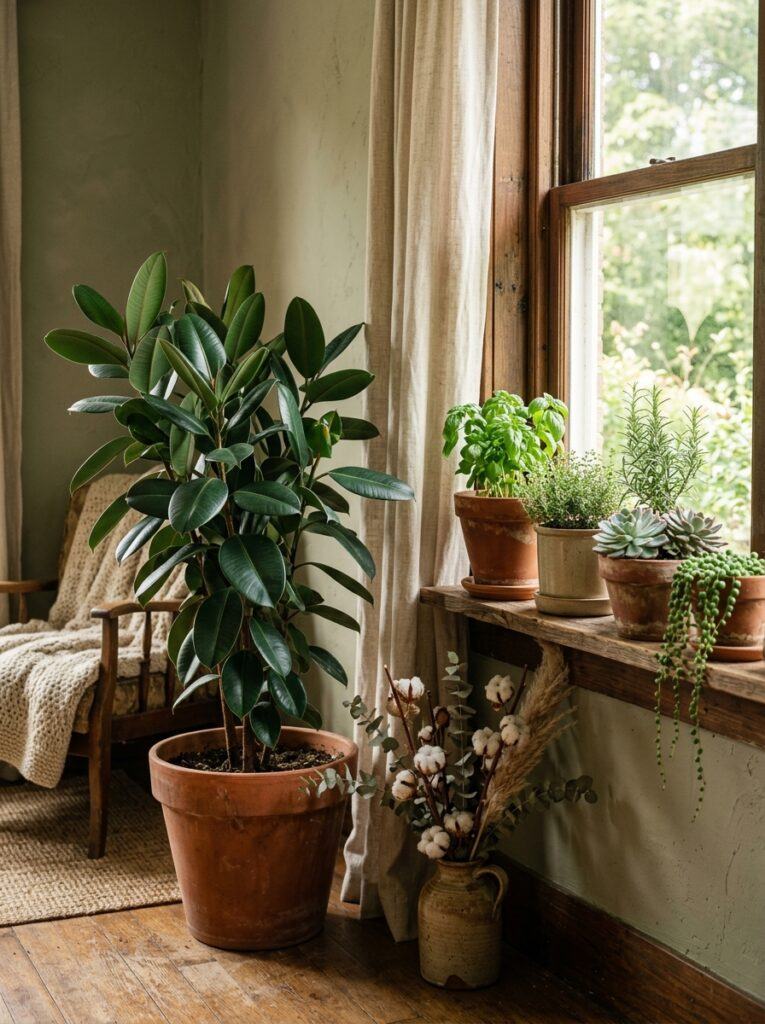
Greenery makes a space feel occupied and cared for. Place one larger plant, such as a monstera or rubber tree, where it can become a focal point. Then group smaller plants at different heights nearby.
Snake plants and succulents suit many low-maintenance routines, but light still matters. Check the direction and duration of window light before choosing a plant. In a sunny kitchen, basil, rosemary, and mint offer color, scent, and something useful for cooking.
Dried branches, flowers, pinecones, acorns, shells, and twigs cost little and bring a seasonal note indoors. Use terracotta, stone, or woven planters to keep the arrangement cohesive. I avoid scattering natural finds everywhere, because a single branch-filled vase has more presence than a dozen tiny objects.
Layer Natural Colors, Light, and Texture for a Cozier Room
Materials need supportive surroundings. Warm taupe, mushroom, beige, brown, terracotta, sage, olive, forest green, and muted blue make natural surfaces look richer. You don’t need to repaint the whole room. Pillow covers, a throw, or a clay-colored vase can shift the mood.
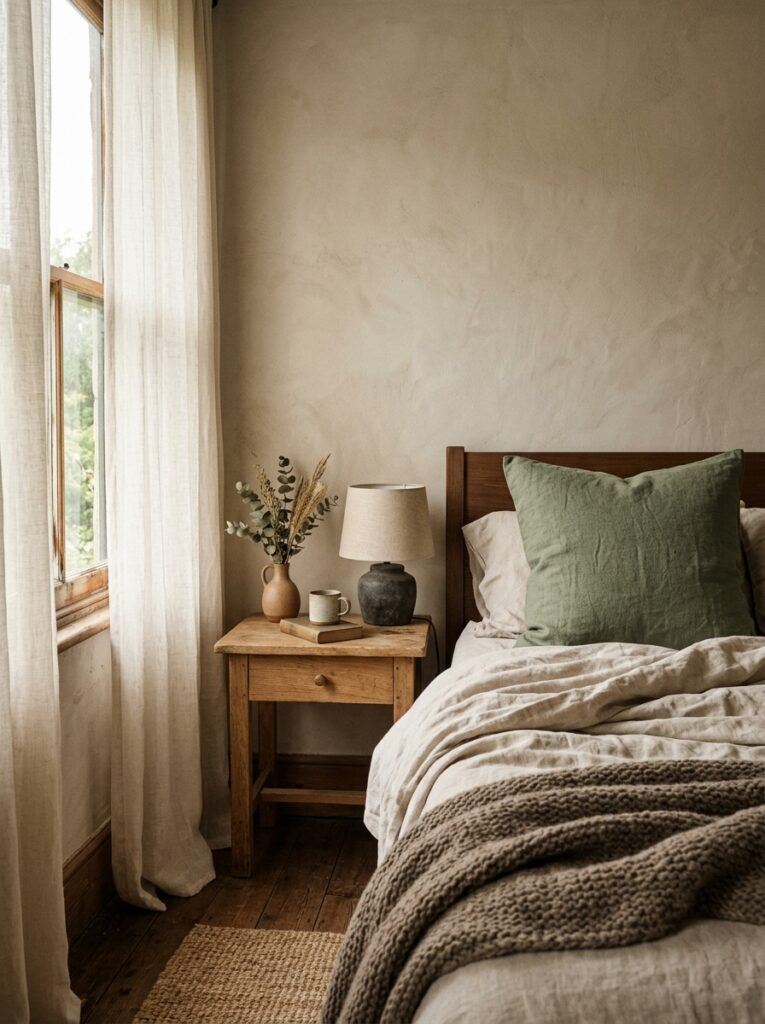
Seasonal changes can stay simple. Dried grasses suit fall, while fresh flowers bring spring indoors. Keep the larger furniture neutral, then switch smaller accents as the year changes.
Daylight is equally important when using natural elements to add warmth. Use sheer linen curtains when privacy allows, and keep windows clear of bulky furniture. A mirror opposite a window can bounce light around the room and reflect outdoor greenery.
At night, skip harsh cool bulbs. Bulbs in the 2,700 to 3,000 Kelvin range give off a warmer soft-white glow. Diffused table lamps make clay, wood grain, and woven shades look gentler, while concealed lighting can cast attractive shadows across wood slats or textured walls.
Balance Soft Materials with Stone and Other Solid Accents
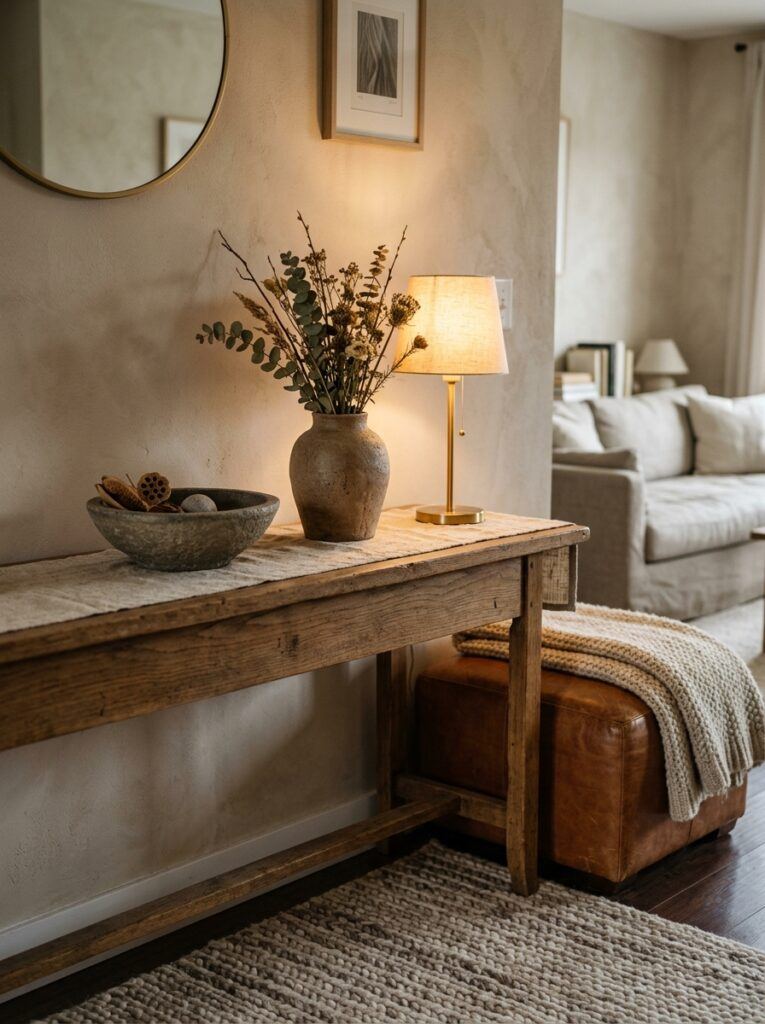
Natural warmth doesn’t require every surface to be soft or brown. Marble, limestone, concrete, clay, and terracotta offer a useful counterpoint. They make a room feel grounded and prevent woven textures from becoming too casual.
Try a marble-topped bar cart, concrete bowl, stone sculpture, pebble bath mat, or handmade clay vase. Pair hard surfaces with linen towels, cotton cushions, wool, leather, or a woven rug.
Leather is especially practical in homes with children or pets because it can handle daily use and often looks better with age. I like it in one larger piece, such as a chair or ottoman, rather than several small matching accessories.
How to Bring Natural Warmth into Every Room Without Overdoing It
Repeat a few materials across the home, but give each room its own job. A basket may organize shoes in the entryway, while another holds extra blankets in the living room. That repetition creates continuity without making every room identical.
Before buying, consider durability, care, available light, and your budget. Solid wood lasts, but a thrifted table may need sanding or oil. Secondhand stores, consignment shops, open-box listings, and local resale apps are good places to find wood furniture, pottery, baskets, and linen textiles.
Small details can make a visible change without construction work. Start with a functional object, then build slowly around it.
What To Avoid
A natural room can still feel cluttered if every surface is filled. Choose a few strong materials, leave breathing room around favorite pieces, and let daylight, texture, and useful objects do most of the work.
- Avoid too many wood tones fighting each other.
- Do not crowd every shelf with tiny natural finds.
- Keep plants where they can actually survive.
- Use warm lighting instead of harsh cool bulbs.
Room-by-Room Natural Warmth Ideas
Entryway
Try a jute runner, wood key bowl, woven basket, or vase with clipped branches.
Living Room
Use a wooden table, rattan baskets, one or two plants, and a textured throw.
Kitchen
Add windowsill herbs, a rustic cutting board, terracotta pots, or a marble cart.
Bathroom
Bring in linen towels, stone accessories, a wooden stool, or a pebble-style mat.
Bedroom
Layer cotton bedding, a wool throw, wood nightstands, and soft warm lamps.
Walls
Hang natural-fiber art, dried flowers, framed pressed leaves, or a sculptural branch.
Keep the Look Calm, Functional, and Personal
Too many materials can make a room feel restless. Heavy curtains can block daylight, and plants placed without regard for light will struggle. Seasonal decor also loses its charm when every table is crowded.
Leave open space around favorite pieces. Let wood show its knots, and let clay or stone retain its uneven finish. I prefer a restrained mix of wood, one woven texture, and a living plant before adding decorative details.
Start With One Warm Detail
You do not need to redo the whole room. Begin with one useful piece, such as a wooden bowl, woven basket, healthy plant, linen curtain, or soft wool throw. Small natural details can change how a room feels surprisingly fast.
Bring Natural Warmth Home Slowly
Natural materials add warmth through touch, color, light, scent, and small signs of life. You don’t need a large budget, a flawless plan, or a major renovation to make a room feel more welcoming.
Begin with one wooden piece, a textured textile, or a healthy plant. Build from there, and let the space collect character over time. The most inviting homes feel lived in, layered, and connected to the natural world.
FAQ: Using Natural Elements To Add Warmth
Wood, woven fibers, plants, linen, wool, stone, clay, terracotta, leather, and warm daylight can all make a home feel warmer. The best approach is to choose two or three materials and repeat them in simple ways throughout the room.
Start with one wood piece, one woven texture, and one soft textile. For example, a wood coffee table, jute rug, and linen curtains can soften a modern room without making it feel cluttered or overly rustic.
The cheapest way is to use small, functional pieces such as a woven basket, wooden bowl, thrifted side table, plant, clay vase, or textured throw. These items can change the feeling of a room without a large furniture purchase.
Yes, you can mix wood tones. Try using one dominant wood tone and one supporting tone. Keeping the undertones similar, such as warm oak with walnut, helps the room feel intentional instead of mismatched.
Two or three natural textures are usually enough for one room. A simple mix like wood, jute, and linen gives the space variety without making it feel busy. You can add plants or stone as small accents.
Yes, plants can make a room feel cozier because they add life, color, shape, and a sense of care. Even one larger plant in the right spot can make a room feel softer and more welcoming.