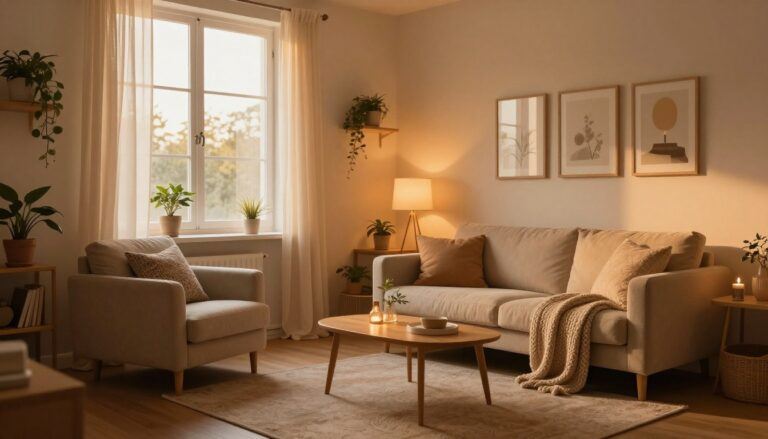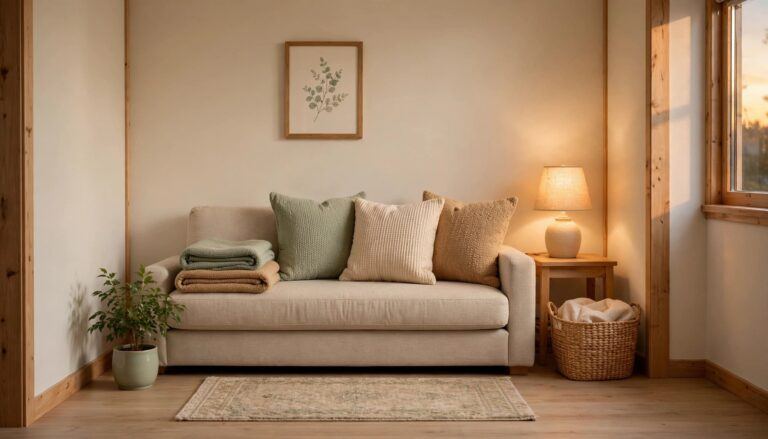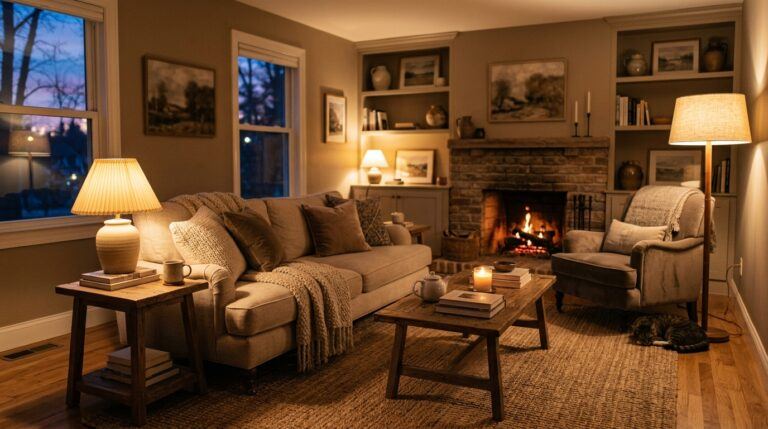

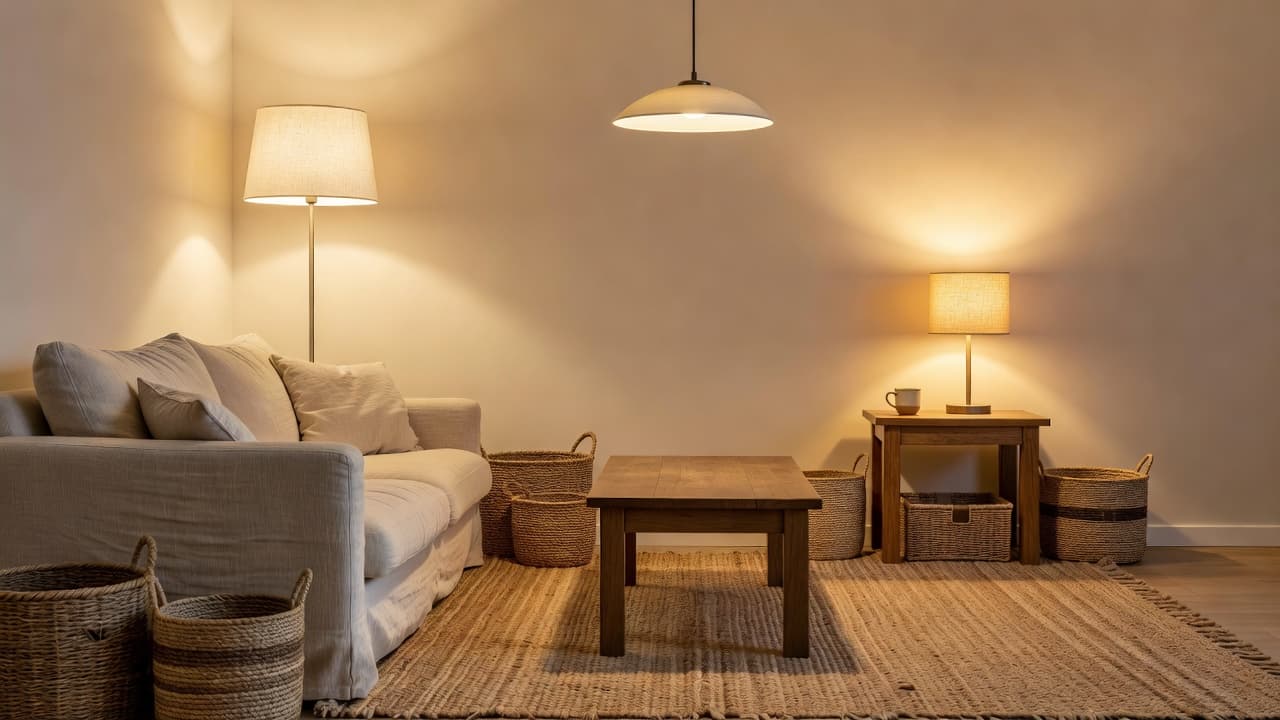
A room can feel strangely cold when harsh overhead lighting does all the work. It flattens the space, sharpens every shadow, and makes even your favorite sofa feel less inviting.
I find that warm ambient lighting comes from several smaller sources, creating a warm glow at different heights. With the right bulbs, shades, lamps, and dimmers, you can use mood lighting to make evenings calmer. These simple changes add a cozy vibe without a major renovation.
Quick Answer
To create a warm ambiance with lighting, use three layers (ambient, task, and accent), choose soft white bulbs between 2700K and 3000K, add dimmers for flexibility, and place lamps at different heights so light comes from multiple directions rather than one overhead fixture.
Key Takeaways
- Combine multiple lighting layers, including task lighting, instead of relying on one ceiling fixture.
- Choose 2700K to 3000K bulbs on the Kelvin scale for a warm, relaxed evening glow.
- Add dimmers to shift easily between practical daylight and softer nighttime light.
- Use varied lamp heights to create balanced pools of light and improve living room lighting.
- Let daylight guide where you add lamps for darker hours.
Creating A Warm Ambiance With Lighting Starts With Three Layers
A cozy room needs more than brightness. Three layers of light create mood lighting that makes each area feel useful and settled.
Balance Overall Light With Task and Accent Sources
Ambient light gives you general visibility. This may come from a ceiling fixture, recessed lights, or a pendant. Task lighting has a practical job, such as helping you read, chop vegetables, or finish a puzzle. Accent lighting draws your eye to something worth noticing, like a plant, painting, or shelf.
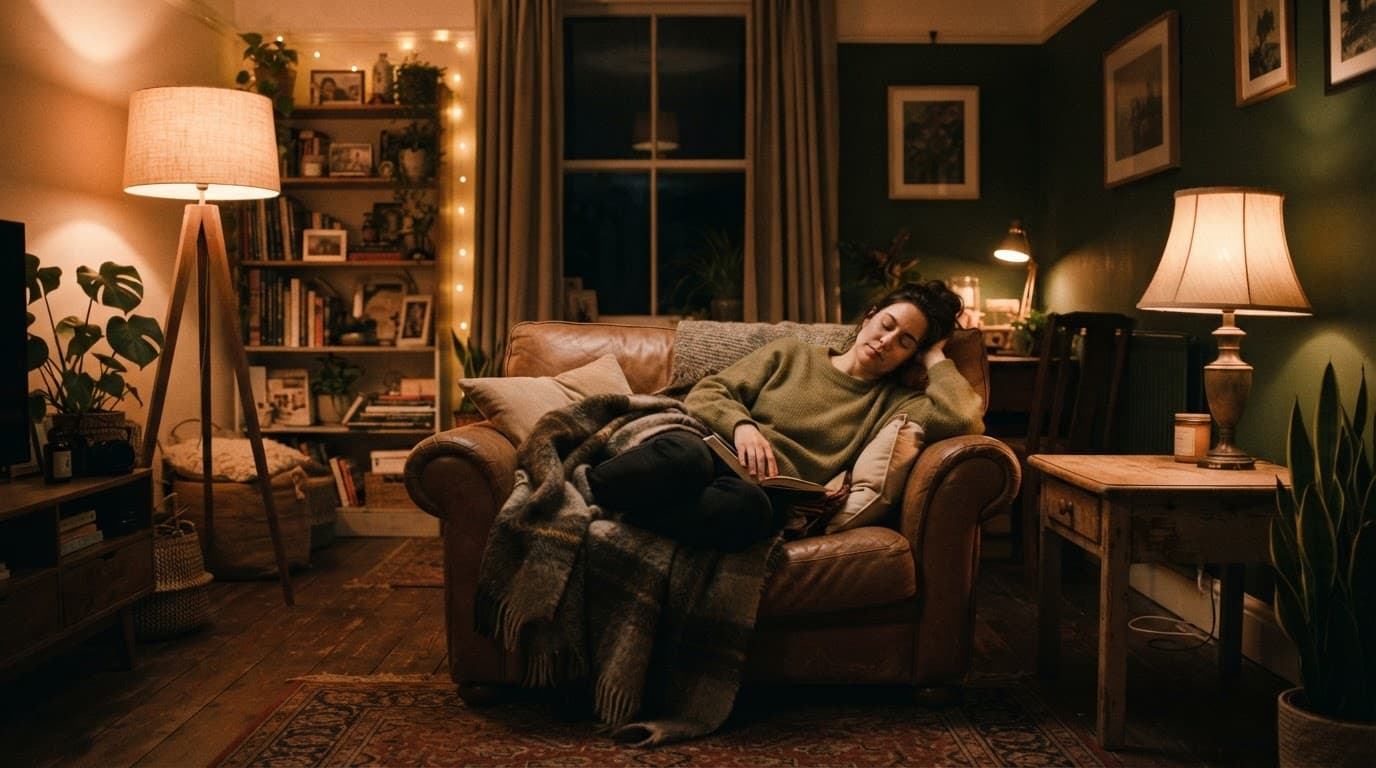
In my living room, I like a ceiling fixture for arrival, then floor lamps behind the sofa and table lamps across the room. A small picture light or rechargeable lamp near a bookcase finishes the scene. The room feels more dimensional because light comes from several directions.
I turn on the smaller lamps first in the evening. The overhead lighting stays available, but it rarely creates the mood I want by itself.
Use Indirect Light to Make Hard Surfaces Feel Softer
Indirect lighting hides the bright source and lets the wall or ceiling do the softening. Try concealed light strips under a shelf, behind a console, or along crown trim. Some products are also called strip lights.
Connected versions can join the same scene as other room lights through a smart hub like the Philips Hue Bridge. The reflected glow becomes diffused light, giving the room a warm glow instead of an exposed bulb.
This approach works especially well with textured rugs, linen curtains, wood furniture, and woven baskets. Those materials catch light unevenly, which gives a room a relaxed, lived-in look rather than a glossy glare.

A light source should have a purpose. Adding fixtures without a plan can make a room busy instead of comforting.
🏠 Cozy Lighting Pro Tips
- Turn on smaller lamps first in the evening before reaching for the overhead light.
- Position fixtures so bulbs stay out of your direct line of sight from seated positions.
- Use rechargeable lamps on shelves and coffee tables to avoid visible cords.
- Test your lighting at different times of day before committing to placement.
- Pair warm bulbs with textured materials like linen, wood, and woven baskets for a softer effect.
Choose Warm Bulbs, Diffusing Shades, and Dimmers for Better Control
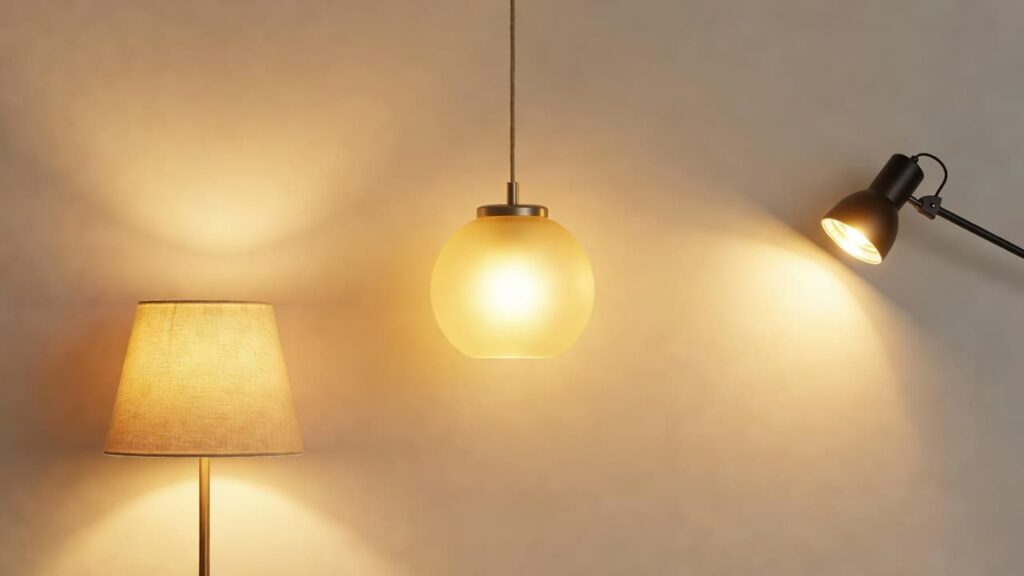
For most cozy spaces, I choose soft white bulbs between 2700K and 3000K. This color temperature creates a golden tone close to candlelight and softens white walls. Cooler Kelvin values above 5000K can feel harsh at night. The same wattage can still look different because bulb color changes the room’s atmosphere.
Did You Know?
Candlelight sits around 1800K to 2200K on the color temperature scale. That is why warm white bulbs (2700K to 3000K) feel so close to a candle’s glow. Bulbs above 5000K mimic daylight, which signals your brain to stay alert and can make a room feel sterile after dark.
Dimmable bulbs with a compatible dimmer switch make a room far more flexible. Use brighter light for cleaning, homework, or cooking, then lower it for dinner or a movie. That shift takes a space from practical task lighting to relaxed mood lighting.
Amber bulbs offer a deeper glow for bedrooms, reading corners, or decorative fixtures. They can create a cozy effect, but they may reduce color accuracy when you’re choosing clothes or viewing artwork.
Smart lighting adds control without requiring new fixtures. Smart bulbs let you adjust brightness and create scenes from an app or voice assistant. You can group smart bulbs by room, schedule changes, and coordinate them with light strips. Some systems, like Philips Hue, use a hub for setup and reliable local control even when the internet is unavailable.
Fabric, linen, silk, frosted glass, and opal shades soften glare with diffused light. Opaque shades aim light up or down, while semi-translucent linen spreads it through the room. Concealed strip lights can add indirect lighting beneath shelves, inside cabinets, or along trim without exposing the source.
Match the Fixture to the Mood and the Activity
Table lamps work best around eye level when you’re seated. Floor lamps can define a reading chair or conversation area, while wall sconces save valuable floor space in a narrow bedroom or hallway. For tight rooms, read how to light up small spaces without the clutter.
Pendants and chandeliers give a dining table a visual center. These choices also help define zones and reinforce the room’s proportions. Keep bulbs out of direct sight whenever possible. If you can see the glaring filament from your usual seat, adjust the fixture, shade, or bulb.
Let Daylight Support the Evening Lighting Plan
During the day, sheer curtains and light window treatments can spread sunshine without leaving the room exposed. I watch where daylight lands before deciding where a lamp belongs.
After sunset, use artificial light to fill the corners that daylight misses. Balance openness with privacy and glare control, especially near street-facing windows or a television.
Create Cozy Lighting Zones in Every Room
Creating a warm ambiance with lighting looks different in each room because every space has its own rhythm. Good lighting follows how you use each room, while mood lighting supports its evening routine. Start with the places where you spend the most time, then build outward.
Make Living Room Lighting Feel Layered and Lived In
Place floor lamps near or behind the sofa, then set table lamps on the opposite side of the room. That balance prevents one side from disappearing after dark. Add a small source of accent lighting near a plant, artwork, or bookcase for depth.
Movable lamps are useful because you can shift them with your habits. A reading chair may need focused task lighting, while a conversation corner benefits from softer light. Move floor lamps or table lamps as your routine changes, and keep cords from distracting the room.
Smart bulbs in movable lamps can support repeatable room scenes. Group lights by room, then recall a scene across living, dining, or bedroom zones using your smart lighting app.
Keep Bedrooms and Dining Areas Soft, Not Dim
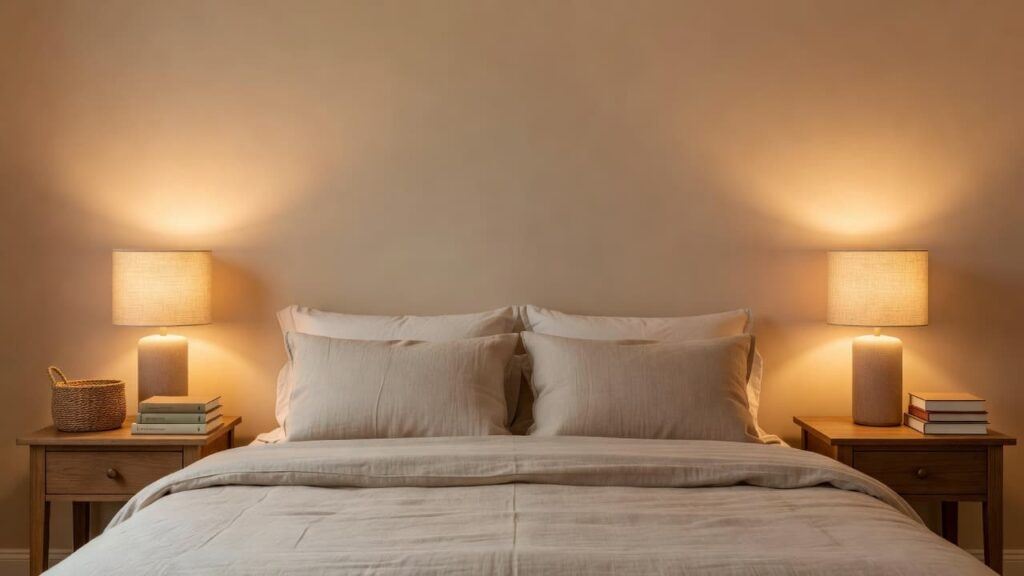
Use matching bedside lamps or balanced wall sconces in a bedroom. Linen shades and a low night light make late-night movement easier without waking the whole room. Cozy lighting should still let you find your water glass and read a page or two.
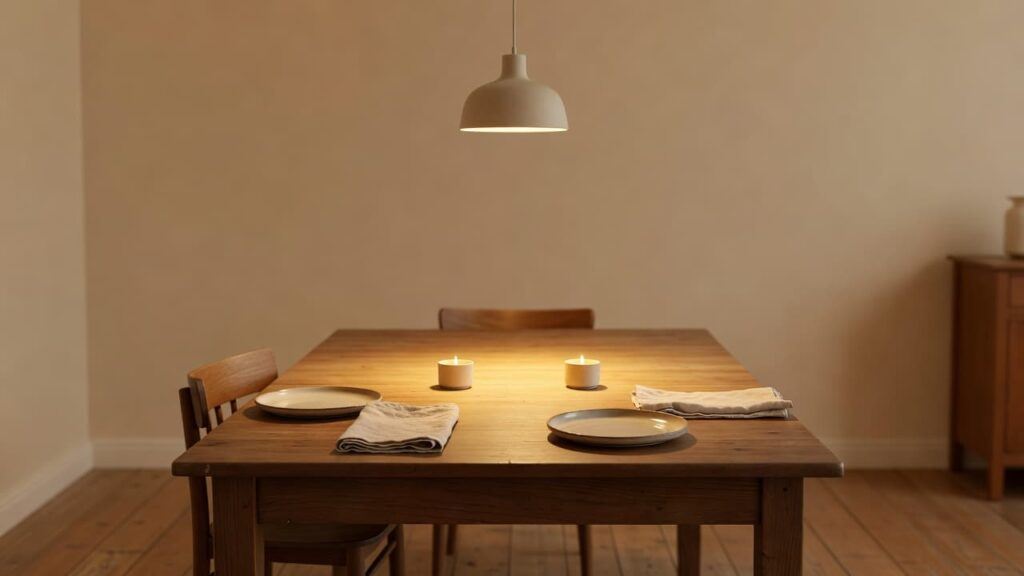
In a dining area, choose dimmable pendants or chandeliers that center the table and suit the room’s scale. Pair either fixture with candles or small table lights, keeping enough light to see faces, food, and serving dishes comfortably.
For kitchens, under-cabinet lights brighten counters without flooding the room. A warm sconce or low night light in an entryway or hallway makes arriving home feel more welcoming. Bathrooms benefit from even vanity lighting, plus a softer separate light for late evenings.
Frequently Asked Questions
Keep Reading
Dig Deeper Into Cozy Spaces (Click Any To Read The Post)
A Softer Home After Sunset
Replace overly cool bulbs first, then build warm ambient lighting in your most-used room with two or three layers. Floor lamps offer a simple adjustment, while shades and dimmers add control without renovation.
These changes create gentle mood lighting and a cozy vibe, without costly renovations or matching pieces. Choose smart bulbs only if useful, and use lighting scenes to automate the atmosphere.