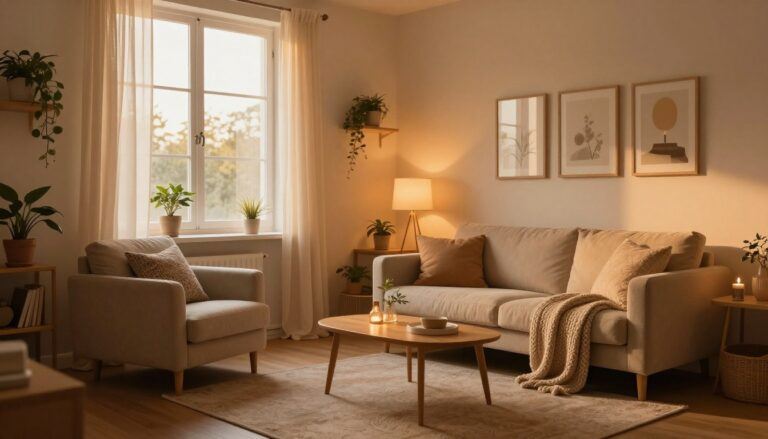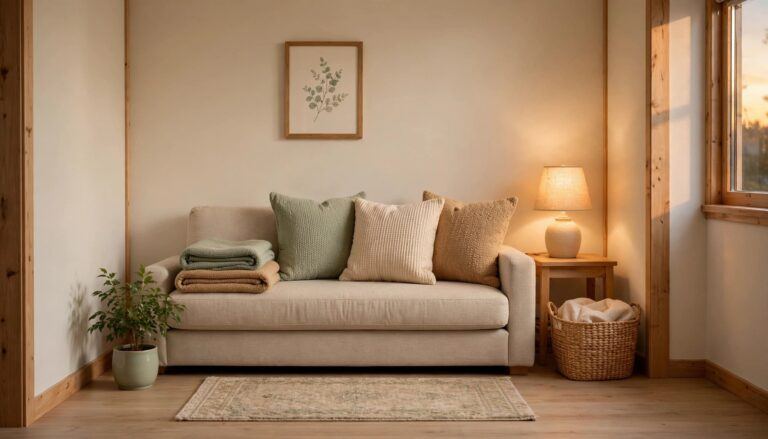

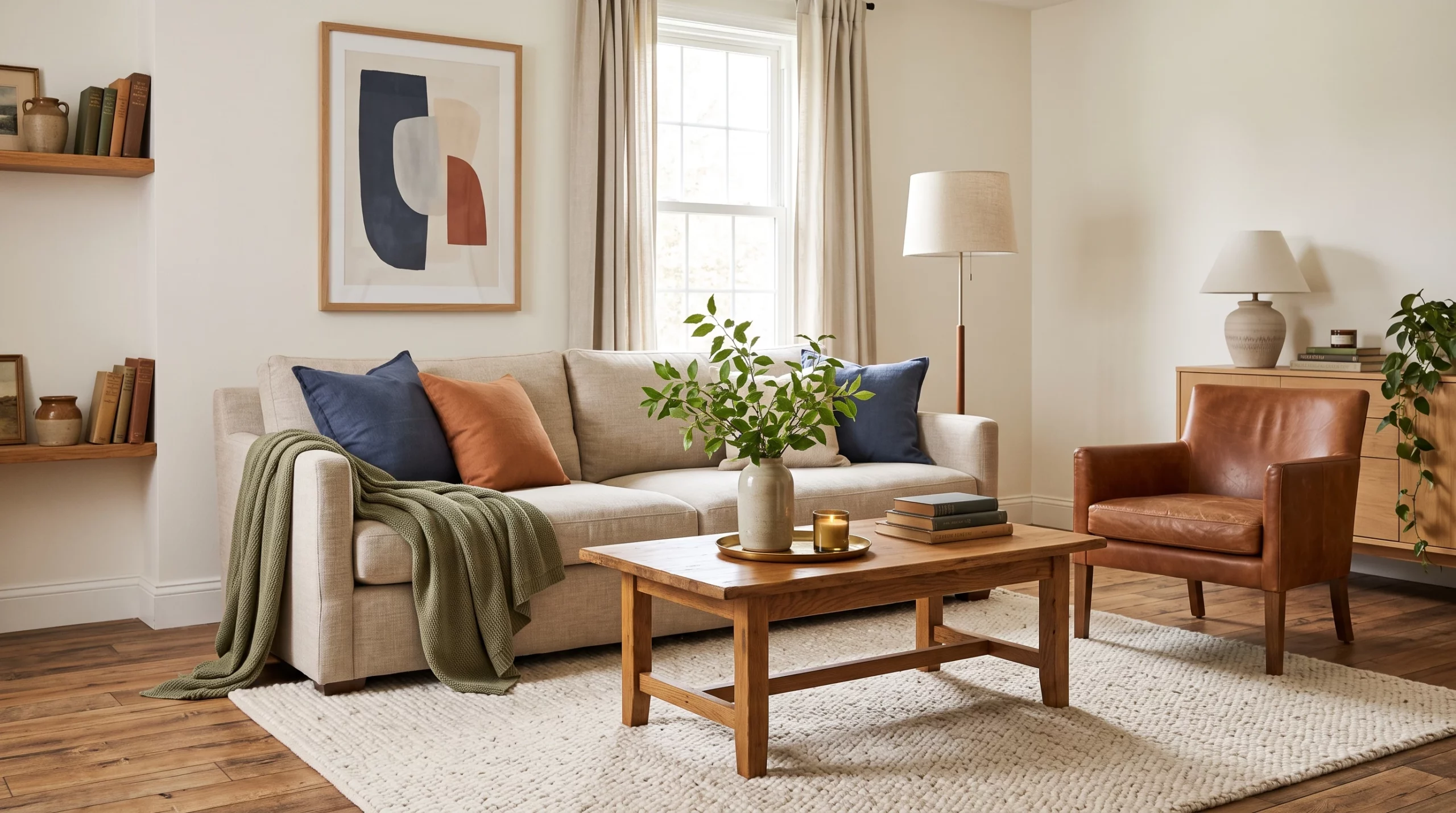
Adding personality to a living room is easy. Keeping it from feeling dated a few years later is the harder part. When I think about how a room feels, I start with a warm neutral base, then bring in a small group of connected colors and cozy layers that can change over time.
The best color in a timeless living room doesn’t need to shout. It can show up in a pillow, a lamp base, a piece of art, or an old book with a beautiful spine. A few thoughtful choices are enough.
This post may contain affiliate links. If you make a purchase through these links, I may earn a small commission at no extra cost to you.
A quick decorating guide
Key Takeaways
- Start with warm neutrals and natural materials before choosing accent colors.
- Choose one main accent color, then support it with two or three related shades.
- Keep costly pieces flexible and bring personality in through softer layers.
- Repeat color at different heights, textures, and corners of the room.
- Test paint and fabrics in daylight and evening light before committing.
How to Add Color to a Timeless Living Room
The simplest answer to how to add color to a timeless living room is to give the color a calm place to land. Warm white, cream, beige, greige, taupe, soft gray, and natural wood are dependable starting points. They don’t compete with the room, and they make it easier to change the mood later.
I always look at fixed finishes first. Floors, trim, fireplace stone, cabinets, and existing wood tones already have a say in the palette. A beige sofa can look lovely with one oak floor and strangely cool beside another.
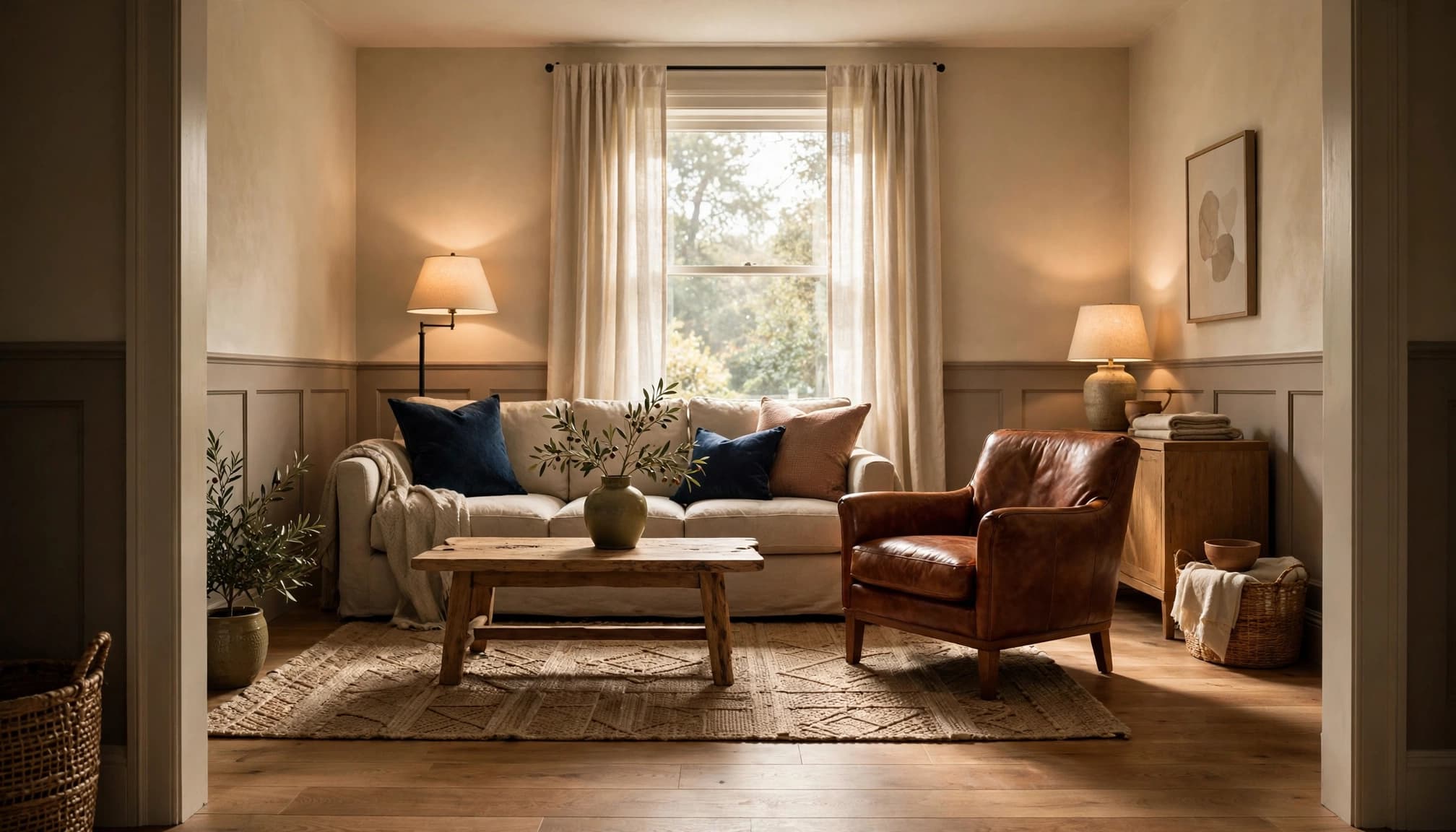
Deep navy, forest green, olive, terracotta, cognac, muted mustard, and black have staying power because they carry some weight. They feel richer than a passing trend color, especially when they appear with linen, wood, wool, or leather.
Use the 60-30-10 Rule as a Flexible Color Guide
I use the 60-30-10 rule as a starting point, not a decorating law. It gives color a simple structure, while leaving plenty of room for a home to feel personal.
Your calm foundation
Think walls, floors, large furniture, and the colors that make the room feel settled.
Your supporting color
Use it in a rug, curtains, a chair, or other pieces that add warmth and depth.
Your personality color
Bring it in with pillows, art, lamps, books, throws, and small collected details.
A simple rule I follow: repeat the accent color in at least three spots, so it feels intentional instead of random.
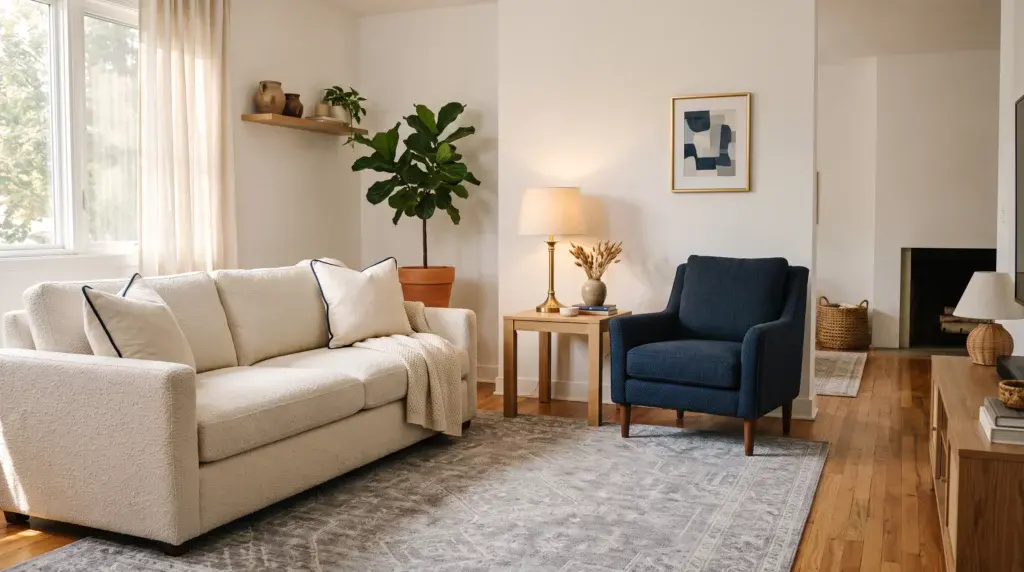
Choose Timeless Color Combinations That Still Feel Warm
These combinations feel classic because they pair grounded colors with warm texture. Start with the one that works best with your floors, trim, and existing furniture.
Ivory, warm wood, and navy
Calm, classic, and easy to live with. Add navy through pillows, artwork, or a soft throw.
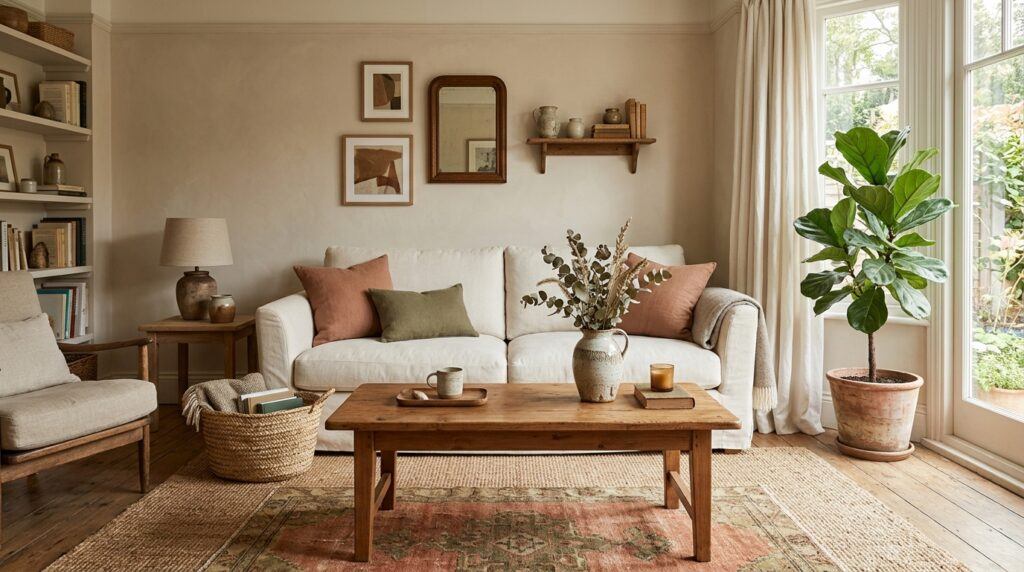
Cream, terracotta, and olive
Earthy and welcoming. This palette works especially well with linen, woven baskets, and houseplants.
Beige, soft gray, and cognac
Relaxed but pulled together. Cognac leather is a helpful bridge between warm and cool tones.
Black, white, and oak
A stronger contrast that still feels warm when you soften it with linen, wool, and natural wood.
Build a Cozy Color Palette With Textiles, Art, and Lighting
I keep costly pieces, like a sofa or large rug, in a flexible classic shade whenever possible. Color is easier to enjoy when it comes through things you can move, wash, or swap without turning the whole room upside down.
Repeat Accent Colors Through Soft, Swap-Friendly Details
Pillows and blankets are the obvious choices, but color can also come through artwork, ceramics, vases, lampshades, book covers, and plants. An olive green note on a throw looks more intentional when a green vase sits across the room, and a plant adds the same natural shade near a window.
Mixing materials matters as much as choosing color. Linen, wool, leather, woven baskets, and natural wood give a room depth. Without those layers, even a beautiful palette can feel a little flat.
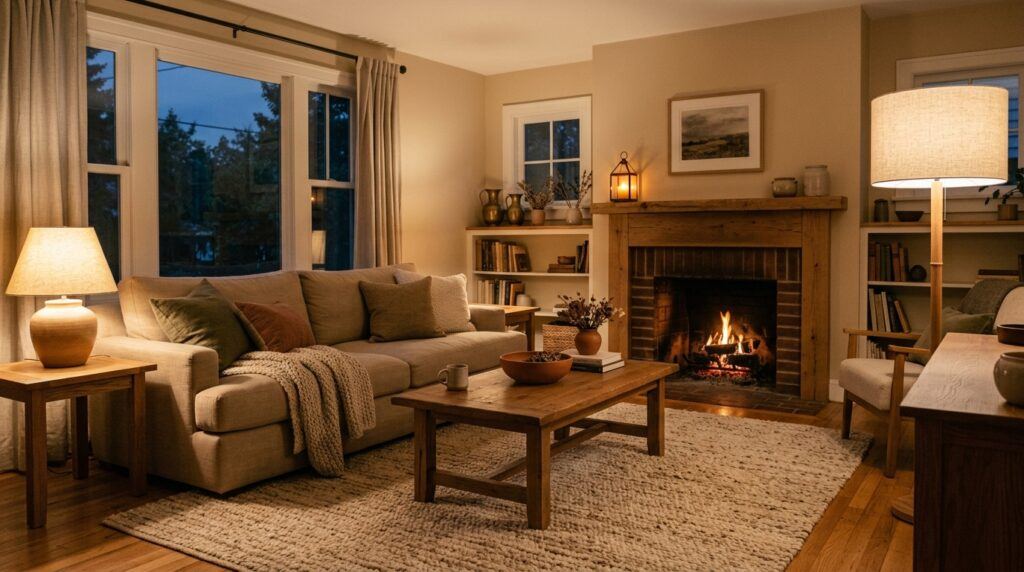
Let Layered Lighting Make Color Feel Softer
Daylight changes every color in the room. A paint color that looks creamy at noon may look dull in a shaded corner, while terracotta fabric often becomes warmer at night.
I prefer a mix of overhead light, table lamps, floor lamps, and candlelight. Warm bulbs around 2700K usually make beige, olive, and wood tones feel more welcoming. A bright, cool bulb can make a cozy room feel like a waiting room.
Color often looks best in the evening when the room has several gentle pools of light instead of one bright source overhead.
Keep Color Choices Timeless Without Making the Room Boring
A timeless room should still feel like someone lives there. The goal isn’t to remove every interesting choice. It’s to put the bolder choices where they can be changed without regret.
Keep the palette to roughly three to five connected colors. Before buying paint, test it on several large patches in both sunny and shaded areas. A tiny paint chip is far too flattering.
Avoid the Color Mistakes That Make a Living Room Feel Restless
Too many unrelated accent colors can make even good furniture feel busy. The same happens when every pillow, artwork, and object asks for attention at once.
Don’t ignore the undertones already in the room. A cool gray wall beside warm honey oak can look accidental. Repeat contrast with purpose, rather than scattering it around like confetti.
Refresh the Palette by Changing Small Details First
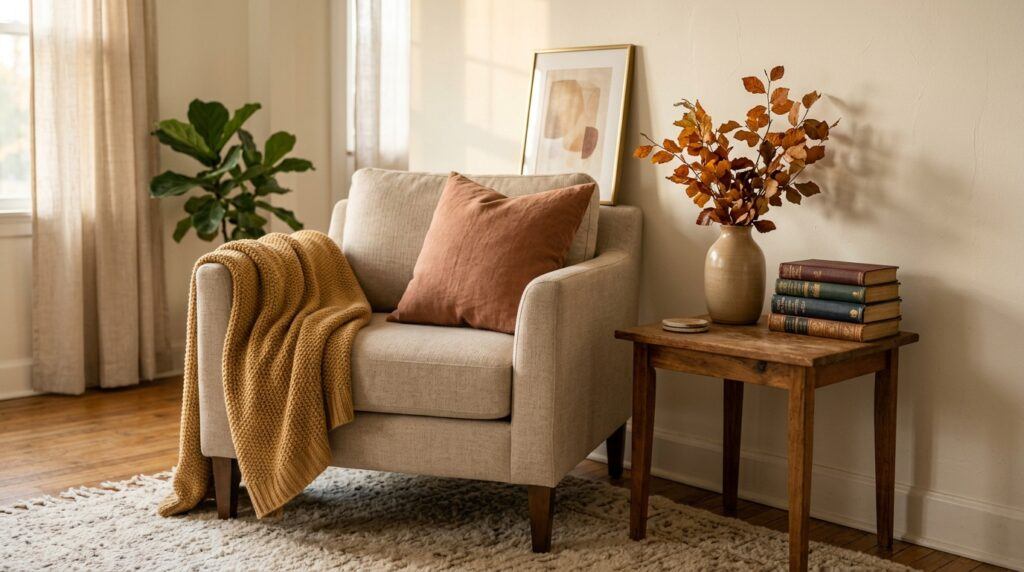
Before replacing a sofa, I change pillow covers, throws, flowers, artwork, and a few small objects. It’s less expensive, and it lets the room shift with the season without losing its familiar feeling.
Terracotta and ochre suit fall. Muted green feels fresh in spring. Navy and cream work all year, especially when the room needs a crisp little reset but not a full furniture-moving weekend.
Before you buy new furniture
Try this small-room refresh first
A few simple swaps can change the mood of a room without losing the comfortable feeling you already love.
- Change pillow covers before replacing larger furniture.
- Add one new throw in a color you want to test.
- Move artwork or books to repeat your accent color elsewhere.
- Bring in flowers, branches, or a plant for a natural seasonal shift.
- Try warmer bulbs before deciding a paint or fabric color is wrong.
Frequently Asked Questions
A few simple answers for choosing color with confidence.
What is the easiest color to add to a neutral living room?
Navy is often the easiest place to start because it works with cream, beige, gray, and most wood tones. Try it in pillows, a throw, or framed art before using it on a wall.
Should the sofa be a neutral color?
A neutral sofa gives you more freedom later, which is why I usually prefer one. A deep green or navy sofa can also work beautifully if it suits the fixed finishes and you plan to keep it for years.
Can warm and cool colors work in the same room?
They can, as long as there is a bridge between them. Soft gray with warm beige, natural wood, and cognac leather usually feels balanced rather than divided.
How many throw pillows are too many?
There is no perfect number, but seating should still be comfortable. If guests have to stack pillows on the floor before sitting down, the room has probably had enough.
A Room That Still Feels Like Home
A timeless living room doesn’t need to be colorless. It needs a calm foundation, a few colors that belong together, and layers that make the space feel warm when the day winds down.
I like to make changes gradually. A pillow, a lamp, or a piece of art can tell you more about a color than a rushed paint decision ever will. Choose what supports comfort, and the room will keep feeling like yours.