

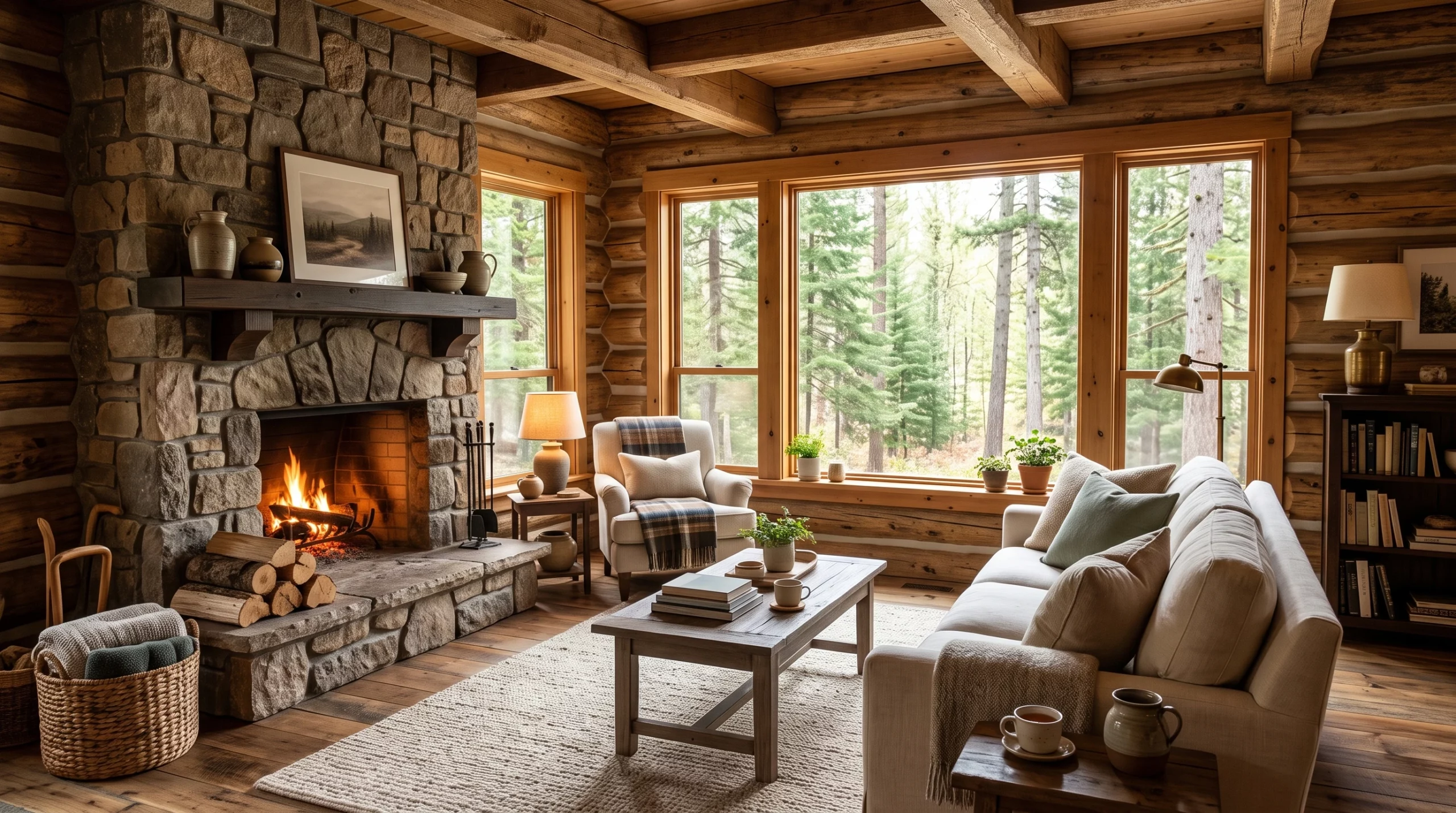
Wood-rich rooms can feel wonderfully sheltered, especially when they include exposed beams, log walls, and a large stone fireplace. Still, too much dark timber can swallow the daylight before noon and leave the living room feeling heavier than it should.
When I think about how to create a cozy cabin living room without making it feel dark, I start by protecting the available light. I don’t want to cover every log wall or remove the rugged details that give the cabin its personality. Instead, I balance those darker surfaces with lighter colors, comfortable fabrics, reflective accents, and lighting placed at several heights.
The formula is fairly simple: brighten the room first, then bring in warmth through texture, furniture, and personal details. You can keep everything that makes the space feel like a real cabin without letting it become gloomy.
How Do You Make a Cabin Living Room Feel Brighter?
Keep the windows as open as privacy allows, balance dark wood with cream or warm neutral furnishings, and use mirrors to spread daylight. Complete the room with light-colored textiles, open furniture arrangements, and several warm light sources instead of relying on one overhead fixture.
Key Takeaways
- Keep windows open to the view and use mirrors to carry daylight farther into the room.
- Balance dark logs with cream, warm white, pale beige, soft gray, or muted sage.
- Add comfort with rugs and textured fabrics instead of more heavy wood furniture.
- Arrange furniture in welcoming groups while preserving open walkways and sightlines.
- Layer warm, dimmable lighting so the cabin remains comfortable after sunset.
- Let the logs, beams, and stone fireplace provide most of the rustic character.
Start by Protecting the Natural Light
A bright cabin does not require hiding every dark beam or replacing a beautiful stone hearth. I prefer to treat those architectural features as the room’s anchors and then give them enough visual breathing room.
Natural daylight should lead the design whenever possible. After that, I focus on lighter colors across large surfaces, a few reflective details, comfortable textures, and several sources of warm artificial light.
The most inviting cabin rooms usually include five basic elements:
- Unobstructed natural light
- Light colors on large upholstered surfaces
- Mirrors or subtle reflective accents
- Layered lighting for different times of day
- Soft textures that add comfort without unnecessary bulk
These rooms also tend to feel collected over time rather than staged around a rustic decorating theme. That distinction matters. A cabin should feel personal and comfortable, not like a display filled with every woodland accessory someone could find.
The Cabin Brightness Formula
Five Elements That Keep Rustic Rooms From Feeling Heavy
Natural Light
Keep windows, doors, and important sightlines as open as possible.
Lighter Surfaces
Use cream, oatmeal, beige, muted sage, and other warm pale colors.
Gentle Reflection
Add mirrors, glazed pottery, aged brass, copper, or subtle glass accents.
Layered Lighting
Combine overhead, task, and accent lighting for more even illumination.
Soft Texture
Bring in linen, wool, knits, rugs, and cushions without crowding the room.
Use Windows, Light Curtains, and Mirrors to Spread Daylight
Picture windows do more than illuminate a room. They pull the surrounding forest, lake, or mountain view into the decor, making the cabin feel larger and more connected to the landscape.
Keep glass doors and large windows as clear as privacy allows. In a secluded setting, bare windows may work beautifully. When coverage is needed, I like sheer linen curtains or woven shades that filter glare without shutting out the daylight.
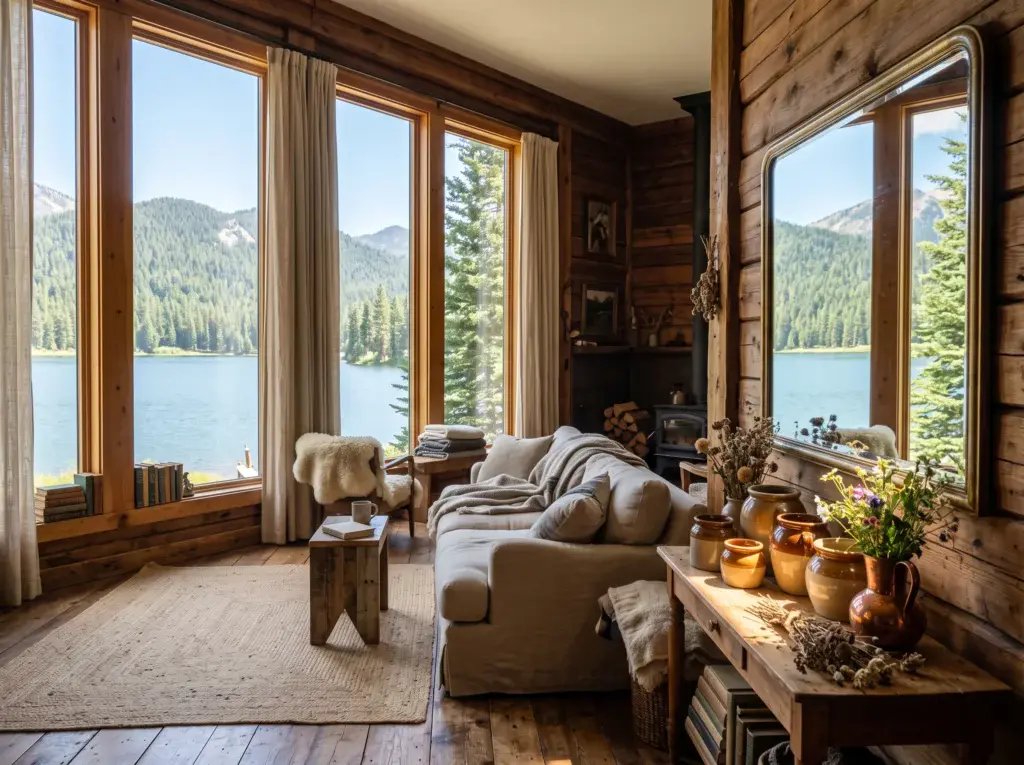
Heavy drapes can look rich, but they often cover more glass than people realize. Against dark timber walls, that lost daylight becomes even more noticeable.
Furniture placement also makes a difference. Position a sofa or bookcase perpendicular to a window instead of directly in front of it. This preserves the view and allows sunlight to travel deeper into the living room.
A large mirror placed across from the brightest window can reflect both the light and the scenery. Smaller reflective accents help as well. Aged brass, copper, glazed pottery, glass lamps, and metallic picture frames catch the light while still looking natural beside wood and stone.
Brighten Dark Wood With the Right Colors
Dark wood absorbs light, so large pale furnishings usually make a greater difference than a collection of tiny white accessories. A cream sofa, oatmeal-colored rug, and light window treatments can noticeably change the room’s mood without altering its architecture.
I return to warm white, pale beige, soft gray, muted sage, and subdued blue because these colors sit comfortably beside pine, cedar, walnut, leather, and natural stone. They create contrast without making the cabin feel cold or overly polished.
Try not to match every furnishing to the wood walls. A room filled with brown upholstery, dark tables, and heavy wood cabinets can become visually dense very quickly.
The ceiling is another place where color can help. A warm white or light beige ceiling makes a vaulted cabin living room feel taller and gives daylight another surface to bounce from. If the walls still feel oppressive, consider lightwashing or whitewashing one wall rather than changing the entire room.
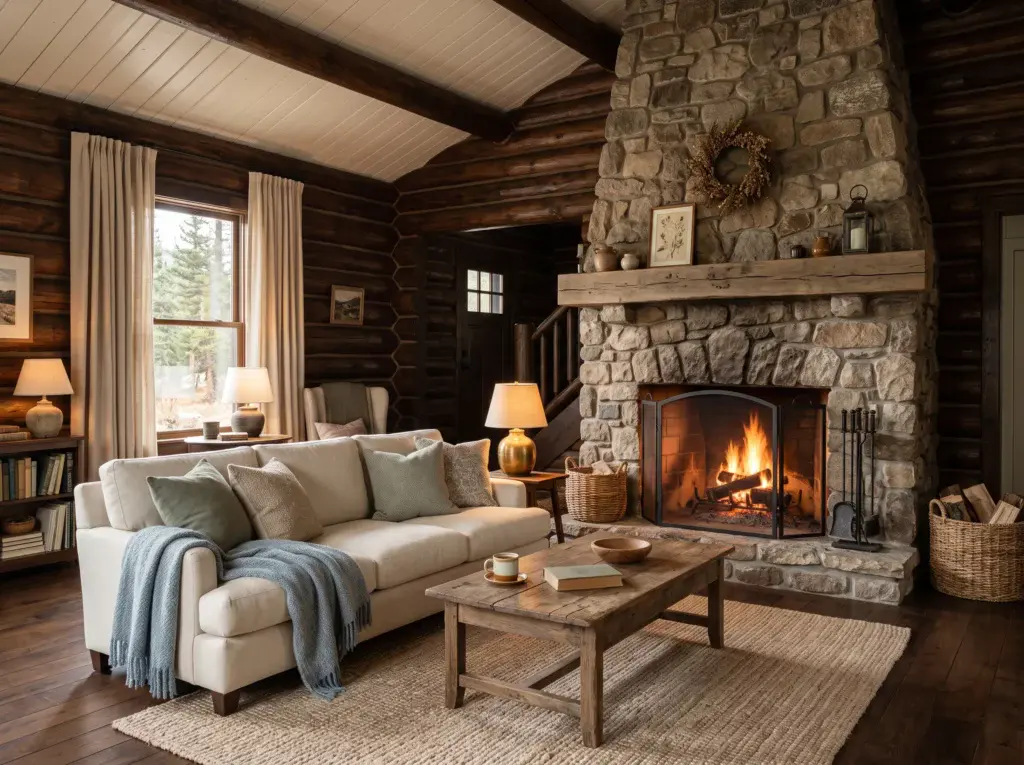
Keep plenty of natural wood visible. Its grain, knots, color variation, and imperfections are part of what gives a cabin its identity.
Let the logs do the visual heavy lifting, then keep the surrounding furnishings lighter and quieter.
Add Warmth With Textures That Still Feel Light
Coziness comes from touch as much as color. A room doesn’t need to be dark to feel warm, and it doesn’t need to be crowded to feel comfortable.
I build that sense of comfort with wool, linen, woven cotton, chunky knits, jute, plaid, and faux sheepskin. These materials soften hard floors and rugged architecture without adding another layer of dark wood.
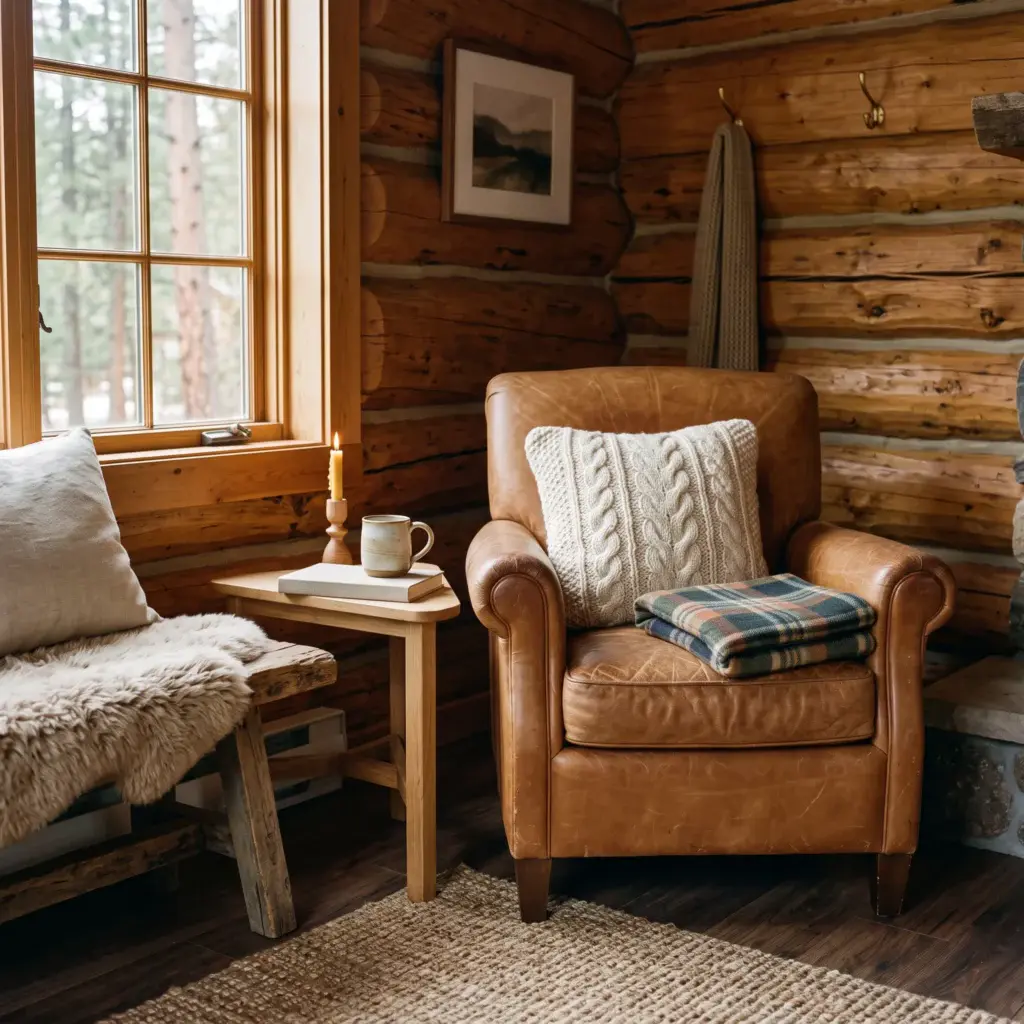
Start with a generously sized area rug beneath the main seating group. It will help define the conversation area, reduce echo, and make a large room feel more settled. An oatmeal, cream, faded pattern, or softly colored rug can also brighten the floor without looking out of place.
From there, add smaller layers carefully. A folded wool throw, several linen cushions, and perhaps a sheepskin draped over a chair may be enough. Too many competing patterns can make the room feel busier and, oddly enough, darker.
Mixing finishes helps the space feel relaxed. A worn leather chair becomes more inviting with a light knit pillow. A rough wood coffee table feels less severe beside linen upholstery. Pale throws and cushion covers also make it easy to refresh the room as the seasons change.
Choose Furniture That Fits the Cabin’s Scale
Many cabins and log homes have tall ceilings, wide layouts, or open great rooms. Small furniture can look stranded in that much space, but oversized, blocky pieces may close off the room and restrict the light.
Choose a sofa and chairs with enough depth to be genuinely comfortable. At the same time, look for exposed legs, raised bases, open arms, or gentler silhouettes. Furniture that allows part of the floor to remain visible tends to feel lighter than pieces that sit solidly against it.
In a large great room, use rugs and furniture groupings to create separate areas for conversation, reading, or enjoying the fireplace. You don’t need to push everything against the walls. Bringing the furniture closer together often makes the room feel more welcoming.
Keep a clear path around each seating group and preserve the primary sightlines toward the fireplace and outdoors. In a smaller cabin, benches with hidden storage and ottomans that double as tables can control clutter without requiring another large cabinet.
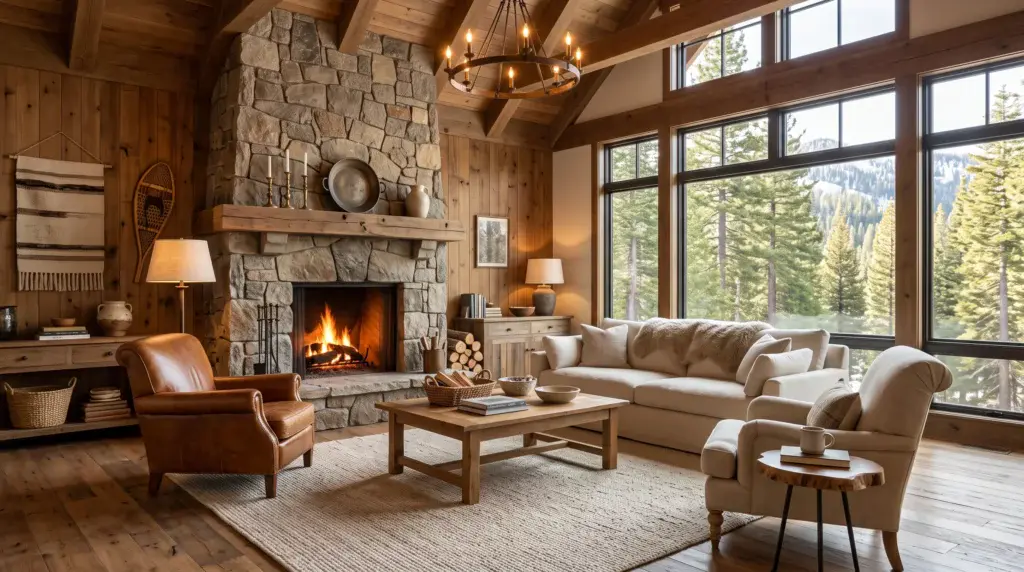
Let the Fireplace Lead the Room
A stone fireplace naturally draws people together, so it makes sense to arrange the main seating around it. That does not mean every chair needs to form a rigid semicircle.
I prefer a looser arrangement that encourages conversation while leaving the windows and architecture visible. A sofa can face the hearth while a pair of chairs sits at an angle, perhaps with a small table and lamp between them.
The fireplace already delivers a considerable amount of texture and rustic character. It doesn’t need a mantel overflowing with signs, artificial greenery, miniature animals, and themed decorations.
A few personal pieces are usually more effective: handmade pottery, a landscape painting, a reclaimed wood box, an old photograph, or a simple bowl filled with pinecones and stones collected nearby.
Plants can provide fresh contrast against warm timber. Ferns, pothos, snake plants, and other easy-care varieties introduce green without competing with the room’s natural materials.
The exposed logs and stonework are already making a strong statement. When every shelf is filled with antlers, signs, and woodland ornaments, the room can begin to resemble a gift shop instead of a comfortable home.
Layer the Lighting for Cozy, Clear Evenings
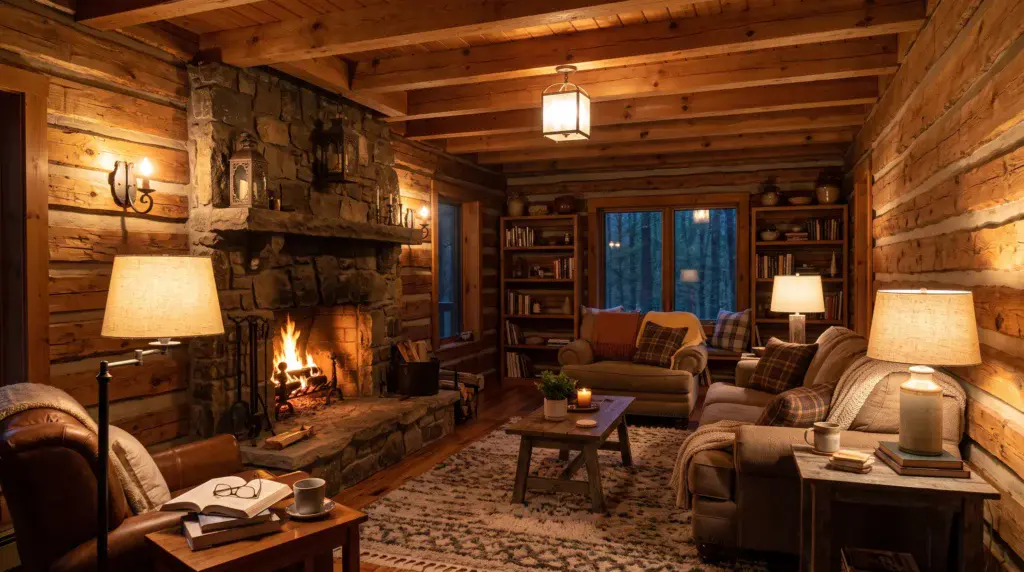
A single overhead fixture rarely provides enough light in a wood-rich cabin. It tends to create bright spots directly beneath the bulb while leaving the walls and corners in shadow.
I prefer to use three layers of lighting:
- Ambient lighting for general visibility
- Task lighting for reading, games, and conversation
- Accent lighting for the fireplace, beams, artwork, or architectural details
Choose warm-white bulbs around 2700K for living areas. Table lamps with linen shades, floor lamps beside reading chairs, and sconces near the fireplace produce a gentler glow than exposed bulbs.
Dimmers are especially useful in a cabin living room. You can raise the light level for cleaning, reading, or playing games and then lower it when you want a quieter atmosphere.
For a newer cabin or renovation, indirect LED lighting beneath shelves or along a beam can soften the ceiling line. A lantern-style pendant or aged-bronze chandelier can still provide rustic character, but it should be part of the lighting plan rather than the only source of illumination.
Avoid the Choices That Make a Cabin Feel Heavy
Some decorating decisions can drain the brightness from a cabin surprisingly quickly. Watch for these common problems:
Cabin Decorating Check
What Can Make the Room Feel Too Heavy?
Try this first: Move anything that blocks daylight or interrupts a walkway before buying more furniture or decor. Sometimes the room simply needs more open space.
Keep the Rustic Character Without Losing the Light
A cozy cabin living room can remain bright when daylight leads the design and dark wood is given a lighter supporting cast. Pale upholstery, soft textiles, open pathways, reflective accents, and layered lighting create comfort without stripping away the room’s rustic soul.
You don’t have to change everything at once. Begin with one practical improvement, such as replacing heavy curtains, adding a lighter rug, moving furniture away from a window, or placing a lamp in a shadowy corner.
A cabin should feel like a place where you can settle in for the evening, enjoy the view, and breathe a little easier. With the right balance, brightness and comfort don’t compete with each other. They belong together.
Find Your Cozy Escape
Explore More Cabin and Cottage Spaces
Discover rustic living rooms, quiet lakeside cottages, welcoming porches, and peaceful retreats created to inspire your own comfortable space.
Explore Cabin & Cottage IdeasCreating a Cozy Cabin Without Losing the Light
These answers cover some of the most common questions about balancing dark wood, natural light, comfortable furniture, and rustic character.
How can I brighten a dark cabin living room?
Begin by removing anything that blocks the windows, including heavy curtains and tall furniture. Add a large mirror across from the brightest window, then introduce a cream sofa, light area rug, pale window treatments, and several warm light sources throughout the room.
What colors work best with dark cabin wood?
Warm white, cream, oatmeal, pale beige, soft gray, muted sage, and subdued blue work well with dark timber. These colors provide contrast without making a rustic cabin feel cold or overly modern.
Should I paint the wood walls in a dark cabin?
Painting every wall is not always necessary. Try lighter furniture, window treatments, rugs, and improved lighting first. If the room remains too dark, consider lightwashing or whitewashing one wall or painting the ceiling a warm white while leaving most of the natural wood visible.
What lighting is best for a cabin living room?
Use a combination of ambient, task, and accent lighting. Warm-white bulbs around 2700K work well in living areas. Combine a ceiling fixture with table lamps, floor lamps, wall sconces, and subtle accent lighting so dark corners do not disappear into shadow.
How do I make a cabin cozy without adding clutter?
Build comfort through texture rather than an abundance of decorations. Use a large rug, several cushions, a wool throw, linen curtains, and comfortable seating. Choose a small collection of meaningful objects and leave some shelves and tabletops open.
What type of furniture makes a cabin feel more open?
Look for comfortable furniture with exposed legs, raised bases, open arms, or softer silhouettes. These details allow more floor space to remain visible. Keep pathways open and avoid placing tall pieces in front of windows or important outdoor views.
Can a cabin living room be both rustic and bright?
Yes. Let the logs, beams, stone fireplace, and outdoor setting provide the rustic character. Balance those darker architectural features with lighter upholstery, natural fabrics, reflective accents, open furniture placement, and layered lighting.
