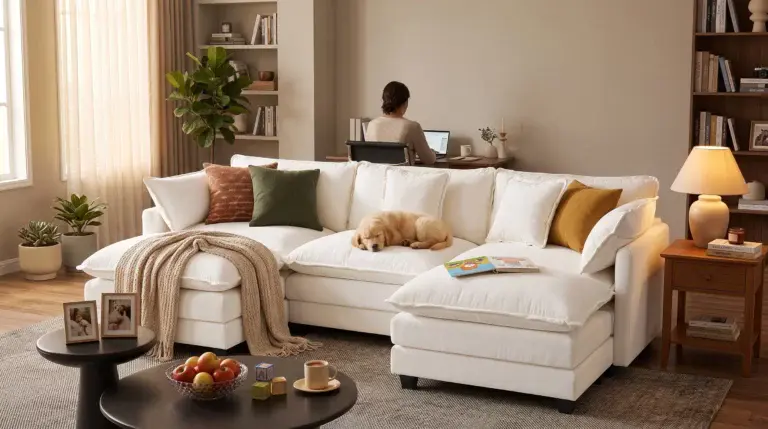

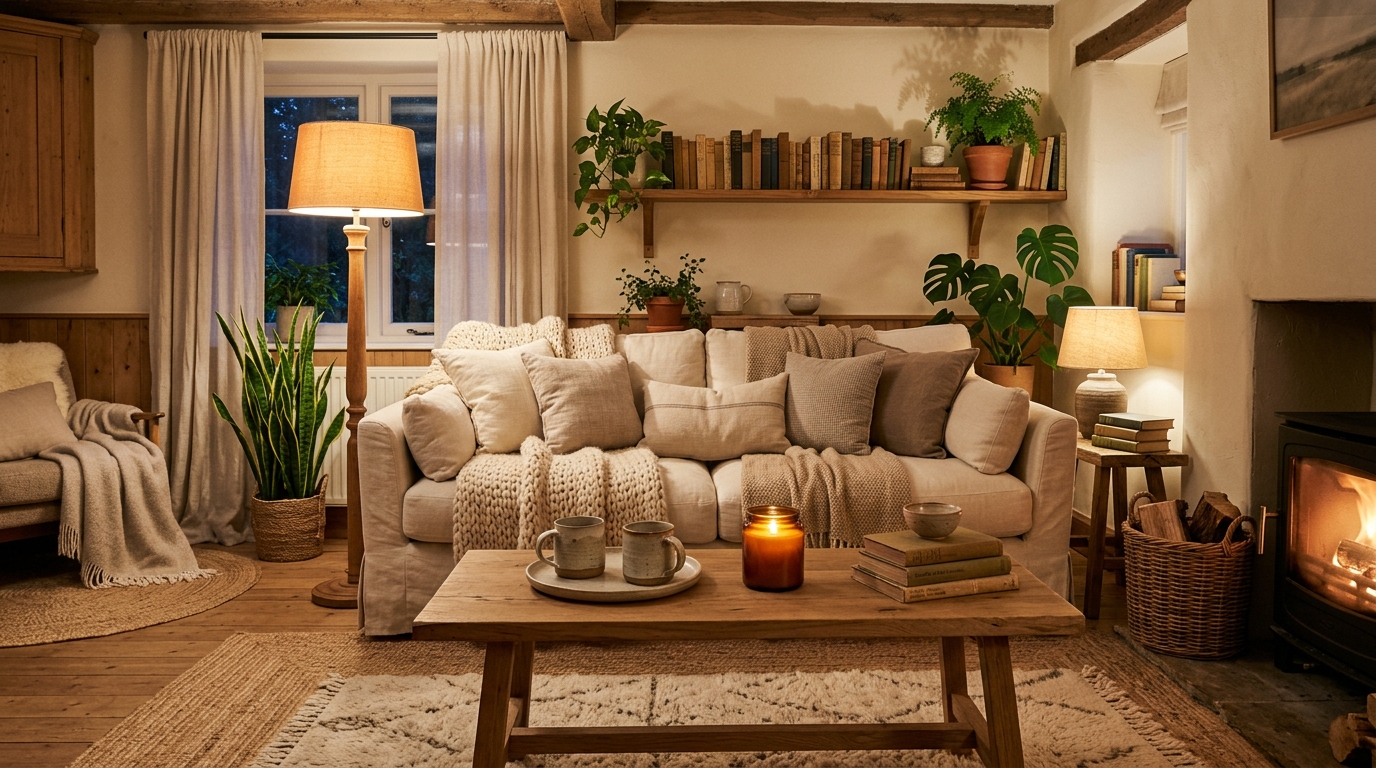
Hygge is more than a decorating trend to me. It is a way to make your living room feel warm, calm, useful, and welcoming on an ordinary Tuesday night.
When I think about creating a hygge-inspired living room, I do not picture a perfect showroom. I picture soft light, a good chair, a blanket within reach, and space for coffee with friends, family time, or a sleeping pet. Start with comfort and connection, then let the decor follow.
Quick Answer
A hygge-inspired living room starts with real comfort. Use warm lighting, soft textures, natural materials, useful surfaces, and seating that encourages people to relax, talk, read, or simply stay awhile.
Key Takeaways
- Use warm neutrals as a calm base, then add depth through texture and a few darker accents.
- Arrange furniture for conversation and lingering, not only for watching television.
- Build several low-level light sources and choose warm bulbs around 2700K.
- Bring in wool, linen, wood, ceramics, plants, books, and objects with a personal story.
- Keep useful surfaces clear and hide everyday clutter in baskets, trays, or closed storage.
Creating A Hygge-Inspired Living Room From the Ground Up
A hygge room feels edited, yet it should never feel empty. In my experience, every visible item should do one of three jobs: add comfort, serve a purpose, or remind you of someone or something you love.
Begin with a neutral foundation. Warm white, cream, beige, oatmeal, taupe, soft gray, muted sage, and dusty blue all work well. I favor shades with red or yellow undertones because they feel gentler after dark. This approach also fits current interiors, which are moving away from stark white and all-gray rooms toward warmer, tactile spaces.
A small apartment can feel just as inviting as a large open-plan home. Creating a hygge-inspired living room depends on the mood you create, not the square footage you own.
Build a warm neutral base without making the room feel plain
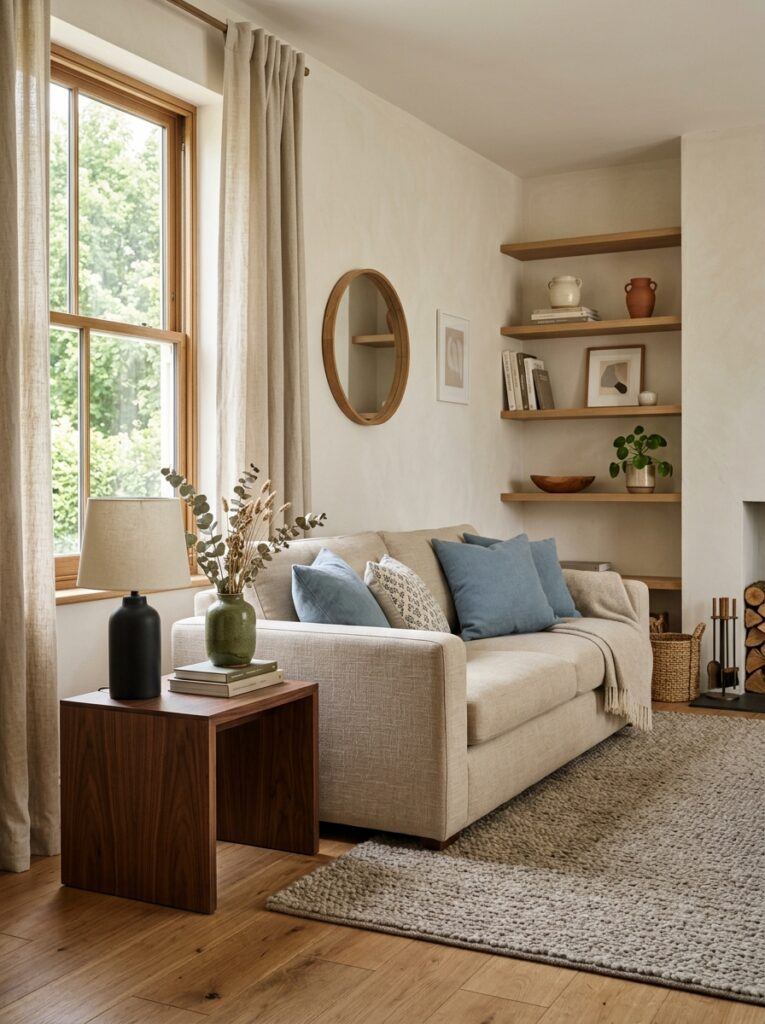
Use calm earthy shades for walls, curtains, rugs, and larger furniture. Then add contrast in smaller doses. A moss-green vase, dusty-blue pillow, walnut side table, or matte black lamp base gives the room shape without disrupting its calm.
Avoid filling every shelf because blank space gives your favorite pieces more presence. I keep daily clutter in a lidded basket or cabinet, then use a tray to corral remotes, coasters, and a candle. A room feels lived in when you can use it without constantly moving decorations.
A Simple Hygge Color Rule
If the room feels too plain, do not rush to add bright color. Add texture first. A woven rug, linen curtain, wood table, ceramic vase, or chunky throw can make a neutral room feel deeper without making it feel busy.
Choose seating that makes people want to stay
Comfort should guide the layout. A deep sofa, soft armchair, pouf, or rounded ottoman makes people more likely to settle in. Low-profile sofas with deep seats and softer curves also fit the relaxed direction many living rooms have taken in 2026.
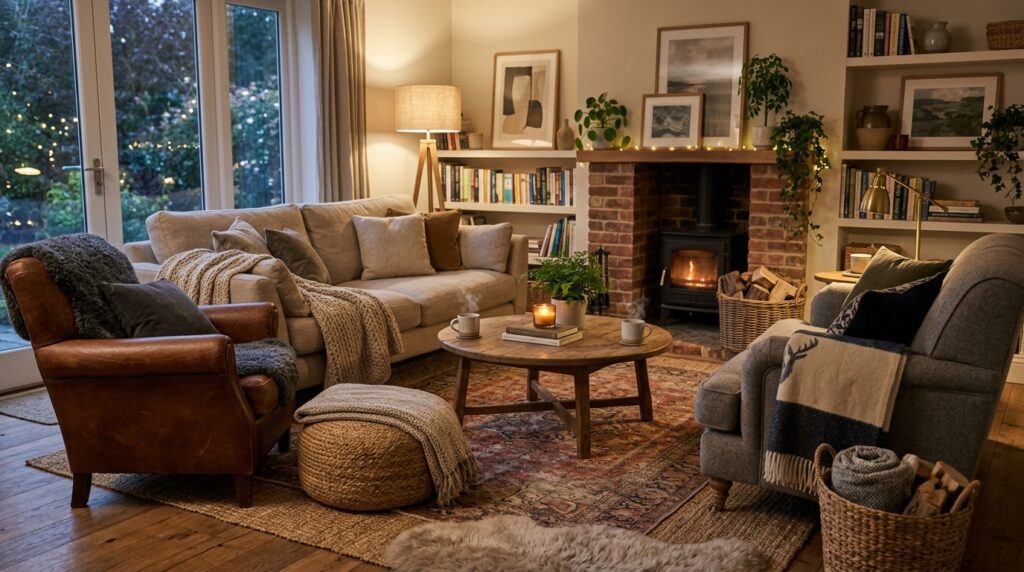
Place seats so people can see each other. When space allows, leave roughly 4 to 8 feet between conversational seating. I avoid aiming every chair at the television, because a room becomes friendlier when a conversation can start without anyone twisting sideways.
A quiet corner can become a reading nook with a comfortable chair, a small bookshelf, and a floor lamp. Add a throw and a side table large enough for a mug.
Comfort Check
- Can someone sit down without moving three pillows first?
- Is there a place nearby for a mug, book, phone, or snack?
- Can people face each other without twisting around?
- Is there a blanket or soft throw within reach?
- Does the room feel good in the evening, not just during daylight?
Layer Hygge Living Room Lighting and Textures for Instant Comfort
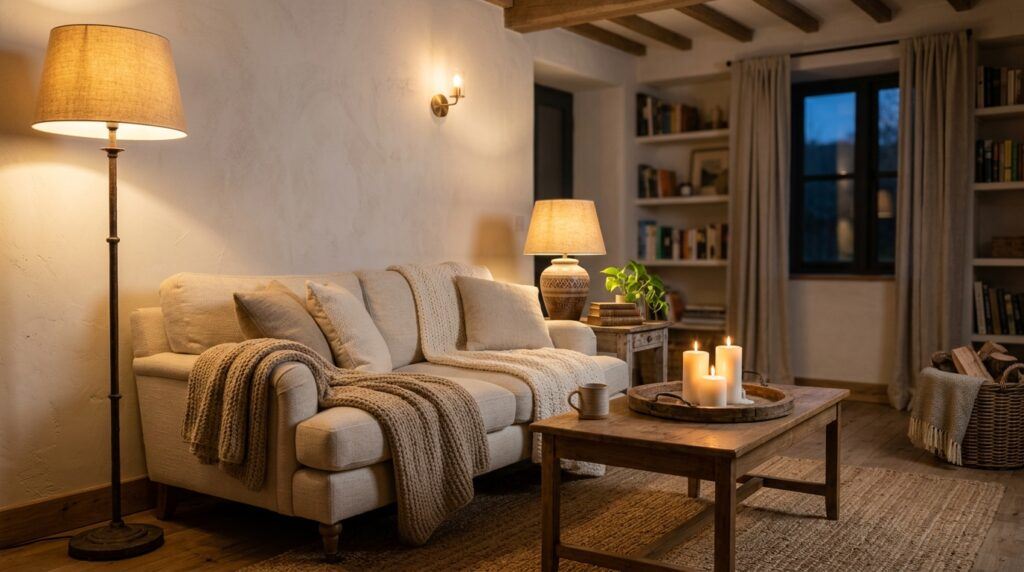
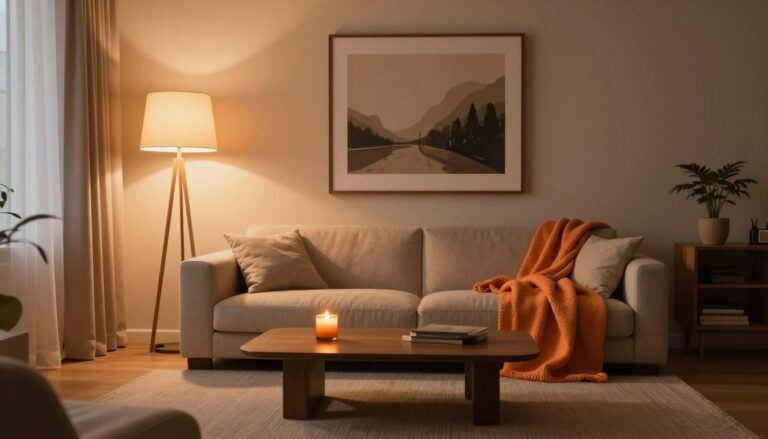
One bright ceiling fixture rarely creates the softness hygge needs. I prefer three or four gentle pools of light across the room: a floor lamp beside the sofa, a table lamp near books, a wall sconce, and candles or subtle string lights.
Choose bulbs around 2700K for a soft golden glow. That temperature feels closer to candlelight than the cool, blue-white light common in workspaces. Texture matters just as much, because a room should look inviting before anyone sits down.
Use candles and lamps to create a softer evening glow
Low-level lighting changes the pace of an evening. I use fabric or frosted shades, dimmable lamps, and candles grouped at different heights on a tray or mantel. A fireplace makes a natural focal point, but it is not required.
A lamp-lit chair and a small candle arrangement can create the same welcoming pull. Keep open flames away from curtains, children, and pets. Battery-operated candles are a practical choice for homes where a curious cat claims every surface.
A cozy room needs more than dim light. Put light where people actually sit, read, talk, and rest.
The 2700K Lighting Tip
For a softer hygge feeling, look for bulbs around 2700K. That gives you a warm golden glow instead of the cool, sharp light that often feels better suited for an office.
Use it in lamps, sconces, and reading corners so the room feels calm without becoming too dark to actually use.
Mix wool, linen, cotton, and other touchable fabrics
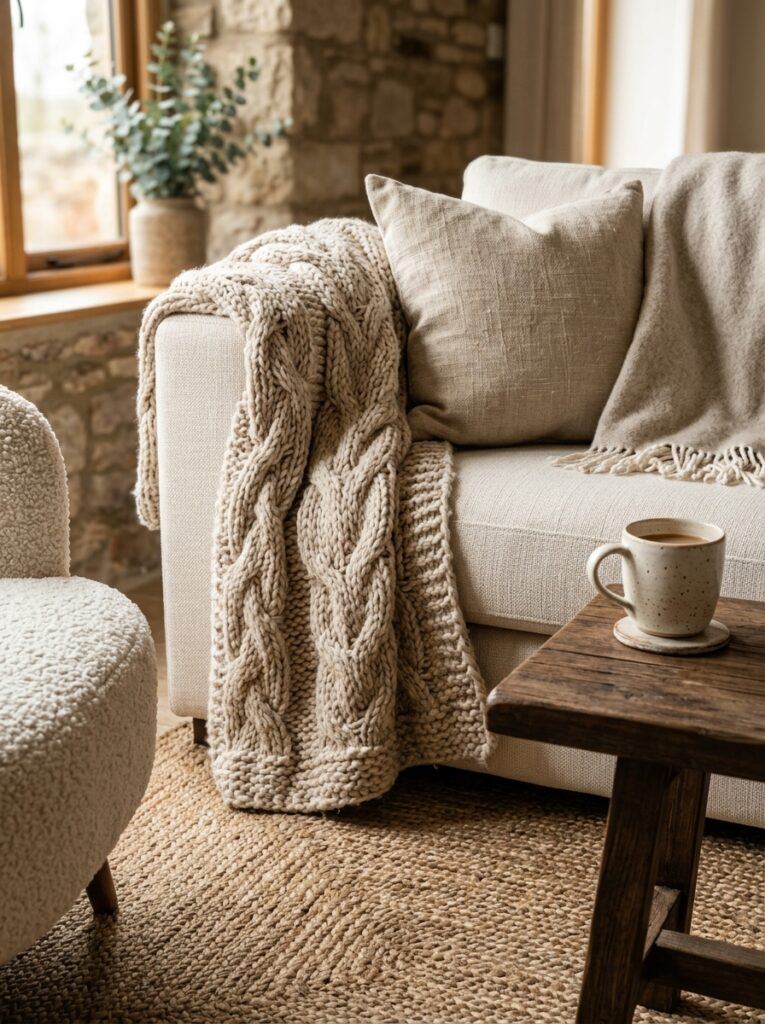
Texture creates depth without asking you to add more color. Layer a large neutral rug with a smaller wool, jute, or textured rug if the floor feels bare. Linen curtains, cotton throws, bouclé upholstery, velvet pillows, faux fur, and sheepskin all bring a different feel.
I drape throws over the sofa arm or chair back so they are easy to grab. Arrange pillows in balanced groups of two or three, then leave enough open seating for people. Too many pillows turn comfort into a chore.
Bring Nature and Personal Meaning Into the Cozy Space
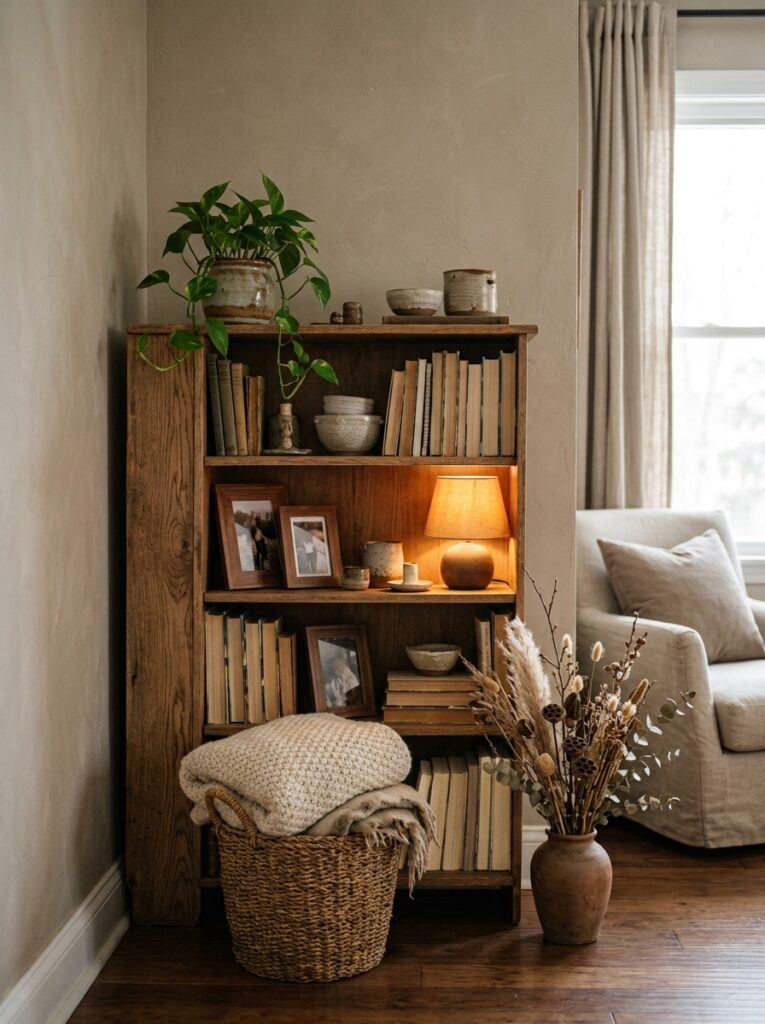
Natural materials keep a hygge room from feeling generic. Wood, wicker, rattan, stone, ceramic, leather, and woven baskets add warmth even when the color palette stays simple. A wood or stone coffee table, clay vase, or rattan basket can anchor the room without making it look themed.
Add a pothos or snake plant if you want low-maintenance greenery. Fresh flowers, dried stems, seasonal branches, and botanical artwork also bring the outdoors inside. I prefer a few real plants to artificial greenery, which can make a room feel less convincing.
Books, family photos, handmade ceramics, and vintage finds give the room its memory. A well-used bookcase can be more comforting than a shelf filled with matching objects.
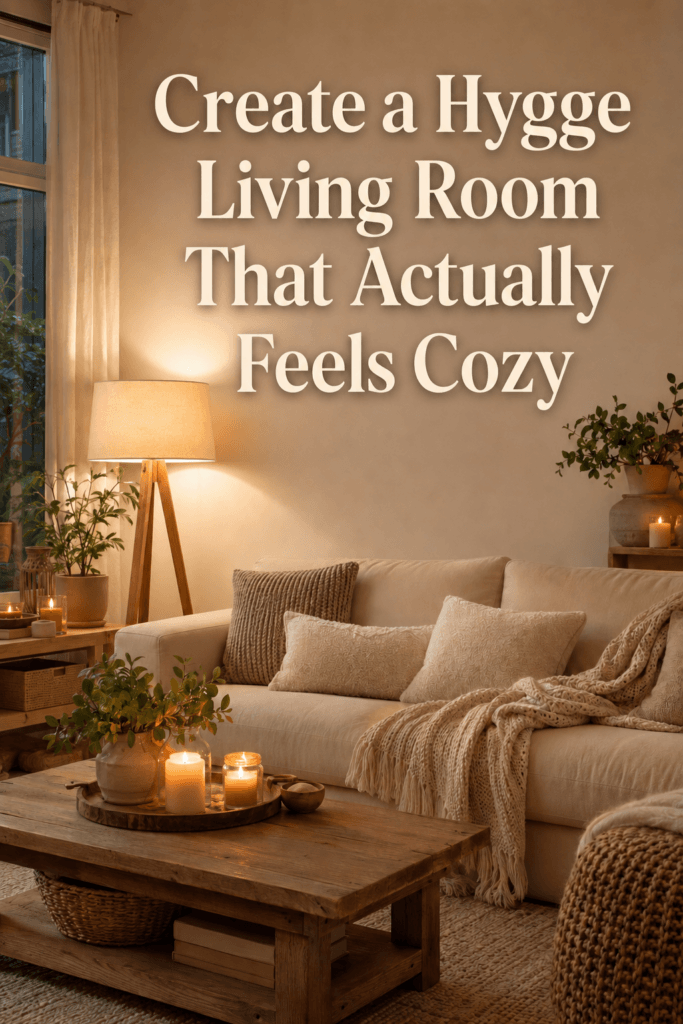
Create a calm room that still feels lived in
Cozy and cluttered are not the same. Display what you use, love, or remember. Remove decor that only creates visual noise.
Keep clear walking paths and make the coffee table useful. I usually style mine with a small tray, two or three books, and room for a mug. Natural light, a mirror, and simple curtains can also open up a darker room while preserving its intimate mood.
Start With These Four Pieces
A Room Made for Everyday Comfort
You do not need to replace every piece you own to make your space feel more hygge. Begin with one comfortable seat, a warm lamp, a soft throw, and one natural or meaningful object.
Layered lighting, touchable fabrics, gentle colors, uncluttered storage, and close seating work together to create real comfort. The best hygge living room supports your actual life, whether you are reading alone, sharing coffee, welcoming friends, or relaxing with family and pets.
Make the Room Feel Like Yours
The best hygge living room is not copied from a catalog. It is built slowly with comfort, soft light, natural textures, and the little things that make you want to stay home a bit longer.
FAQ: Creating a Hygge-Inspired Living Room
A hygge living room feels warm, calm, useful, and comfortable. Soft lighting, cozy seating, natural textures, warm neutral colors, candles, books, plants, and personal items all help create that feeling.
Warm neutrals usually work best. Cream, beige, oatmeal, taupe, soft gray, muted sage, dusty blue, and warm white can all create a calm base. You can add depth with wood tones, moss green, walnut, clay, or matte black accents.
Use several low-level light sources instead of one bright ceiling light. Floor lamps, table lamps, sconces, candles, and dimmable bulbs around 2700K can create a warm evening glow.
Yes. Hygge depends more on mood than square footage. A small room can feel very cozy with one comfortable seat, a warm lamp, a soft throw, useful storage, and a few natural or meaningful objects.
Display items that are useful, comforting, or meaningful, then hide everyday clutter in baskets, trays, cabinets, or closed storage. Keep walking paths clear and leave enough open surface space for mugs, books, and daily use.