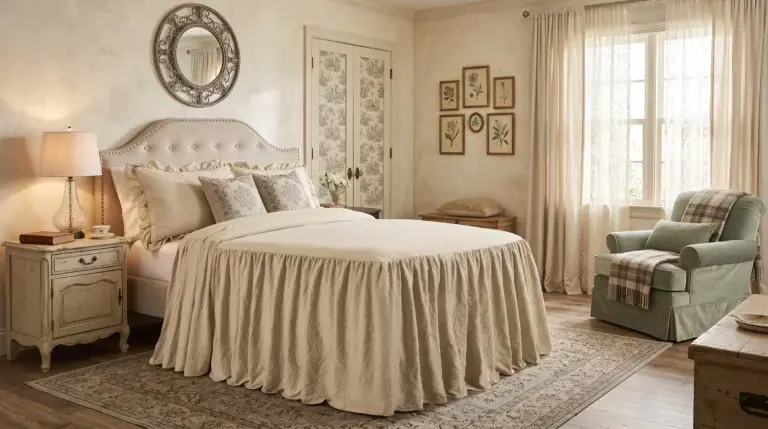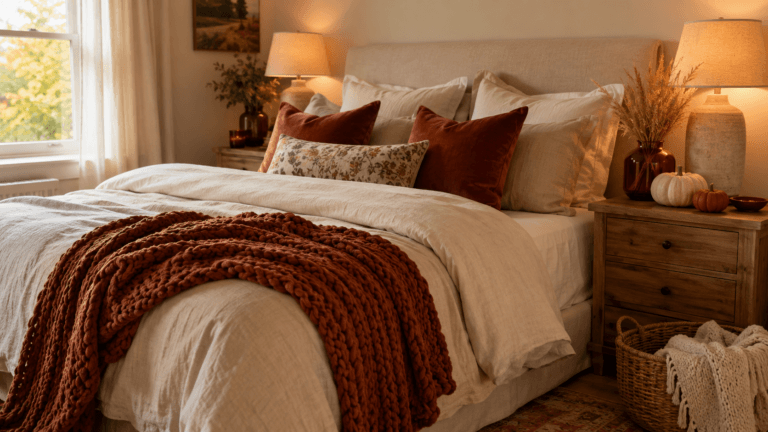

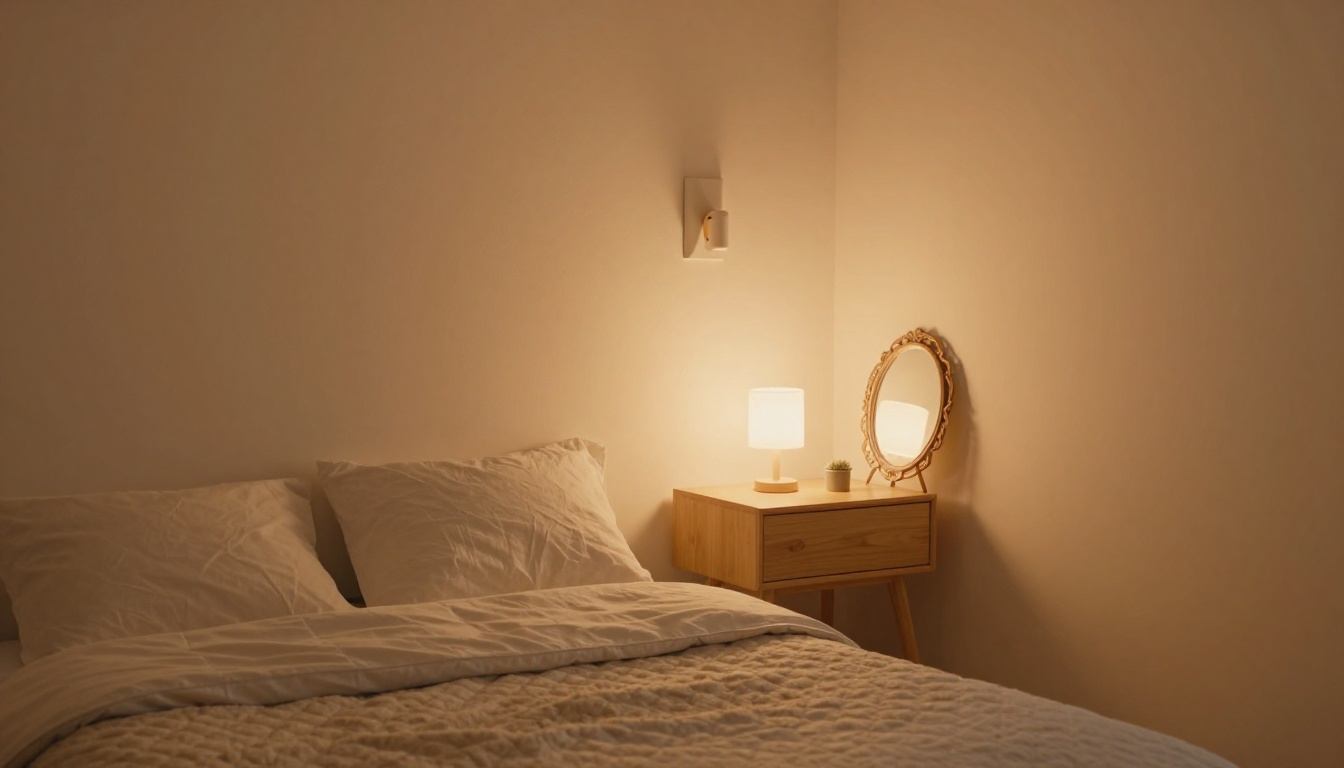
A cramped bedroom can feel softer the moment a warm pool of light reaches the bedside. A narrow hallway feels longer when light brushes the wall instead of glaring down from one bright ceiling bulb.
To light up small spaces, I use gentle layers rather than adding lamps at random. Soft bulbs, reflective surfaces, and a few well-placed fixtures have made my own small rooms feel calmer and more welcoming. Start with the light you need, then add warmth around it.
This post may contain affiliate links. If you make a purchase through these links, I may earn a small commission at no extra cost to you.
Key Takeaways
- Layer ambient, task, and accent light to add depth without clutter.
- Choose warm white bulbs, usually 2700K to 3000K, for cozy rooms.
- Save floor space with sconces, pendants, flush mounts, and under-shelf lighting.
- Bounce light with mirrors and pale finishes, but keep shiny surfaces limited.
- Test each light at night from the spot where you actually sit or sleep.
Light up small spaces with layered lighting
A single overhead fixture flattens a room. Instead, use three jobs for light: ambient light for general visibility, task light for reading or cooking, and accent light for softness.
My simple plan is one main fixture, one useful work light, and one decorative glow. A flush mount plus a reading lamp and a small wall sconce can make a studio feel far more settled than one oversized lamp.
Choose warm white bulbs around 2700K to 3000K in living rooms, bedrooms, and entryways. A brighter neutral bulb works well at a desk or kitchen counter. I prefer dimmable bulbs and compatible fixtures because the same room may need clear light at 2 p.m. and a restful mood after dinner.
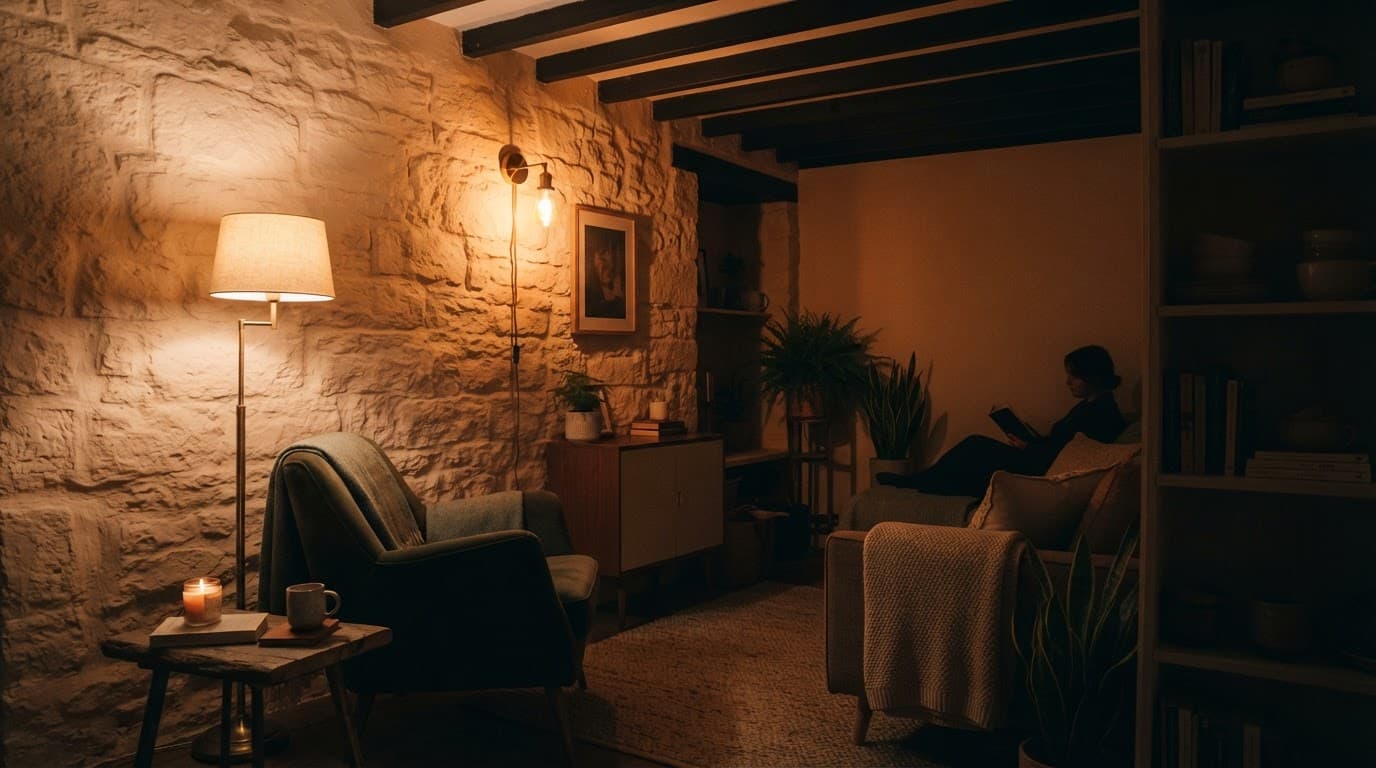
For visual ideas, browse small-room lighting inspiration and notice how often the light sits at different heights.
Choose fixtures that save floor and surface space
Plug-in sconces and swing-arm wall lamps work beside beds and sofas. A pendant can brighten a narrow console, while a flush mount keeps a low ceiling clear. Under-cabinet strips help dark kitchen counters, and clip-on lamps suit tiny reading corners.
Pick slim shapes and shades that aim light where you need it without blocking a walkway. Hide cords in paintable cord covers, and use renter-friendly adhesive clips for lightweight cables. Follow fixture instructions, use the right bulbs, and never overload an outlet.
Use mirrors, pale surfaces, and hidden light to spread brightness
Place a mirror across from a window or beside a lamp to bounce light farther into the room. Pale walls, glass, glazed ceramic, and a small brass detail can help too. Too many glossy surfaces, however, can make a cozy room feel cold.
LED strips under shelves, behind a headboard, beneath cabinets, or above a bookcase create a soft edge of light. I keep hidden lighting warm and dimmable so it feels like a glow, not a display case.
Make every corner brighter without making it feel crowded
To light up small spaces well, keep walking paths open and send some light toward walls or ceilings. That upward wash draws the eye beyond the furniture footprint.
Quick lighting plans for small spaces
Use these simple combinations as a starting point. Each plan gives the room a main source of light, a useful task light, and a softer glow.
Tiny Bedroom
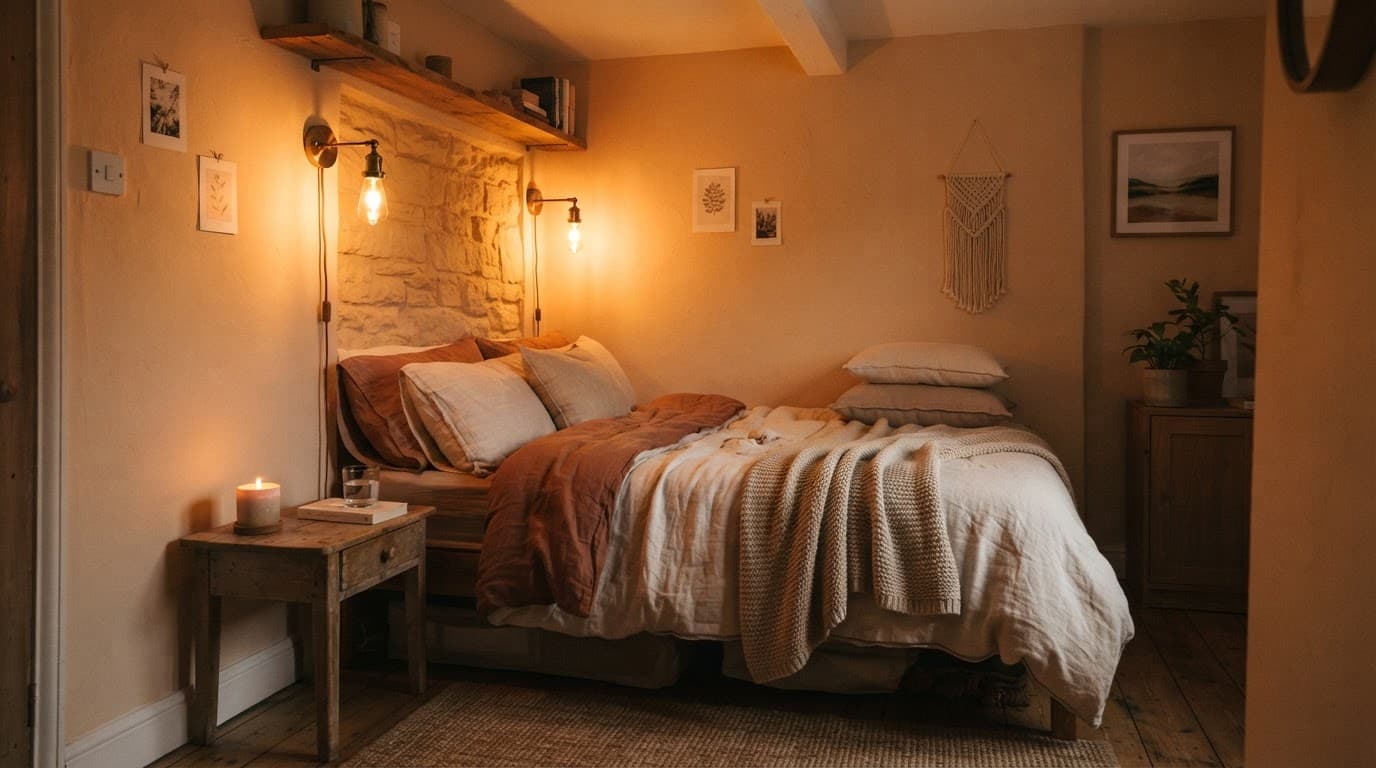
Add plug-in bedside sconces or pendants, warm bulbs for winding down, and a dim LED strip behind the headboard.
Studio Apartment
Use a flush mount for general light, a slim floor lamp by seating, and a small table lamp to make the sleeping area feel separate.
Narrow Hallway
Choose a flush mount or compact wall light, then add a mirror to reflect the light. A motion-sensor night-light can make late trips safer.
Small Kitchen
Pair a ceiling fixture with under-cabinet strips. Use warmer light for the overall room and neutral white task lighting around prep areas.
Small living rooms and studio apartments
Set a slim floor lamp behind a chair or place a petite lamp on a narrow console. A wall sconce near the sofa frees up side-table space. In a studio, separate the sleeping, dining, and lounging areas with different pools of light instead of physical dividers.
Vertical fixtures add height, while wide lamp bases crowd tight routes. I use one warm lamp near seating and a brighter light near any work surface.
Tiny bedrooms, bathrooms, and entryways
Mount bedside sconces about 20 to 30 inches above the mattress, then aim reading light over your shoulder rather than into your eyes. Pendants also work beside a bed when nightstands are tiny. For more bedroom examples, these cozy lighting ideas show how pendants and portable lamps can soften a sleep space.
In bathrooms, use bright, even light around the mirror and choose fixtures rated for damp locations. An entryway needs only a flush mount, picture light, or motion-sensor glow. I use these transition lights to make moving between rooms feel gentle.
Avoid the lighting mistakes that make small rooms feel smaller
One overhead light leaves corners gloomy and faces shadowed. Add a lower lamp or sconce before buying a brighter ceiling bulb.
Avoid blue-white bulbs in rooms meant for resting. Also skip shades that swallow all useful light, lamps that shine into your eyes, and tangled cords that make the room feel unfinished. Too many matching fixtures can look busy, while no contrast leaves the room flat.
Each evening, turn on one light at a time and sit in the room’s main spot. Adjust its height, direction, or brightness until it feels comfortable. Real-world tips in this cozy lighting discussion can also spark practical ideas, but never drape fabric over a hot lamp.
Frequently Asked Questions
Simple answers for creating a small room that feels warm, useful, and easy to move through.
What is the best light color for a cozy small room?
Warm white bulbs between 2700K and 3000K usually feel most welcoming in bedrooms, living rooms, and entryways. Use a slightly cooler bulb for detailed work, but avoid making it the only light source in a room meant for resting.
How can a small room get more light without adding a ceiling fixture?
Try plug-in sconces, rechargeable lamps, slim floor lamps, under-shelf strips, and mirrors near an existing lamp or window. Several low-glare sources often feel more natural and comfortable than one intense fixture.
Are wall sconces a good choice for renters?
Plug-in sconces can give you the look of built-in lighting without hardwiring. Check your lease first, conceal cords neatly, and use the mounting hardware recommended for the fixture and wall type.
How many lamps does a small room need?
Start with two or three light sources that do different jobs, such as a main light, reading light, and soft accent light. Add another lamp only if it solves a real problem, like a dark desk, entryway, or reading chair.
How can small-space lighting stay cozy without feeling dim?
Pair warm ambient bulbs with brighter task lighting where you read, cook, or work. Light-colored shades, fixtures aimed toward walls, and dimmable bulbs help the room stay soft while still giving you enough light for everyday tasks.
A Softer Way to See a Small Room
A small room doesn’t need a renovation or a crowded collection of lamps to feel beautiful. Layer ambient, task, and accent light, use vertical or hidden fixtures, and choose warm bulbs that still support daily life.
When you light up small spaces with care, their limits fade into the background. I see lighting as one of the simplest ways to make a home feel restful, personal, and lived in.